

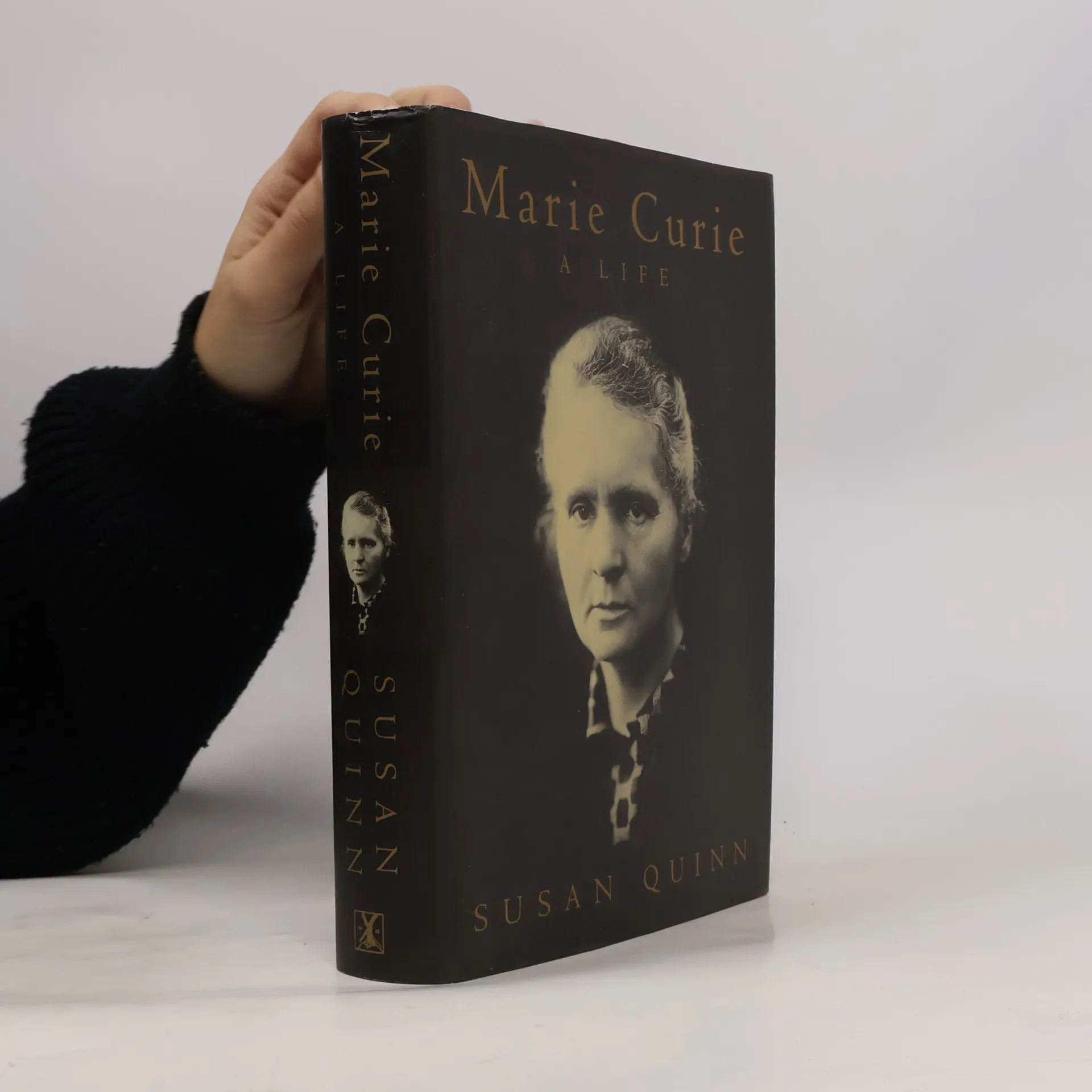
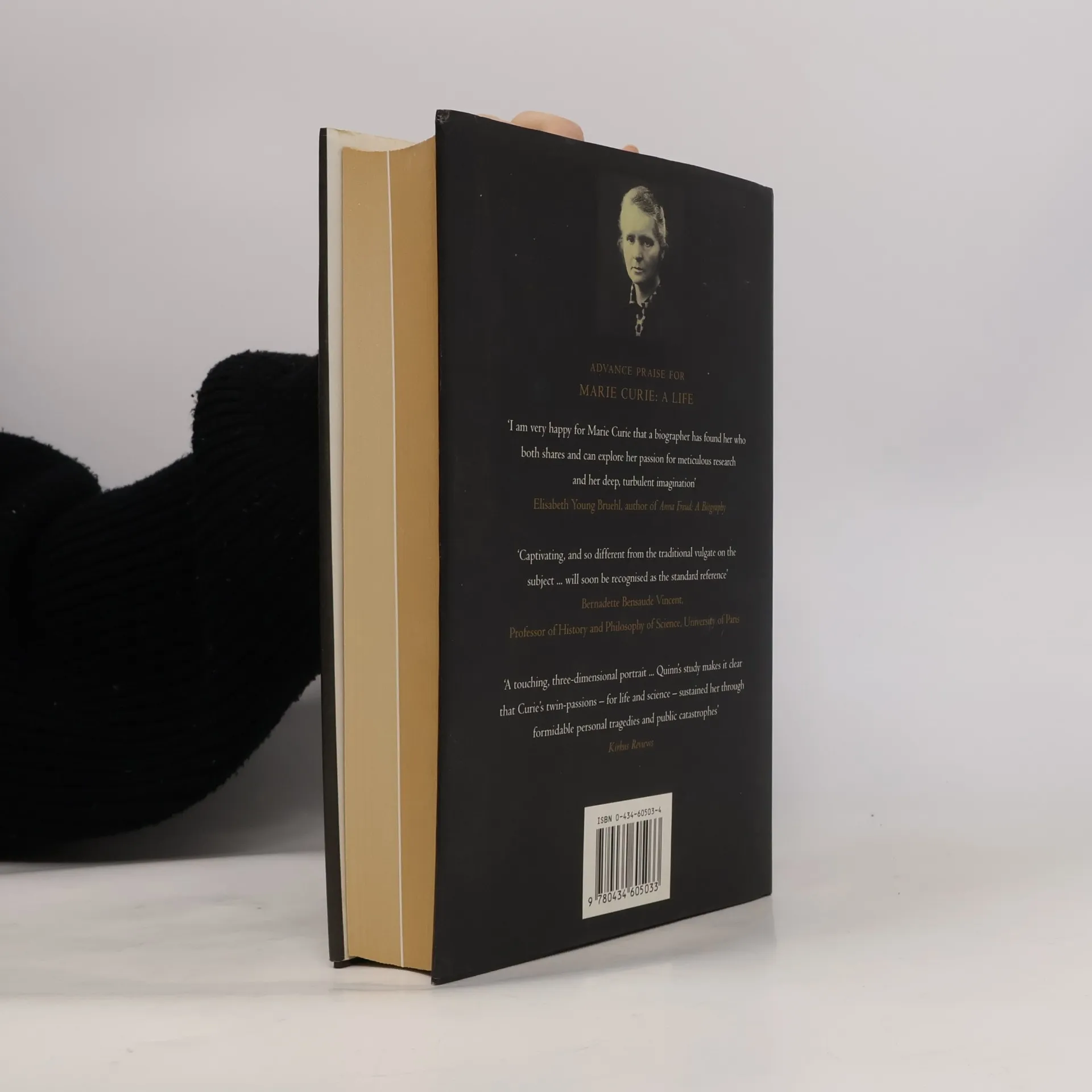
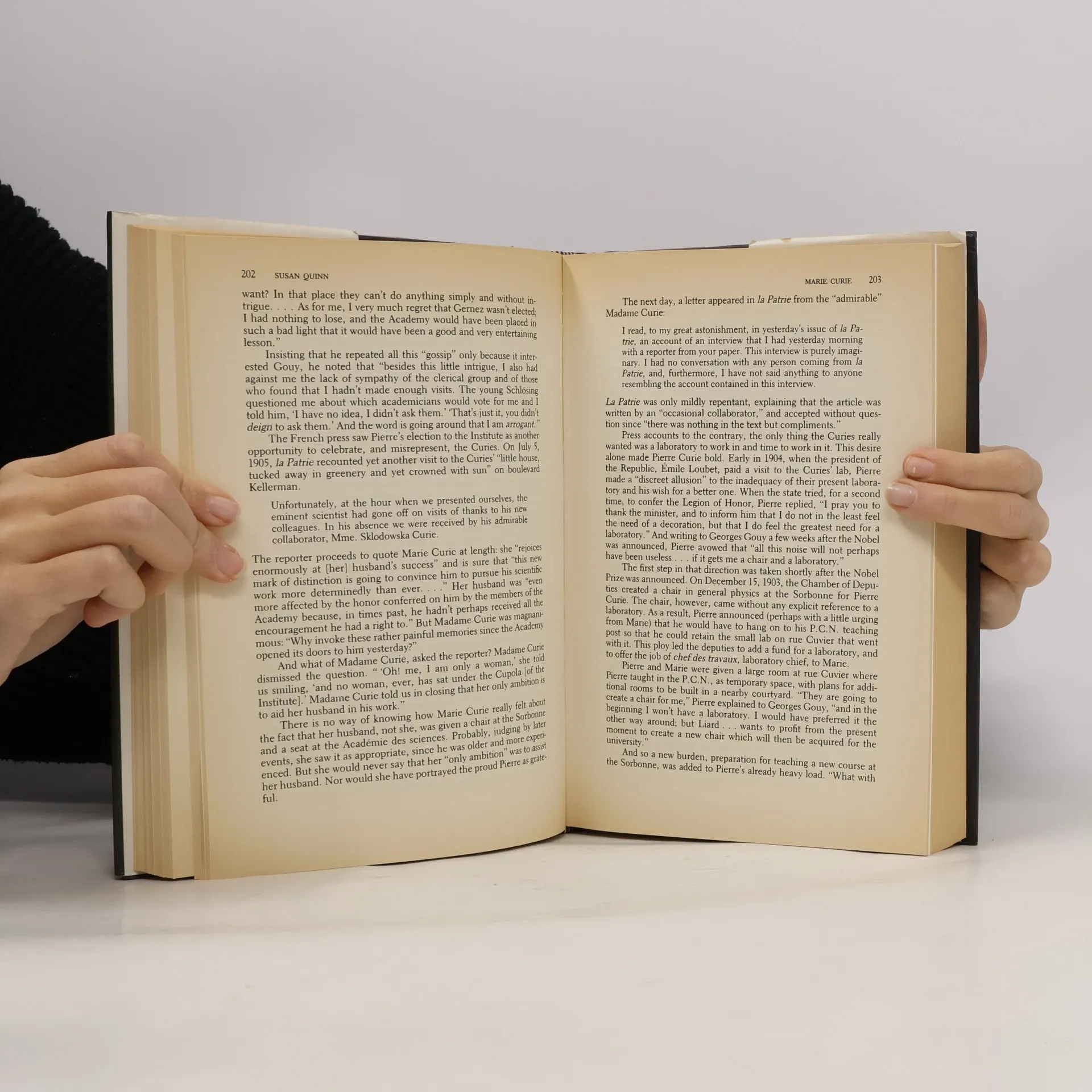
Marie Curie
Auteurs
En savoir plus sur le livre
Marie Curie discovered radioactivity, for which she won the Nobel Prize in physics. In 1911 she won an unprecedented second Nobel Prize, this time in chemistry, for isolating new radioactive elements. Despite these achievements, or perhaps because of her fame, she has remained a saintly, unapproachable genius. From family documents and a private journal, Susan Quinn tells the human story. From the stubborn 16-year-old studying science at night while working as a governess, to her romance and scientific partnership with Pierre Curie the story covers her defeats as well as her successes: her rejection by the French Academy, her unbearable grief at Pierre's untimely and gruesome death, and her retreat into a love affair with a married fellow scientist, causing a scandal which almost cost her the second Nobel Prize.
Achat du livre
Marie Curie, Susan Quinn
- Langue

- Année de publication
- 1995
- Reliure
- (rigide),
- État du livre
- Bon
- Prix
- 6,89 €
Modes de paiement
Personne n'a encore évalué .
- Titre
- Marie Curie
- Langue
- Anglais
- Auteurs
- Susan Quinn
- Éditeur
- Heinemann
- Publié
- 1995
- Format
- rigide
- Pages
- 509
- ISBN10
- 0434605034
- ISBN13
- 9780434605033
- Séries
- Catégories
- Description
- Marie Curie discovered radioactivity, for which she won the Nobel Prize in physics. In 1911 she won an unprecedented second Nobel Prize, this time in chemistry, for isolating new radioactive elements. Despite these achievements, or perhaps because of her fame, she has remained a saintly, unapproachable genius. From family documents and a private journal, Susan Quinn tells the human story. From the stubborn 16-year-old studying science at night while working as a governess, to her romance and scientific partnership with Pierre Curie the story covers her defeats as well as her successes: her rejection by the French Academy, her unbearable grief at Pierre's untimely and gruesome death, and her retreat into a love affair with a married fellow scientist, causing a scandal which almost cost her the second Nobel Prize.