



En savoir plus sur le livre
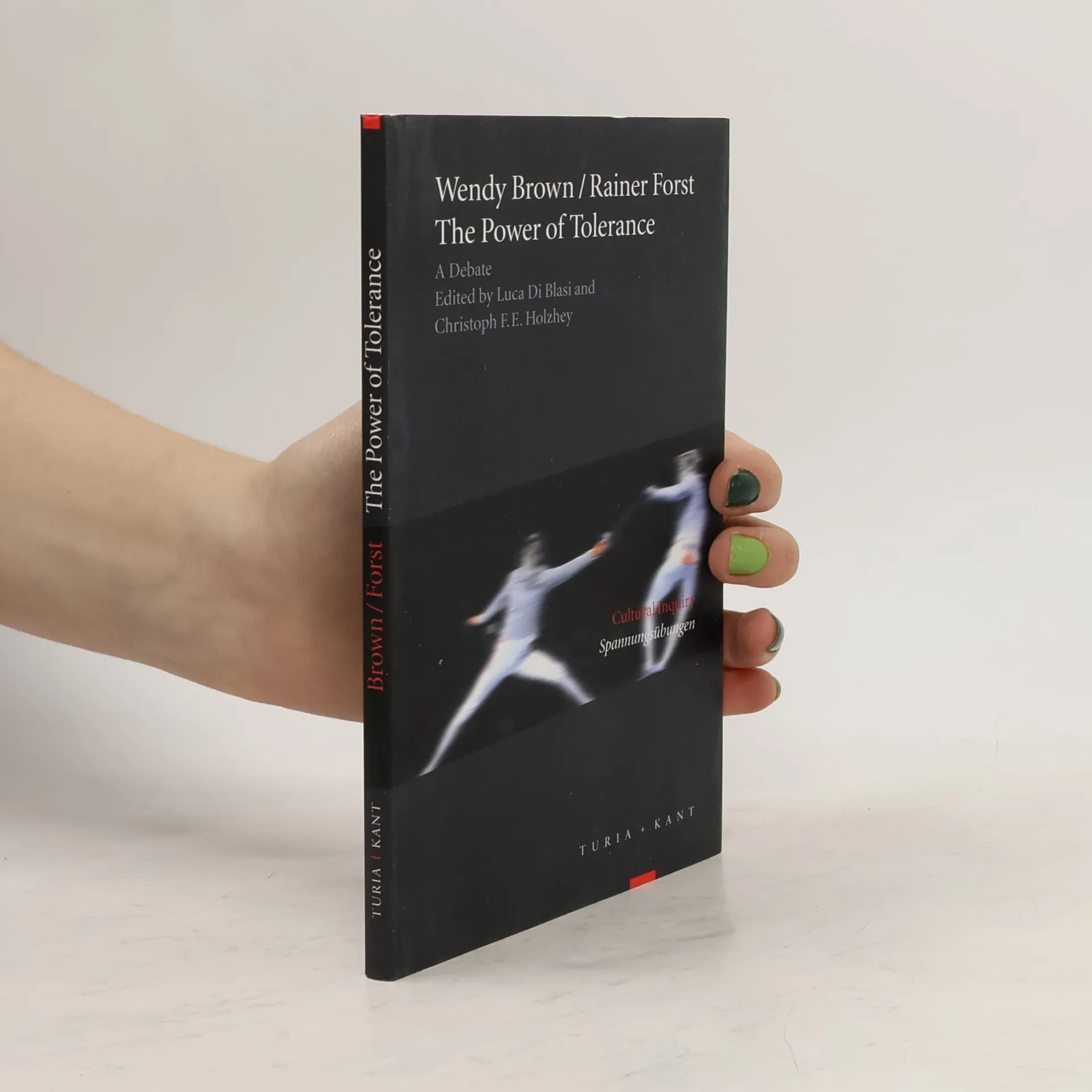
The ideal of tolerance is only invoked once there is a conflict. But what does it mean to answer a conflict with a call for tolerance? Is tolerance a way of resolving conflicts or rather a means of sustaining them? Does tolerance help to turn conflicts into productive tensions or does it perpetuate underlying power relations? To what extent does tolerance hide its involvement with power and thereby constitute a form of de-politicization? Two major theoreticians and critics of tolerance – Wendy Brown and Rainer Forst – discussed such questions at the ICI Berlin, organized and moderated by Antke Engel. In an intense debate, in which fundamental issues between different critical traditions became visible despite political similiarities, both scholars discussed different notions of tolerance, their normative premises, limits, and political implications.
Achat du livre
The power of tolerance, Wendy Brown
- Langue

- Année de publication
- 2014
- Reliure
- (souple)
Modes de paiement
Personne n'a encore évalué .
- Titre
- The power of tolerance
- Langue
- Anglais
- Auteurs
- Wendy Brown
- Éditeur
- Turia + Kant
- Publié
- 2014
- Format
- souple
- Pages
- 111
- ISBN10
- 3851327314
- ISBN13
- 9783851327311
- Séries
- Catégories
- Mots clés
- Thématique philosophique
- Description
- The ideal of tolerance is only invoked once there is a conflict. But what does it mean to answer a conflict with a call for tolerance? Is tolerance a way of resolving conflicts or rather a means of sustaining them? Does tolerance help to turn conflicts into productive tensions or does it perpetuate underlying power relations? To what extent does tolerance hide its involvement with power and thereby constitute a form of de-politicization? Two major theoreticians and critics of tolerance – Wendy Brown and Rainer Forst – discussed such questions at the ICI Berlin, organized and moderated by Antke Engel. In an intense debate, in which fundamental issues between different critical traditions became visible despite political similiarities, both scholars discussed different notions of tolerance, their normative premises, limits, and political implications.