

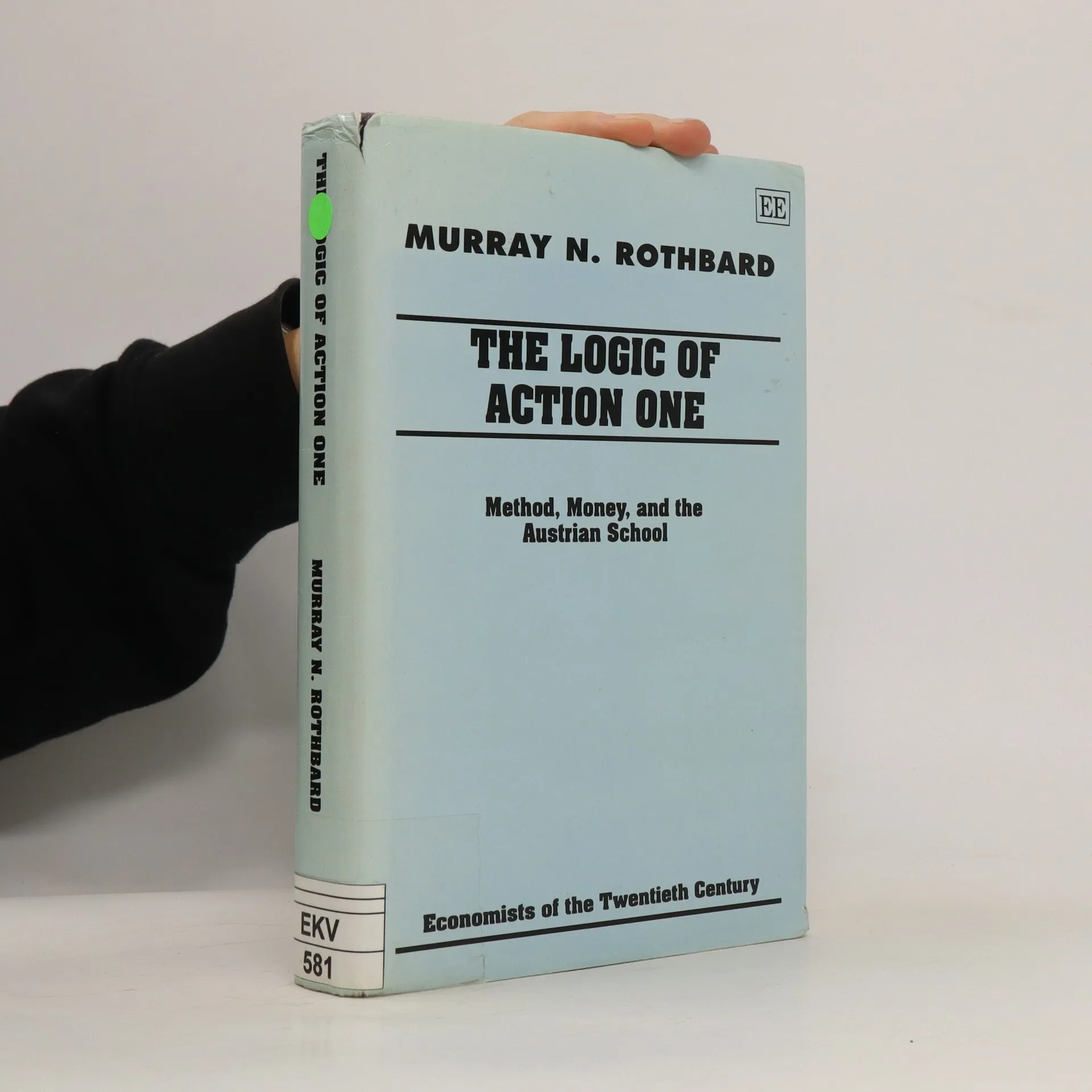
En savoir plus sur le livre
In this, the first of two volumes, Murray Rothbard - one of the major figures in twentieth-century Austrian economics - argues with clarity and force that economics is a deductive science based on the fundamental realities of action, scarcity and the passage of time. Such conviction is demonstrated in the first part of this book, where Professor Rothbard analyses method. The second part focuses on some of the theoretical debates within the Austrian school, including property and justice rights, welfare economics, value and efficiency. In the third section Rothbard considers the Austrian approach to money and calculation, including discussion of the definition of the supply of money, freely floating exchange rates and calculation and its role under socialism. This latest volume of Murray Rothbard's work goes some way to represent the important contributions he made to the field. The second volume of Murray Rothbard's essays on Austrian economics is also available.
Achat du livre
The Logic of Action one, Murray Newton Rothbard
- Langue

- Année de publication
- 1997
- Reliure
- (rigide)
Modes de paiement
Il manque plus que ton avis ici.
- Titre
- The Logic of Action one
- Langue
- Anglais
- Auteurs
- Murray Newton Rothbard
- Éditeur
- Edward Elgar Publishing
- Publié
- 1997
- Format
- rigide
- Pages
- 480
- ISBN10
- 1858980151
- ISBN13
- 9781858980157
- Séries
- Catégories
- Mots clés
- Commerce
- Évaluation
- 4,65 sur 5
- Description
- In this, the first of two volumes, Murray Rothbard - one of the major figures in twentieth-century Austrian economics - argues with clarity and force that economics is a deductive science based on the fundamental realities of action, scarcity and the passage of time. Such conviction is demonstrated in the first part of this book, where Professor Rothbard analyses method. The second part focuses on some of the theoretical debates within the Austrian school, including property and justice rights, welfare economics, value and efficiency. In the third section Rothbard considers the Austrian approach to money and calculation, including discussion of the definition of the supply of money, freely floating exchange rates and calculation and its role under socialism. This latest volume of Murray Rothbard's work goes some way to represent the important contributions he made to the field. The second volume of Murray Rothbard's essays on Austrian economics is also available.