

En savoir plus sur le livre
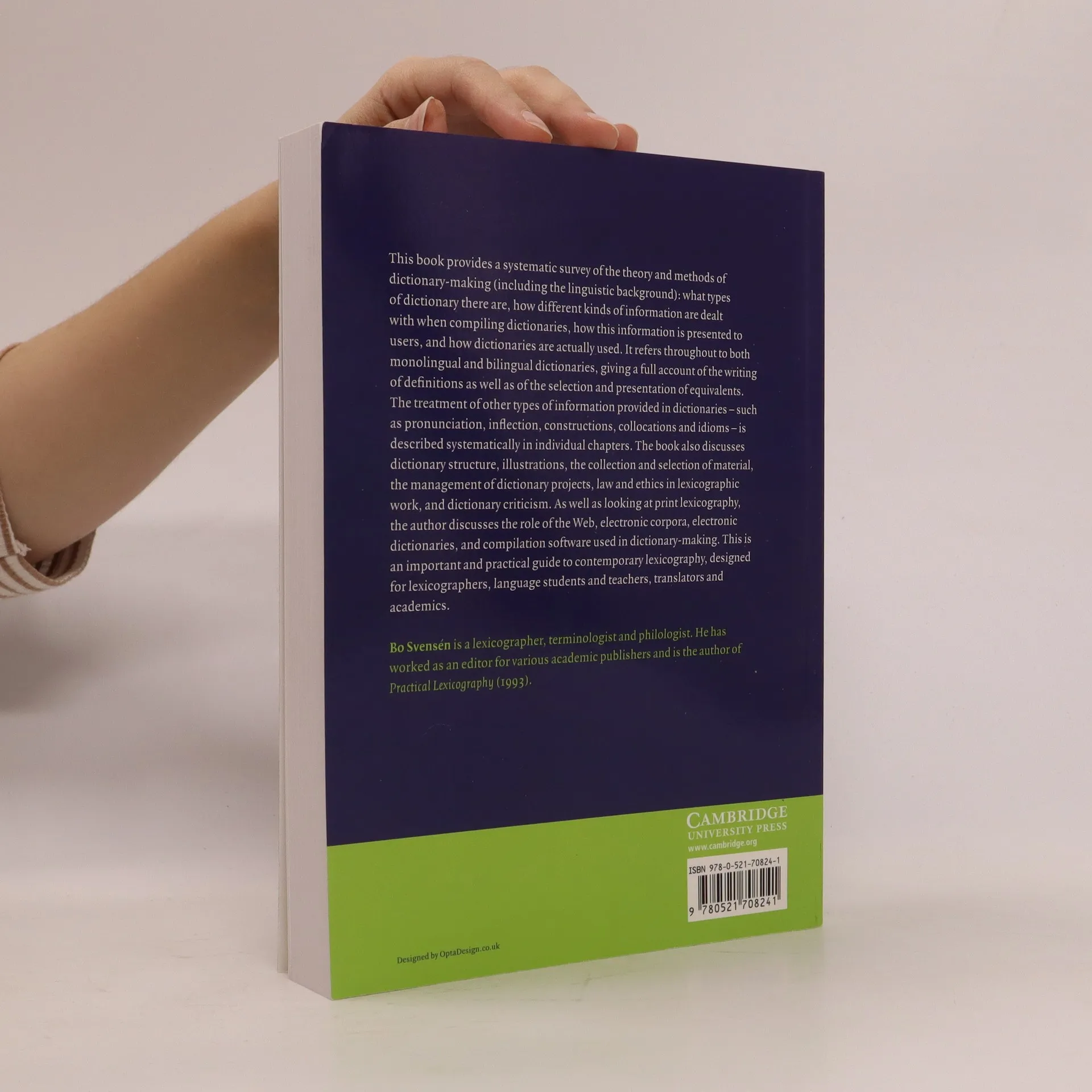
This book provides a systematic survey of the theory and methods of dictionary-making (including the linguistic background): what types of dictionary there are, how different kinds of information are dealt with when compiling dictionaries, how this information is presented to users, and how dictionaries are actually used. It refers throughout to both monolingual and bilingual dictionaries, giving a full account of the writing of definitions as well as of the selection and presentation of equivalents. The treatment of other types of information provided in dictionaries - such as pronunciation, inflection, constructions, collocations and idioms - is described systematically in individual chapters. The book also discusses dictionary structure, illustrations, the collection and selection of material, the management of dictionary projects, law and ethics in lexicographic work, and dictionary criticism. As well as looking at print lexicography, the author discusses the role of the Web, electronic corpora, electronic dictionaries, and compilation software used in dictionary-making. This is an important and practical guide to contemporary lexicography, designed for lexicographers, language students and teachers, translators and academics.
Achat du livre
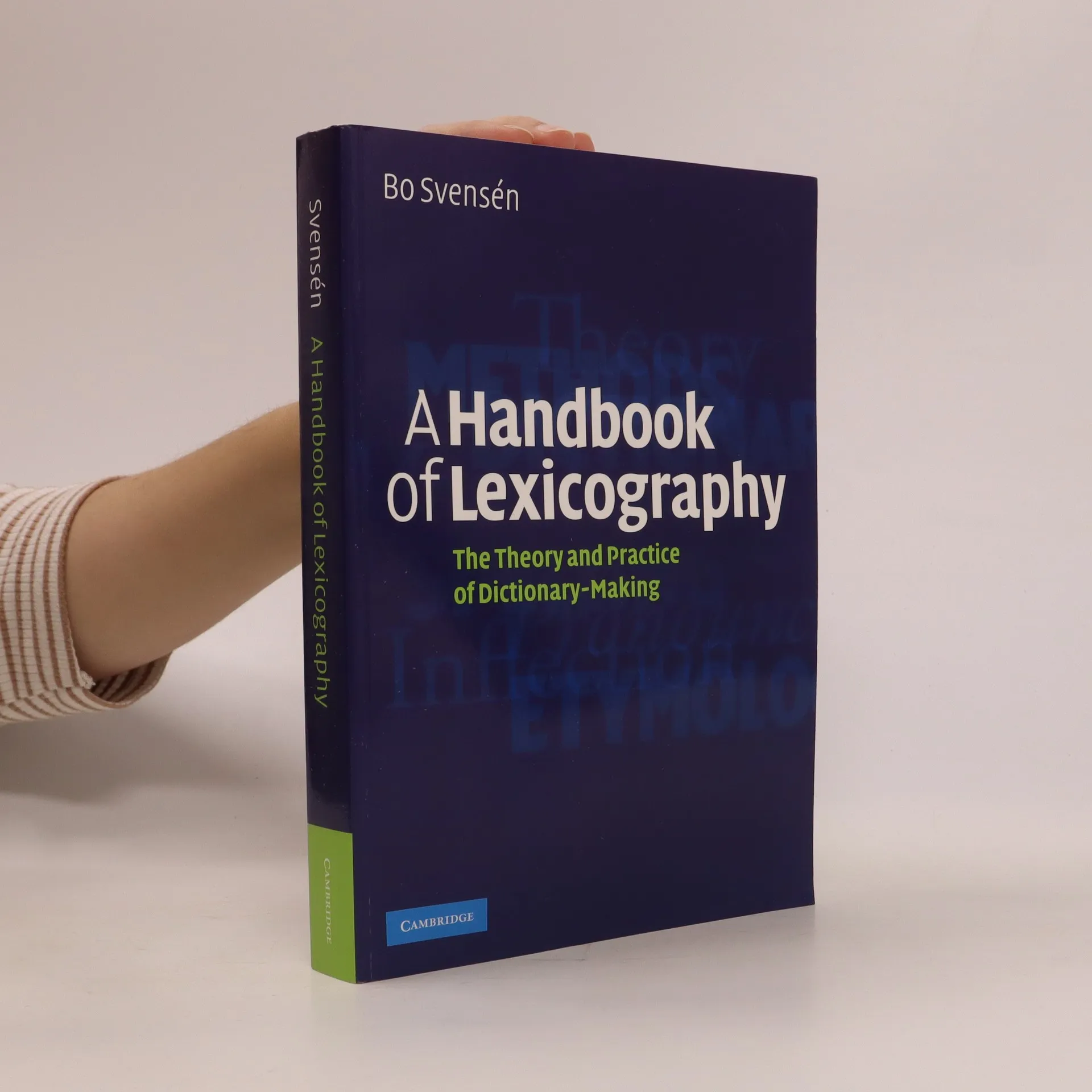
A Handbook of Lexicography, Bo Svensén
- Langue

- Année de publication
- 2009
- Reliure
- (souple)
Modes de paiement
Il manque plus que ton avis ici.
- Titre
- A Handbook of Lexicography
- Langue
- Anglais
- Auteurs
- Bo Svensén
- Éditeur
- Cambridge University Press
- Publié
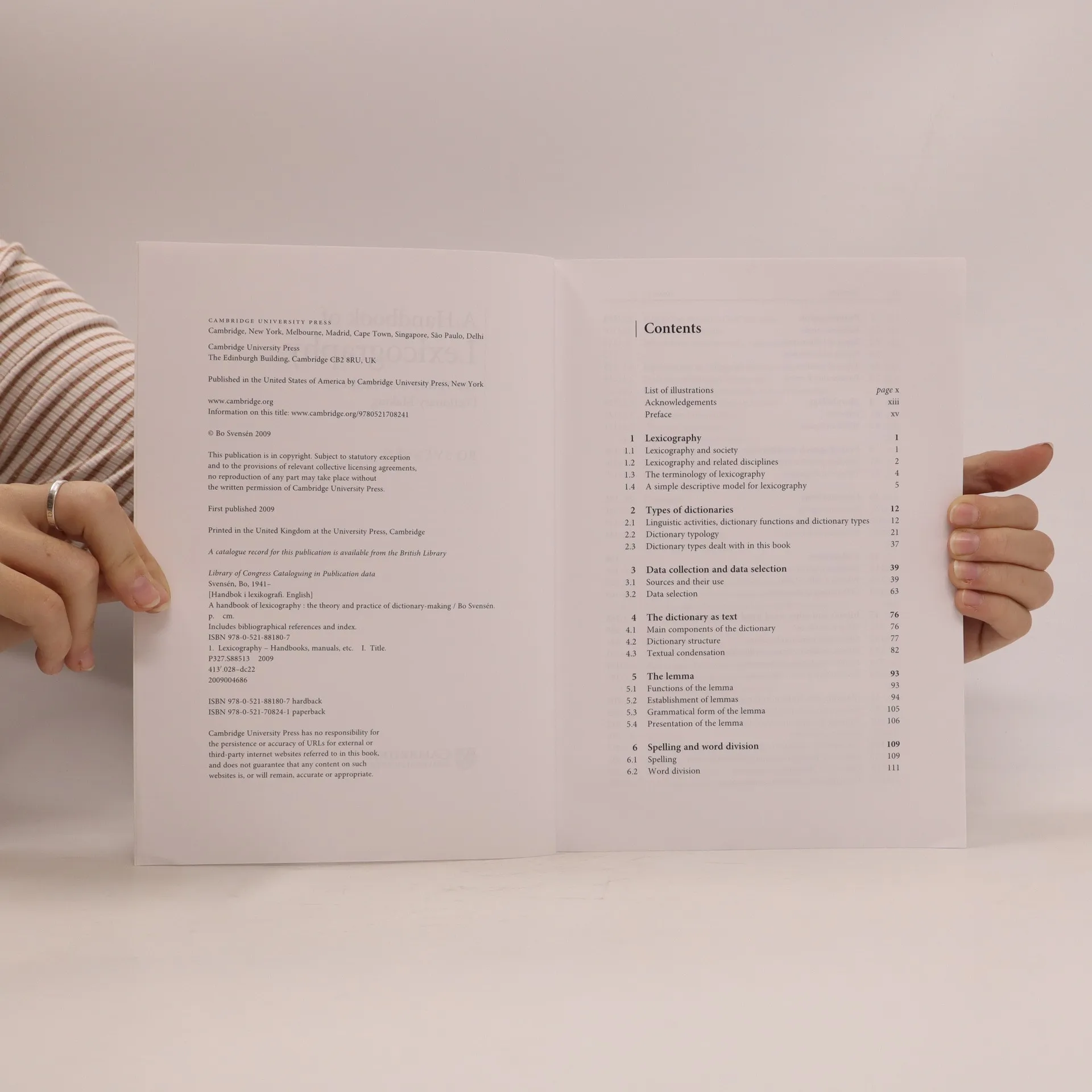
- 2009
- Format
- souple
- Pages
- 552
- ISBN10
- 0521708249
- ISBN13
- 9780521708241
- Séries
- Catégories
- Mots clés
- Linguistique
- Évaluation
- 3 sur 5
- Description
- This book provides a systematic survey of the theory and methods of dictionary-making (including the linguistic background): what types of dictionary there are, how different kinds of information are dealt with when compiling dictionaries, how this information is presented to users, and how dictionaries are actually used. It refers throughout to both monolingual and bilingual dictionaries, giving a full account of the writing of definitions as well as of the selection and presentation of equivalents. The treatment of other types of information provided in dictionaries - such as pronunciation, inflection, constructions, collocations and idioms - is described systematically in individual chapters. The book also discusses dictionary structure, illustrations, the collection and selection of material, the management of dictionary projects, law and ethics in lexicographic work, and dictionary criticism. As well as looking at print lexicography, the author discusses the role of the Web, electronic corpora, electronic dictionaries, and compilation software used in dictionary-making. This is an important and practical guide to contemporary lexicography, designed for lexicographers, language students and teachers, translators and academics.