



En savoir plus sur le livre
This significant book should be essential reading for all thoughtful Christians and practicing scientists. The authors illustrate how modern science emerged from the Judeo-Christian worldview, which posits a real, contingent universe created by an omnipotent personal God. They argue that humanity's rationality and creativity enable us to explore this universe. Pearcey and Thaxton effectively use analogies to clarify complex concepts, making their explanations accessible to non-specialists. Their insights into topics like Einstein's relativity and the informational content of DNA are exceptional, justifying the book's purchase. Dr. David Shotton from the University of Oxford praises its clarity and relevance. Additionally, Pearcey and Thaxton assert that the perceived alliance between atheism and science is a temporary phenomenon; rather, Christian theism has historically contributed to scientific advancement and will continue to do so. Phillip E. Johnson from the University of California, Berkeley, emphasizes the book's importance for a broad audience. J.P. Moreland from Talbot School of Theology recommends it as an excellent resource for understanding the interplay between science and Christian theology, making it a valuable text for courses on science and religion.
Achat du livre
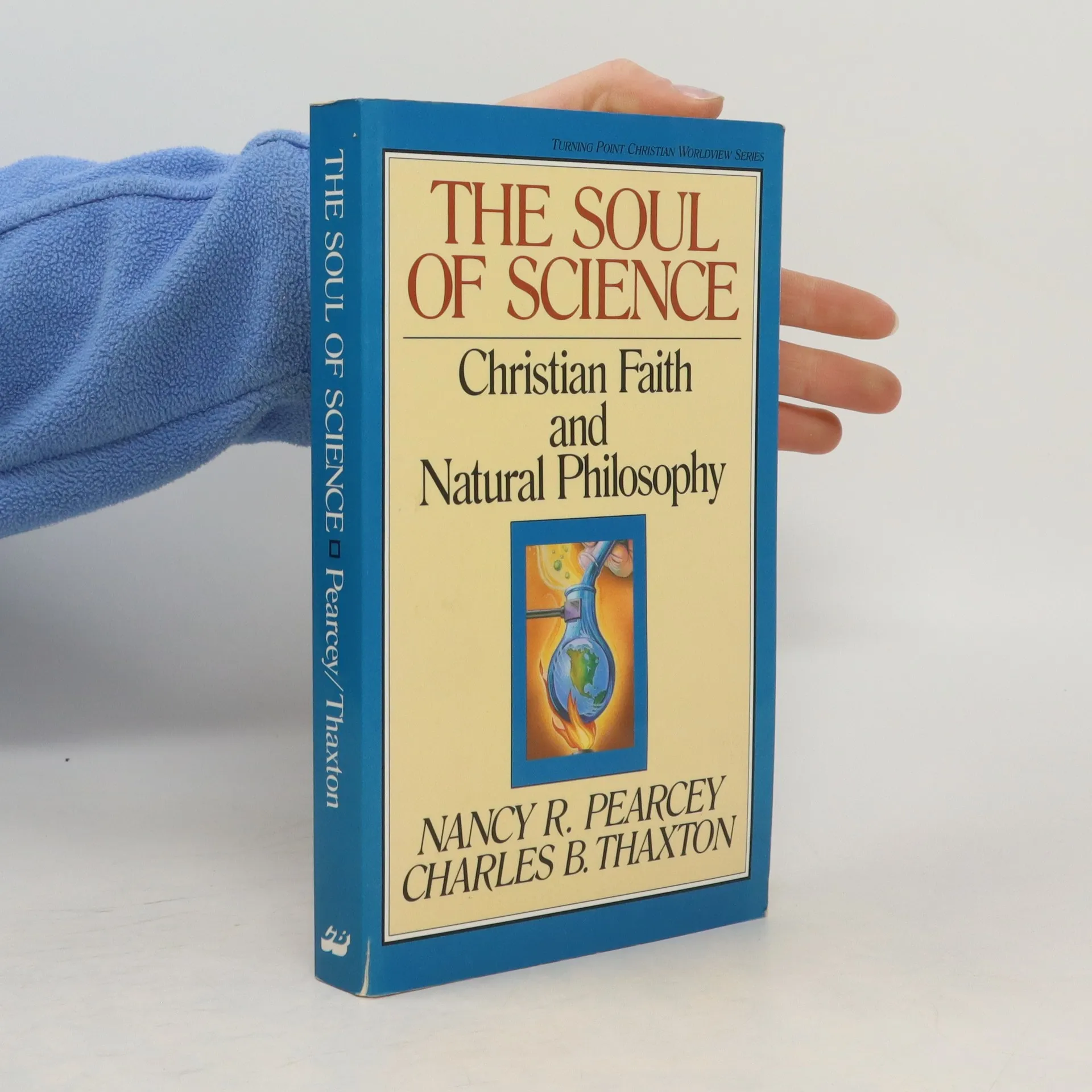
The Soul of Science, Charles B. Thaxton, Nancy R. Pearcey
- Langue

- Année de publication
- 1994
- Reliure
- (souple)
Modes de paiement
Il manque plus que ton avis ici.
- Titre
- The Soul of Science
- Langue
- Anglais
- Auteurs
- Charles B. Thaxton, Nancy R. Pearcey
- Éditeur
- Crossway Books
- Publié
- 1994
- Format
- souple
- ISBN10
- 0891077669
- ISBN13
- 9780891077664
- Séries
- Mots clés
- Thèmes religieux, Thématique philosophique, Thèmes chrétiens, Science, Éducation, système scolaire, Théologie
- Évaluation
- 4,15 sur 5
- Description
- This significant book should be essential reading for all thoughtful Christians and practicing scientists. The authors illustrate how modern science emerged from the Judeo-Christian worldview, which posits a real, contingent universe created by an omnipotent personal God. They argue that humanity's rationality and creativity enable us to explore this universe. Pearcey and Thaxton effectively use analogies to clarify complex concepts, making their explanations accessible to non-specialists. Their insights into topics like Einstein's relativity and the informational content of DNA are exceptional, justifying the book's purchase. Dr. David Shotton from the University of Oxford praises its clarity and relevance. Additionally, Pearcey and Thaxton assert that the perceived alliance between atheism and science is a temporary phenomenon; rather, Christian theism has historically contributed to scientific advancement and will continue to do so. Phillip E. Johnson from the University of California, Berkeley, emphasizes the book's importance for a broad audience. J.P. Moreland from Talbot School of Theology recommends it as an excellent resource for understanding the interplay between science and Christian theology, making it a valuable text for courses on science and religion.