




En savoir plus sur le livre
This extensively illustrated study opens with an account of the movement's Brunelleschi, arbiter of Florence's building problems, and Alberti, who supplied the new architecture with a suitable theoretical foundation. The editor considers the general effect of the new artistic culture on the changes that took place first in fifteenth-century Italian cities and then throughout Europe.The relationship between the development of architecture and that of other related fields, especially the great advances in painting and sculpture, receives special attention. Also considered are the effects of the beginnings of modern science and the general economic and social changes of the age. Finally this study takes the reader to the point where the history of modern architecture, discussed in volumes of the same name by Professor Benevolo, begins.
Achat du livre
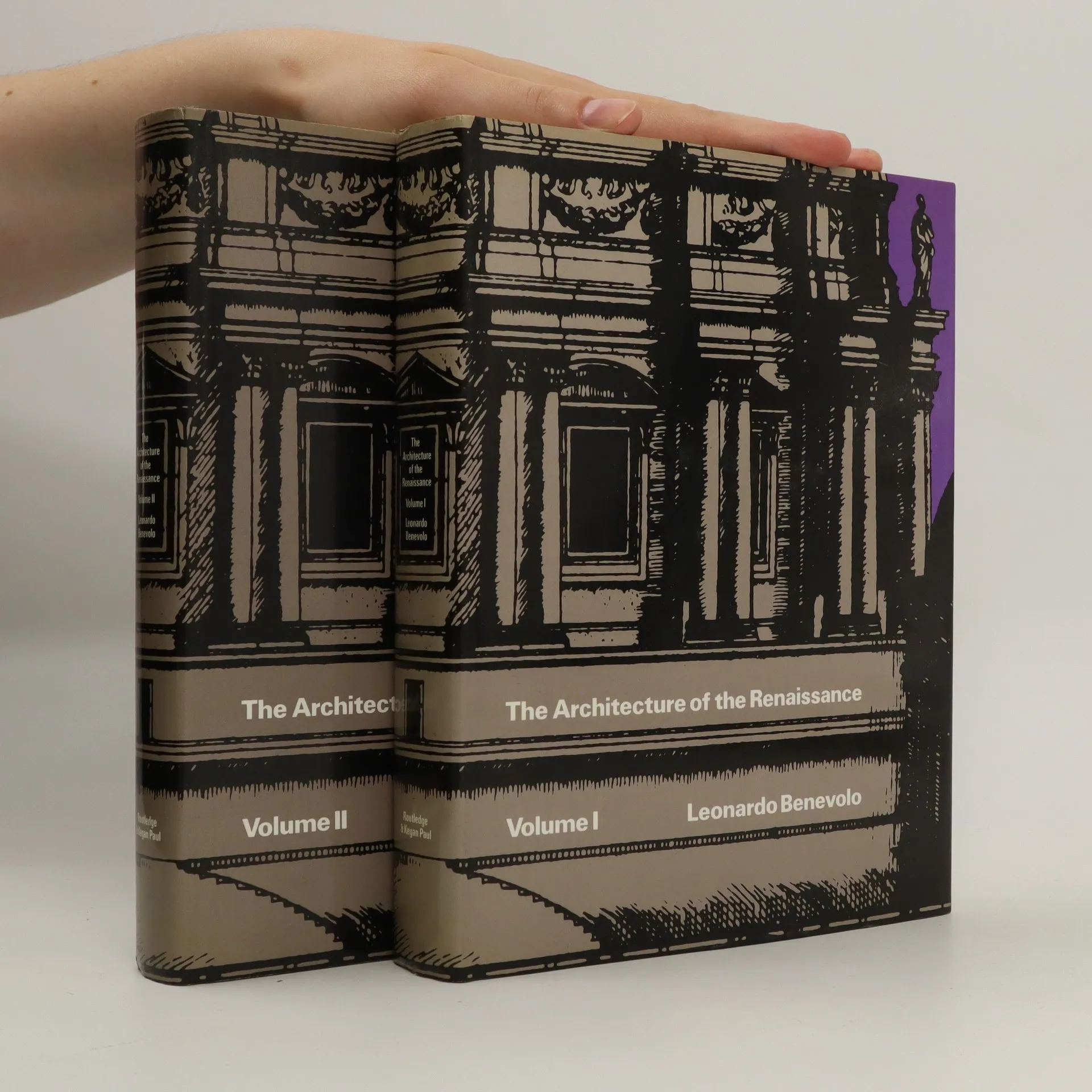
The Architecture of the Renaissance Volume I, II, Leonardo Benevolo
- Langue

- Année de publication
- 1978
- Reliure
- (rigide)
Modes de paiement
Il manque plus que ton avis ici.
- Titre
- The Architecture of the Renaissance Volume I, II
- Langue
- Anglais
- Auteurs
- Leonardo Benevolo
- Éditeur
- Routledge & Kegan Paul
- Publié
- 1978
- Format
- rigide
- Pages
- 1092
- ISBN10
- 0710080360
- ISBN13
- 9780710080363
- Séries
- Catégories
- Mots clés
- Thème historique, Architecture
- Évaluation
- 4,5 sur 5
- Description
- This extensively illustrated study opens with an account of the movement's Brunelleschi, arbiter of Florence's building problems, and Alberti, who supplied the new architecture with a suitable theoretical foundation. The editor considers the general effect of the new artistic culture on the changes that took place first in fifteenth-century Italian cities and then throughout Europe.The relationship between the development of architecture and that of other related fields, especially the great advances in painting and sculpture, receives special attention. Also considered are the effects of the beginnings of modern science and the general economic and social changes of the age. Finally this study takes the reader to the point where the history of modern architecture, discussed in volumes of the same name by Professor Benevolo, begins.