

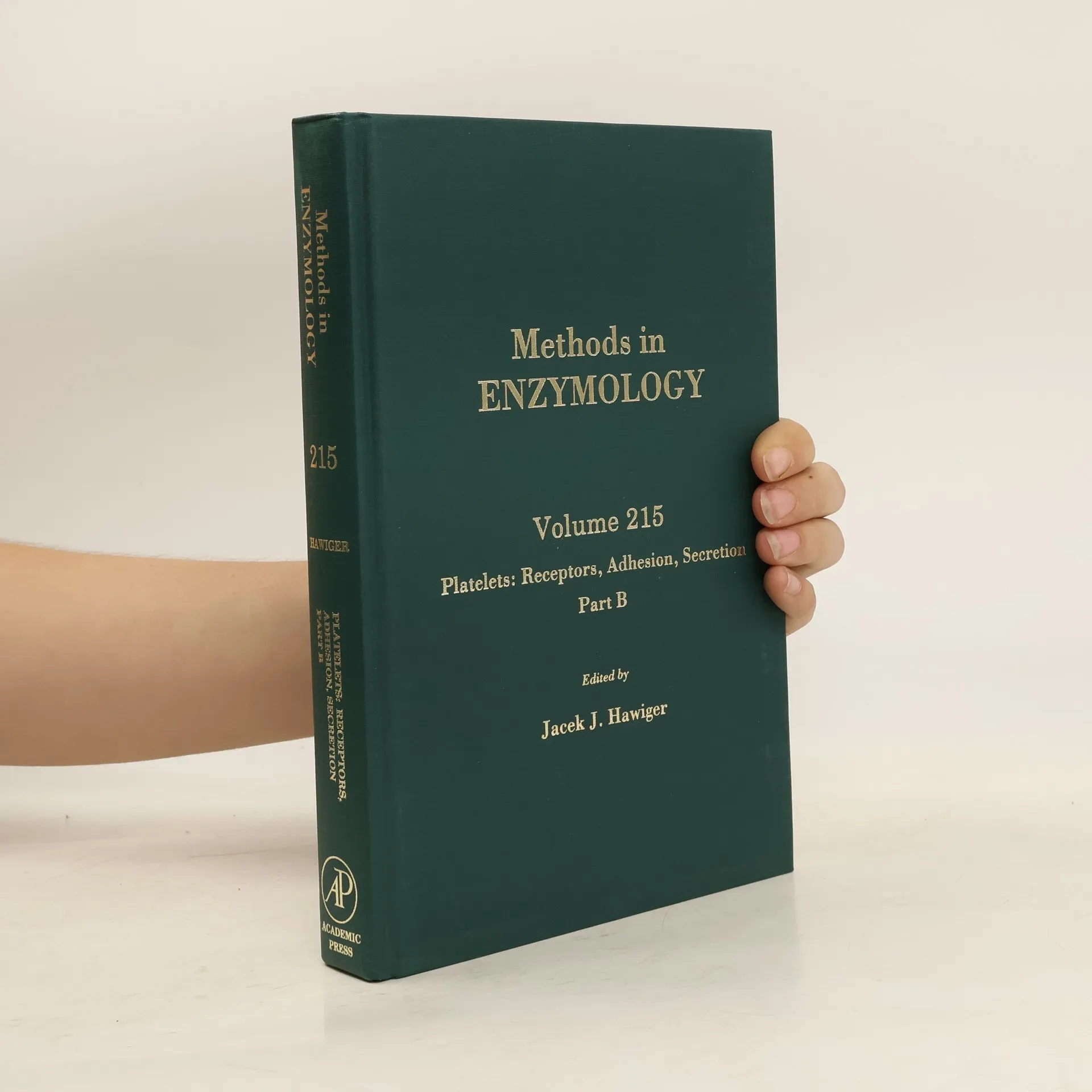
Methods in Enzymology 215. Platelets: Receptors, Adhesion, Secretion
Auteurs
En savoir plus sur le livre
This volume contains a comprehensive collection of methods for the isolation of platelet membranes, subcellular organelles, the cytoskeleton, and for the assay and purification of platelet receptors. Key Features * Platelets are cellular elements with the highest density of receptors per membrane surface area involved in binding of adhesive molecules, clotting, enzymes, and vasoactive amines * Platelets are essential for the arrest of bleeding and for formation of intravascular thrombi contributing to heart attacks, strokes, and disseminated intravascular coagulation, and are involved in immune complex disease * Platelets are useful for studying the processes of cell adhesion, neurotransmitter uptake, stimulus-response coupling, including signal transduction and secretion
Achat du livre
Methods in Enzymology 215. Platelets: Receptors, Adhesion, Secretion, Jacek J Hawiger
- Langue

- Année de publication
- 1992
- Reliure
- (rigide)
Modes de paiement
Personne n'a encore évalué .
- Titre
- Methods in Enzymology 215. Platelets: Receptors, Adhesion, Secretion
- Langue
- Anglais
- Auteurs
- Jacek J Hawiger
- Éditeur
- Academic press
- Publié
- 1992
- Format
- rigide
- Pages
- 526
- ISBN10
- 0121821161
- ISBN13
- 9780121821166
- Séries
- Catégories
- Mots clés
- Santé & Médecine, Sciences naturelles
- Description
- This volume contains a comprehensive collection of methods for the isolation of platelet membranes, subcellular organelles, the cytoskeleton, and for the assay and purification of platelet receptors. Key Features * Platelets are cellular elements with the highest density of receptors per membrane surface area involved in binding of adhesive molecules, clotting, enzymes, and vasoactive amines * Platelets are essential for the arrest of bleeding and for formation of intravascular thrombi contributing to heart attacks, strokes, and disseminated intravascular coagulation, and are involved in immune complex disease * Platelets are useful for studying the processes of cell adhesion, neurotransmitter uptake, stimulus-response coupling, including signal transduction and secretion