

En savoir plus sur le livre
People are inescapably shaped by the culture in which they live, while culture itself is made and remade by people. Human beings in their daily lives feel a genuine freedom of thought and belief, yet this is unavoidably constrained by cultural limitations--such as those imposed by the language spoken, the knowledge developed and the information available at any time. In this book, Margaret Archer provides an analysis of the nature and stringency of cultural constraints, and the conditions and degrees of cultural freedom, and offers a radical new explanation of the tension between them. She suggests that the "problem of culture and agency" directly parallels the "problem of structure and agency," and that both problems can be solved by using the same analytical framework. She therefore paves the way toward the theoretical unification of the structural and cultural fields.
Achat du livre
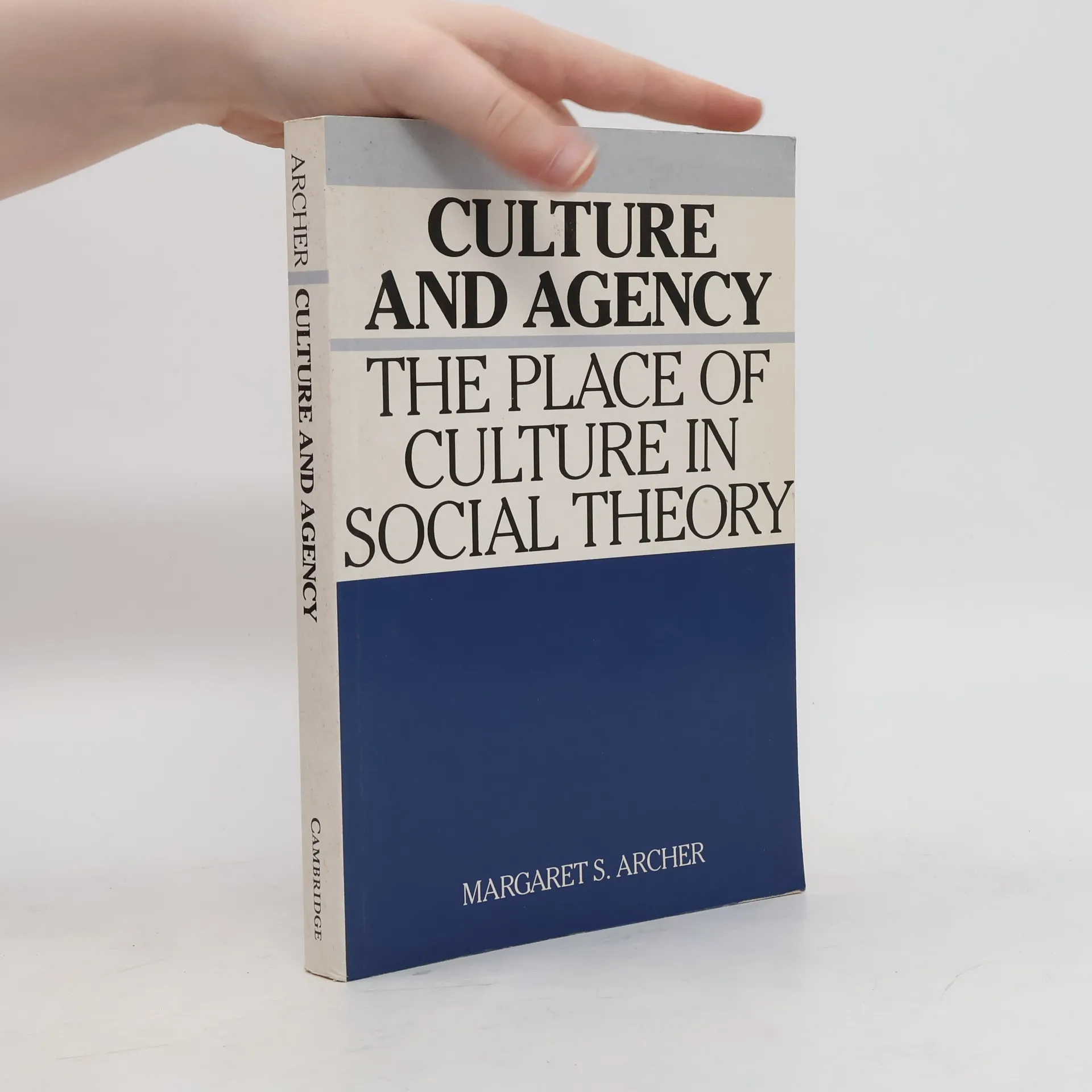
Culture and Agency, Margaret Archer
- Langue

- Année de publication
- 1990
- Reliure
- (souple)
Modes de paiement
Il manque plus que ton avis ici.
- Titre
- Culture and Agency
- Sous-titre
- The Place of Culture in Social Theory
- Langue
- Anglais
- Auteurs
- Margaret Archer
- Éditeur
- Cambridge University Press
- Publié
- 1990
- Format
- souple
- Pages
- 371
- ISBN10
- 0521387361
- ISBN13
- 9780521387361
- Séries
- Catégories
- Mots clés
- Culture et Société
- Évaluation
- 4,55 sur 5
- Description
- People are inescapably shaped by the culture in which they live, while culture itself is made and remade by people. Human beings in their daily lives feel a genuine freedom of thought and belief, yet this is unavoidably constrained by cultural limitations--such as those imposed by the language spoken, the knowledge developed and the information available at any time. In this book, Margaret Archer provides an analysis of the nature and stringency of cultural constraints, and the conditions and degrees of cultural freedom, and offers a radical new explanation of the tension between them. She suggests that the "problem of culture and agency" directly parallels the "problem of structure and agency," and that both problems can be solved by using the same analytical framework. She therefore paves the way toward the theoretical unification of the structural and cultural fields.