

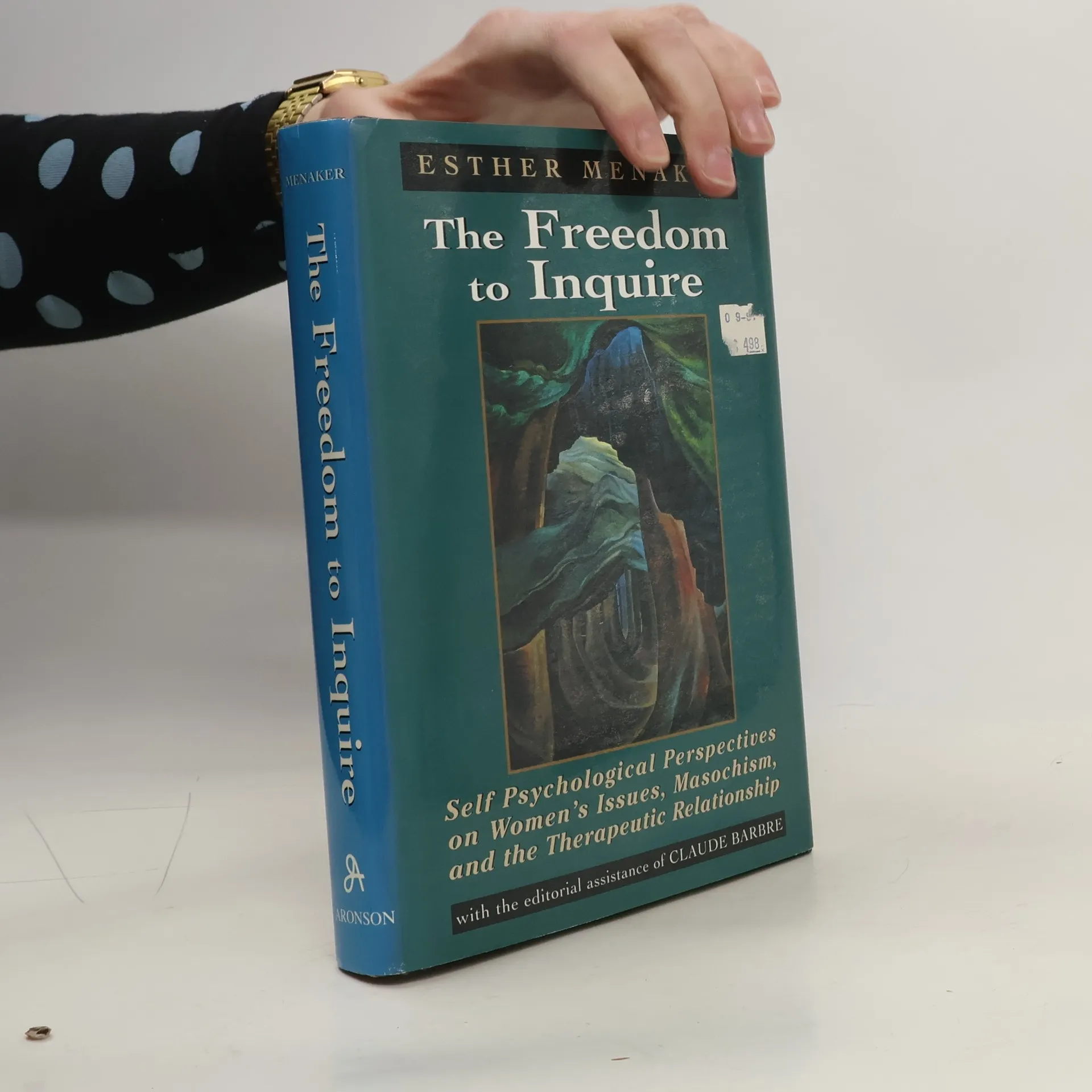
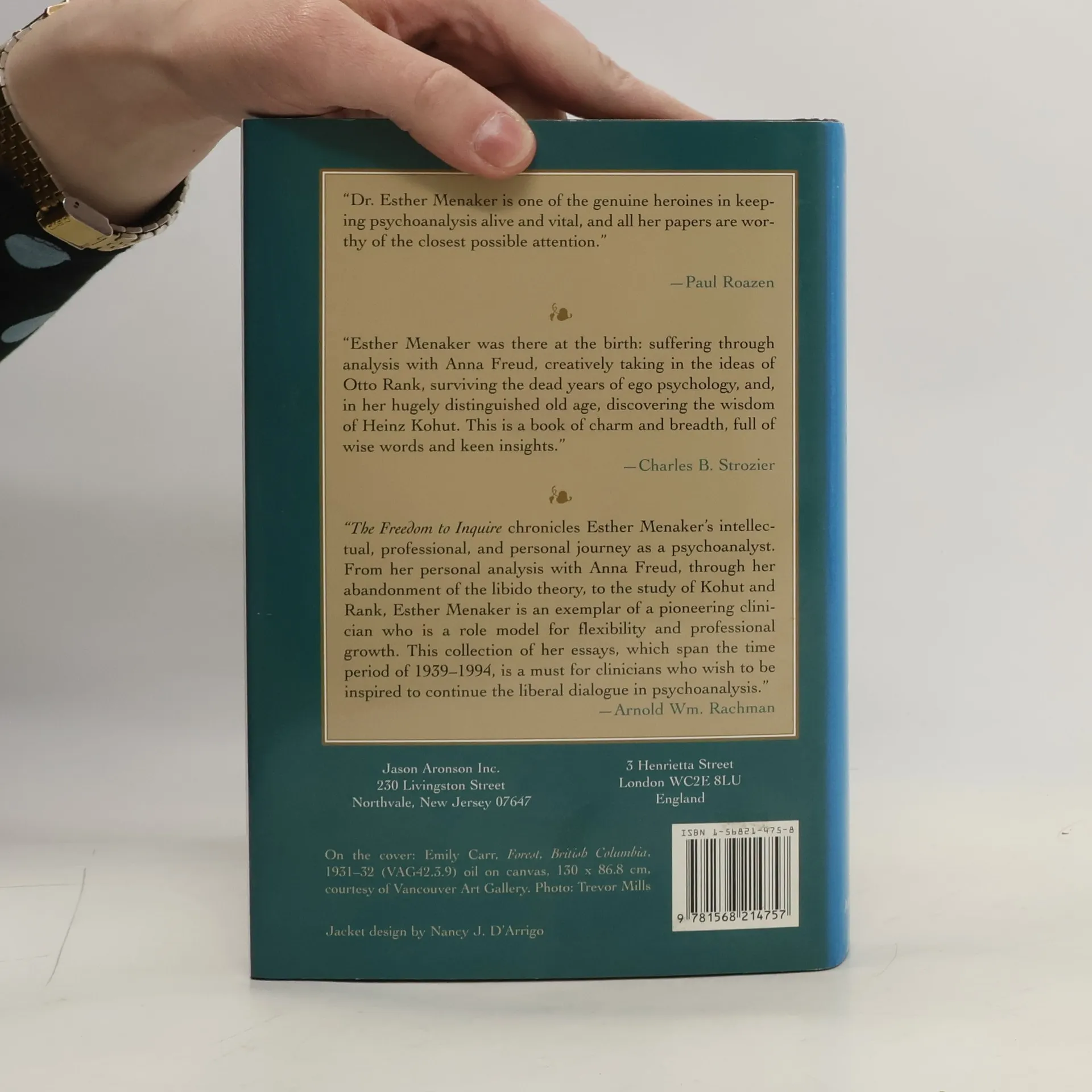

The Freedom to Inquire
Auteurs
Paramètres
En savoir plus sur le livre
These significant papers, written over a period of more than forty years, document the evolution of Dr. Esther Menaker's thinking from a Freudian position - reflective of her early training with Anna Freud in Vienna - to a self psychological approach both in theory and in practice. In developing treatment objectives, Dr. Menaker traces the historical and social factors that lead to different psychological problems, and emphasizes growth and the optimal fulfillment of an individual's potentiality, rather than the elimination of symptoms as constituting "cure." Her shift from classical instinct theory as the primary explanation of human behavior to what Kohut termed the empathic stance as a legitimate method of observation is clearly illustrated with clinical material. Organized in sections that reflect Dr. Menaker's major areas of interest, and written from the vantage point of more than sixty years of experience as a psychoanalyst and gifted teacher, this volume focuses on self psychology, masochism, women's issues, and the history of psychoanalysis. The book concludes with an interview with Dr. Menaker that captures the author's candid style in regard to her work and life.
Achat du livre
The Freedom to Inquire, Esther Menaker
- Langue

- Année de publication
- 1995
- Reliure
- (rigide)
Modes de paiement
Personne n'a encore évalué .
- Titre
- The Freedom to Inquire
- Langue
- Anglais
- Auteurs
- Esther Menaker
- Éditeur
- Jason Aronson, Inc.
- Publié
- 1995
- Format
- rigide
- ISBN10
- 1568214758
- ISBN13
- 9781568214757
- Séries
- Catégories
- Mots clés
- Thèmes psychologiques, Thématique philosophique, Femmes
- Description
- These significant papers, written over a period of more than forty years, document the evolution of Dr. Esther Menaker's thinking from a Freudian position - reflective of her early training with Anna Freud in Vienna - to a self psychological approach both in theory and in practice. In developing treatment objectives, Dr. Menaker traces the historical and social factors that lead to different psychological problems, and emphasizes growth and the optimal fulfillment of an individual's potentiality, rather than the elimination of symptoms as constituting "cure." Her shift from classical instinct theory as the primary explanation of human behavior to what Kohut termed the empathic stance as a legitimate method of observation is clearly illustrated with clinical material. Organized in sections that reflect Dr. Menaker's major areas of interest, and written from the vantage point of more than sixty years of experience as a psychoanalyst and gifted teacher, this volume focuses on self psychology, masochism, women's issues, and the history of psychoanalysis. The book concludes with an interview with Dr. Menaker that captures the author's candid style in regard to her work and life.