

Paramètres
- 712pages
- 25 heures de lecture
En savoir plus sur le livre
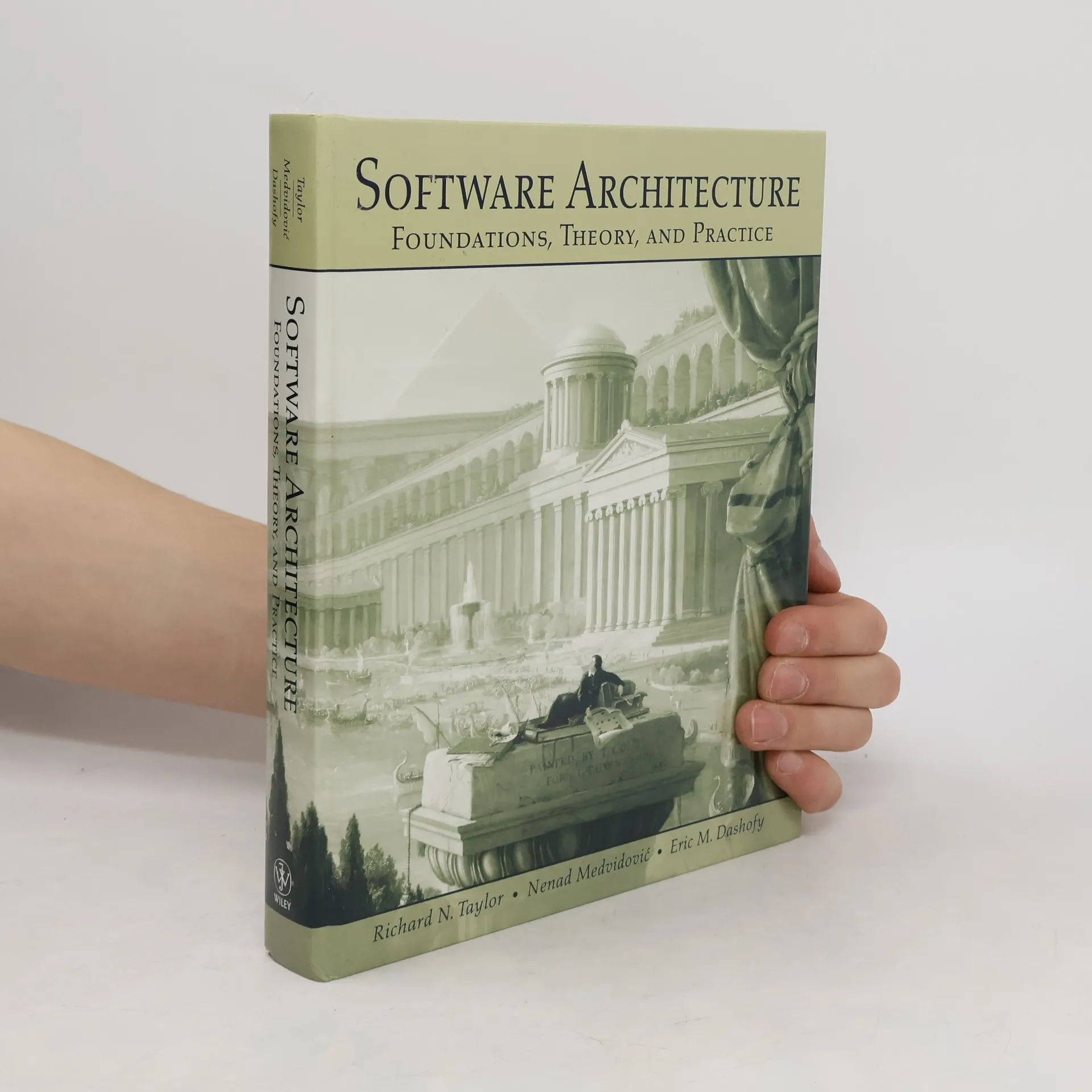
Software architecture is foundational to the development of large, practical software-intensive applications. This brand-new text covers all facets of software architecture and how it serves as the intellectual centerpiece of software development and evolution. Critically, this text focuses on supporting creation of real implemented systems. Hence the text details not only modeling techniques, but design, implementation, deployment, and system adaptation -- as well as a host of other topics -- putting the elements in context and comparing and contrasting them with one another. Rather than focusing on one method, notation, tool, or process, this new text/reference widely surveys software architecture techniques, enabling the instructor and practitioner to choose the right tool for the job at hand. Software Architecture is intended for upper-division undergraduate and graduate courses in software architecture, software design, component-based software engineering, and distributed systems
Achat du livre
Software Architecture, Richard N. Taylor
- Langue

- Année de publication
- 2009
- Reliure
- (rigide)
Modes de paiement
Il manque plus que ton avis ici.
- Titre
- Software Architecture
- Langue
- Anglais
- Auteurs
- Richard N. Taylor
- Éditeur
- John Wiley & Sons
- Publié
- 2009
- Format
- rigide
- Pages
- 712
- ISBN10
- 0470167742
- ISBN13
- 9780470167748
- Séries
- Catégories
- Mots clés
- Architecture, Technologie, Logiciel
- Évaluation
- 3,85 sur 5
- Description
- Software architecture is foundational to the development of large, practical software-intensive applications. This brand-new text covers all facets of software architecture and how it serves as the intellectual centerpiece of software development and evolution. Critically, this text focuses on supporting creation of real implemented systems. Hence the text details not only modeling techniques, but design, implementation, deployment, and system adaptation -- as well as a host of other topics -- putting the elements in context and comparing and contrasting them with one another. Rather than focusing on one method, notation, tool, or process, this new text/reference widely surveys software architecture techniques, enabling the instructor and practitioner to choose the right tool for the job at hand. Software Architecture is intended for upper-division undergraduate and graduate courses in software architecture, software design, component-based software engineering, and distributed systems