

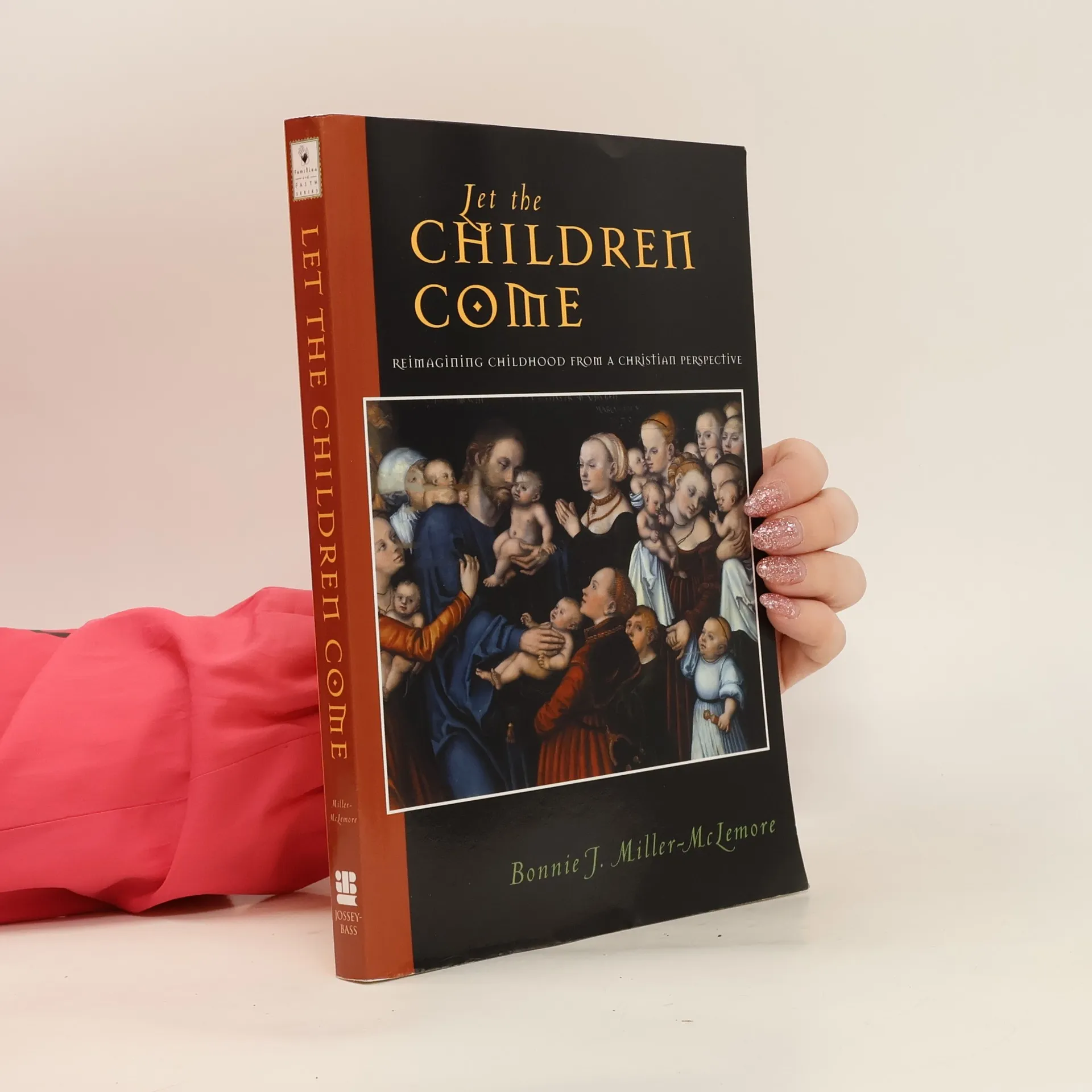


En savoir plus sur le livre
In this important and much-needed book, theologian, author, and teacher Bonnie J. Miller-McLemore writes about the struggle to raise children with integrity and faithfulness as Christians in a complex postmodern society. Let the Children Come shows that the care of children is in itself a religious discipline and a communal practice that places demands on both congregations and society as a whole. The author calls for clearer and more defined ways in which Christians can respond to the call to nurture all children (not just their own) as manifestations of God's presence in the world. Miller-McLemore raises and investigates questions that up until now have largely been left unasked, such What are the dominant cultural perceptions of children— including religious perceptions— with which parents must grapple? How have Christians defined children and parenting, and how should they today?
Achat du livre
Let the Children Come, Bonnie J. Miller-McLemore
- Langue

- Année de publication
- 2003
- Reliure
- (souple)
Modes de paiement
Il manque plus que ton avis ici.
- Titre
- Let the Children Come
- Langue
- Anglais
- Auteurs
- Bonnie J. Miller-McLemore
- Éditeur
- Jossey-Bass
- Publié
- 2003
- Format
- souple
- Pages
- 256
- ISBN10
- 0787956651
- ISBN13
- 9780787956653
- Séries
- Catégories
- Mots clés
- Évaluation
- 4,2 sur 5
- Description
- In this important and much-needed book, theologian, author, and teacher Bonnie J. Miller-McLemore writes about the struggle to raise children with integrity and faithfulness as Christians in a complex postmodern society. Let the Children Come shows that the care of children is in itself a religious discipline and a communal practice that places demands on both congregations and society as a whole. The author calls for clearer and more defined ways in which Christians can respond to the call to nurture all children (not just their own) as manifestations of God's presence in the world. Miller-McLemore raises and investigates questions that up until now have largely been left unasked, such What are the dominant cultural perceptions of children— including religious perceptions— with which parents must grapple? How have Christians defined children and parenting, and how should they today?