

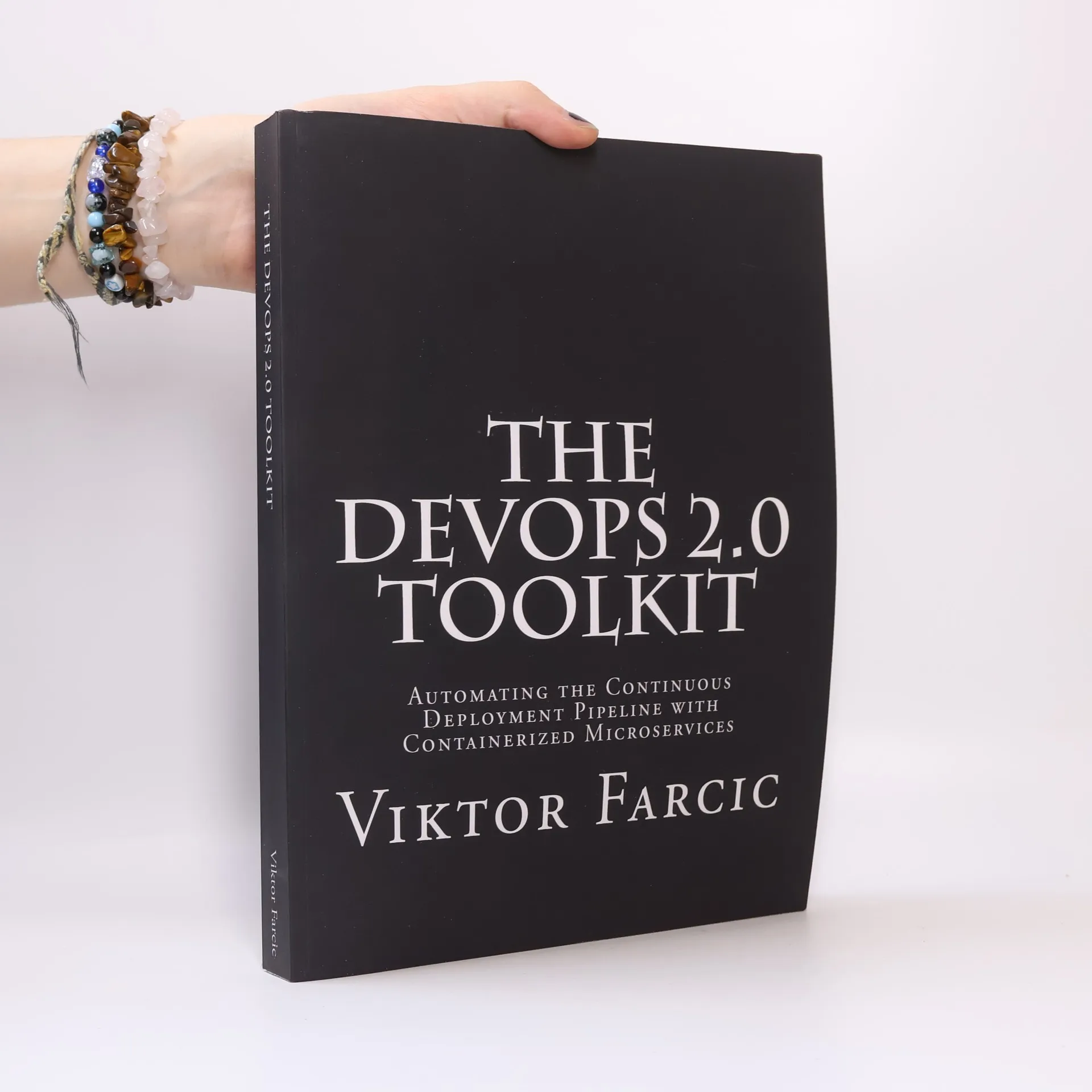


The DevOps 2.0 Toolkit
Automating the Continuous Deployment Pipeline with Containerized Microservices
Auteurs
Évaluation du livre
En savoir plus sur le livre
"This book is about techniques that help us architect software in a better and more efficient way: With microservices packed as immutable containers, then tested and deployed continuously to servers that are automatically provisioned with configuration management tools. It's about fast, reliable and continuous deployments with zero-downtime and the ability to roll-back. It's about scaling to any number of servers, designing self-healing systems capable of recovering from both hardware and software failures, and about centralized logging and monitoring of a cluster. We will cover some of the latest and greatest practices and a variety of tools such as: Docker, Kubernetes, Ansible, Ubuntu, Docker Swarm, Docker Compose, and Consul."--Back cover.
Achat du livre
The DevOps 2.0 Toolkit, Farcic Viktor
- Langue

- Année de publication
- 2016
- Reliure
- (souple)
Modes de paiement
Il manque plus que ton avis ici.
- Titre
- The DevOps 2.0 Toolkit
- Sous-titre
- Automating the Continuous Deployment Pipeline with Containerized Microservices
- Langue
- Anglais
- Auteurs
- Farcic Viktor
- Publié
- 2016
- Format
- souple
- Pages
- 414
- ISBN10
- 152391744X
- ISBN13
- 9781523917440
- Séries
- Mots clés
- Technologie
- Évaluation
- 3,35 sur 5
- Description
- "This book is about techniques that help us architect software in a better and more efficient way: With microservices packed as immutable containers, then tested and deployed continuously to servers that are automatically provisioned with configuration management tools. It's about fast, reliable and continuous deployments with zero-downtime and the ability to roll-back. It's about scaling to any number of servers, designing self-healing systems capable of recovering from both hardware and software failures, and about centralized logging and monitoring of a cluster. We will cover some of the latest and greatest practices and a variety of tools such as: Docker, Kubernetes, Ansible, Ubuntu, Docker Swarm, Docker Compose, and Consul."--Back cover.