

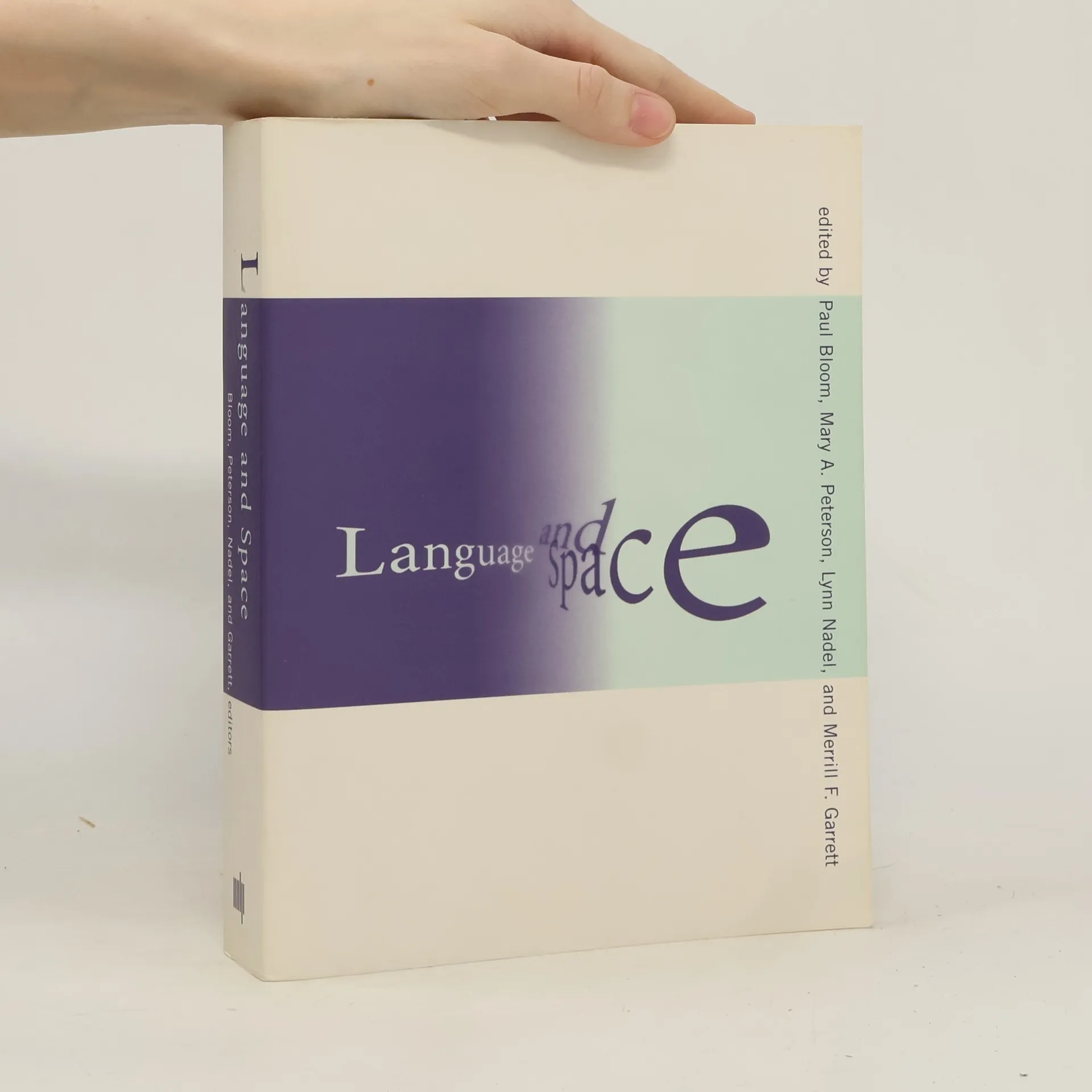

Language, Speech, and Communication: Language and Space
Évaluation du livre
En savoir plus sur le livre
The fifteen original contributions in this volume bring together significant research and theoretical perspectives from psychology, linguistics, anthropology, and neuroscience, offering a vital synthesis across these fields. The exploration of the relationship between natural language and spatial cognition aims to address fundamental questions regarding the mind, language, and culture. Each chapter presents a contemporary overview of specific research programs, tackling inquiries such as how the brain represents space, the types of spatial representations, the process of learning to discuss space, and the influence of culture. Additionally, the discussions consider whether experimental tests on the relationship between space and language should focus solely on closed-class linguistic elements or also include open-class elements. Throughout the text, contributors engage with one another's arguments, highlighting key areas of consensus and contention. Notable contributors include Manfred Bierwisch, Paul Bloom, Melissa Bowerman, and others, each providing unique insights into the intricate connections between language and spatial understanding.
Achat du livre
Language, Speech, and Communication: Language and Space, Paul Bloom, Mary A. Peterson, Merrill F. Garrett, Lynn Nadel
- Langue

- Année de publication
- 1999
- Reliure
- (souple)
Modes de paiement
Il manque plus que ton avis ici.
- Titre
- Language, Speech, and Communication: Language and Space
- Langue
- Anglais
- Éditeur
- MIT Press (MA)
- Publié
- 1999
- Format
- souple
- Pages
- 616
- ISBN10
- 0262522667
- ISBN13
- 9780262522663
- Séries
- Catégories
- Mots clés
- Linguistique
- Évaluation
- 4,25 sur 5
- Description
- The fifteen original contributions in this volume bring together significant research and theoretical perspectives from psychology, linguistics, anthropology, and neuroscience, offering a vital synthesis across these fields. The exploration of the relationship between natural language and spatial cognition aims to address fundamental questions regarding the mind, language, and culture. Each chapter presents a contemporary overview of specific research programs, tackling inquiries such as how the brain represents space, the types of spatial representations, the process of learning to discuss space, and the influence of culture. Additionally, the discussions consider whether experimental tests on the relationship between space and language should focus solely on closed-class linguistic elements or also include open-class elements. Throughout the text, contributors engage with one another's arguments, highlighting key areas of consensus and contention. Notable contributors include Manfred Bierwisch, Paul Bloom, Melissa Bowerman, and others, each providing unique insights into the intricate connections between language and spatial understanding.