

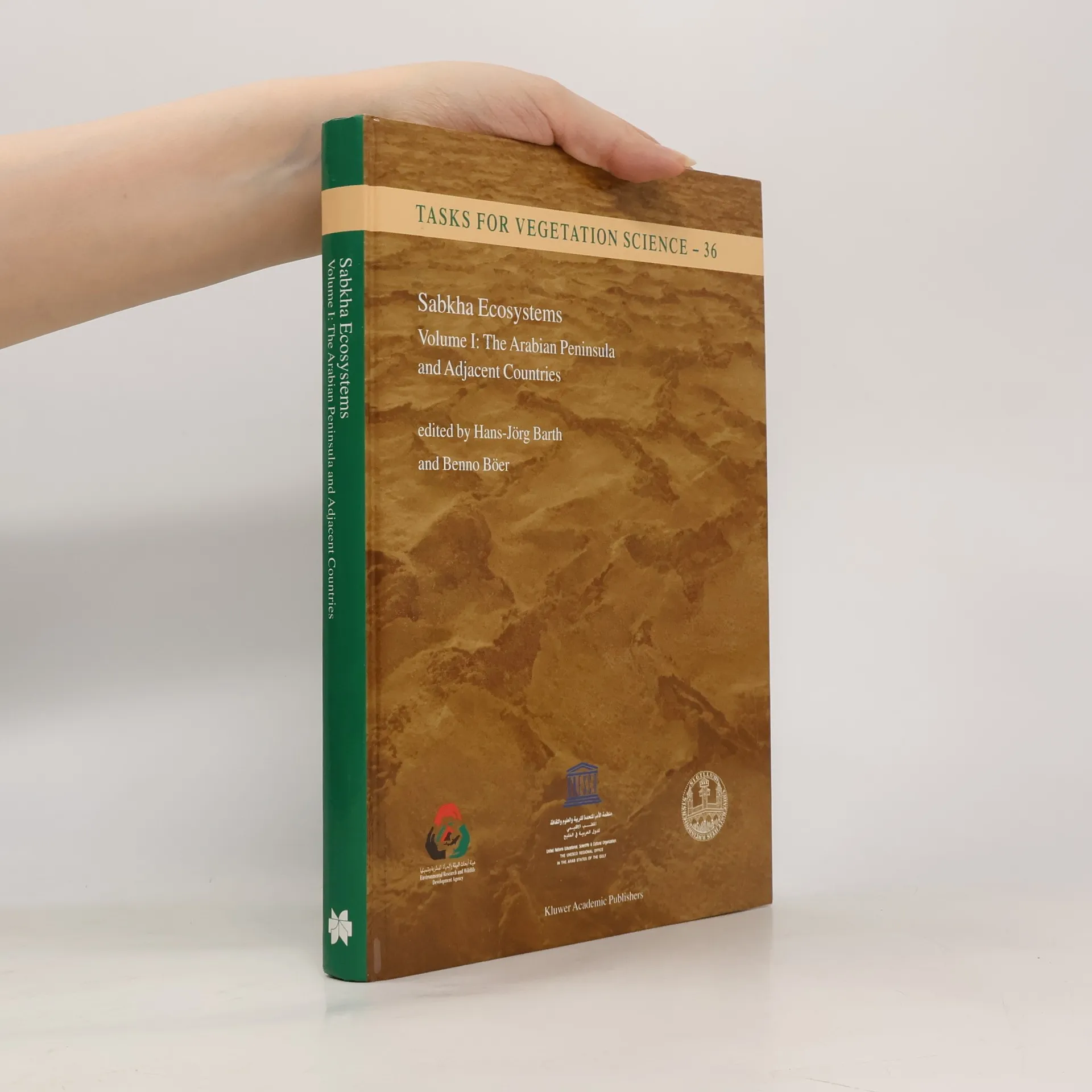


Tasks for Vegetation Science - 1: Sabkha Ecosystems
The Arabian Peninsula and Adjacent Countries
Auteurs
En savoir plus sur le livre
Research on sabkha ecology commenced only a few decades ago and sabkhat were considered as wasteland. It is only now, that environmental managers realize that sabkhat are ecosystems with a research, development, and conservation value. This multidisciplinary volume is a first comprehensive documentation of sabkha research in the Arabian peninsula region, including contributions from 16 countries. Topics covered include aspects of geology, hydrology, geomorphology, zoology, botany, ecology, ecosystem analysis, past, present, and future land use methods and development, and nature conservation at the landscape level.
Achat du livre
Tasks for Vegetation Science - 1: Sabkha Ecosystems, Hans-Jörg Barth, Benno Böer
- Langue

- Année de publication
- 2002
- Reliure
- (rigide)
Modes de paiement
Personne n'a encore évalué .
- Titre
- Tasks for Vegetation Science - 1: Sabkha Ecosystems
- Sous-titre
- The Arabian Peninsula and Adjacent Countries
- Langue
- Anglais
- Auteurs
- Hans-Jörg Barth, Benno Böer
- Éditeur
- Kluwer Academic Publishers
- Publié
- 2002
- Format
- rigide
- Pages
- 368
- ISBN10
- 1402005040
- ISBN13
- 9781402005046
- Séries
- Mots clés
- La nature, Sciences naturelles, Science, Médecine, Plantes, Technologie, Thématique écologique, Géologie, Arabie Saoudite, Hydrogéologie
- Description
- Research on sabkha ecology commenced only a few decades ago and sabkhat were considered as wasteland. It is only now, that environmental managers realize that sabkhat are ecosystems with a research, development, and conservation value. This multidisciplinary volume is a first comprehensive documentation of sabkha research in the Arabian peninsula region, including contributions from 16 countries. Topics covered include aspects of geology, hydrology, geomorphology, zoology, botany, ecology, ecosystem analysis, past, present, and future land use methods and development, and nature conservation at the landscape level.