

En savoir plus sur le livre
Neutron and synchrotron facilities, which are beyond the scale of the laboratory, and supported on a national level in countries throughout the world. These tools for probing micro- and nano-structure research and on fast dynamics research of atomic location in materials have been key in the development of new polymer-based materials. Different from several existing professional books on neutron science, this book focuses on theory, instrumentation, an applications.The book is divided into five Part 1 describes the underlying theory of neutron scattering. Part 2 describes the various instruments that exist and the various techniques used to achieve neutron scattering or bombardment. Part 3 discusses data treatment and simulation methods as well as how to assess the environment of the sample (temperature, pressure, shear, and external fields). Part 4 addresses the myriad applications of small and large molecules, biomolecules, and gels. Part 5 describes the various global neutron sources that exist and provides an overview of the different reactors.
Achat du livre
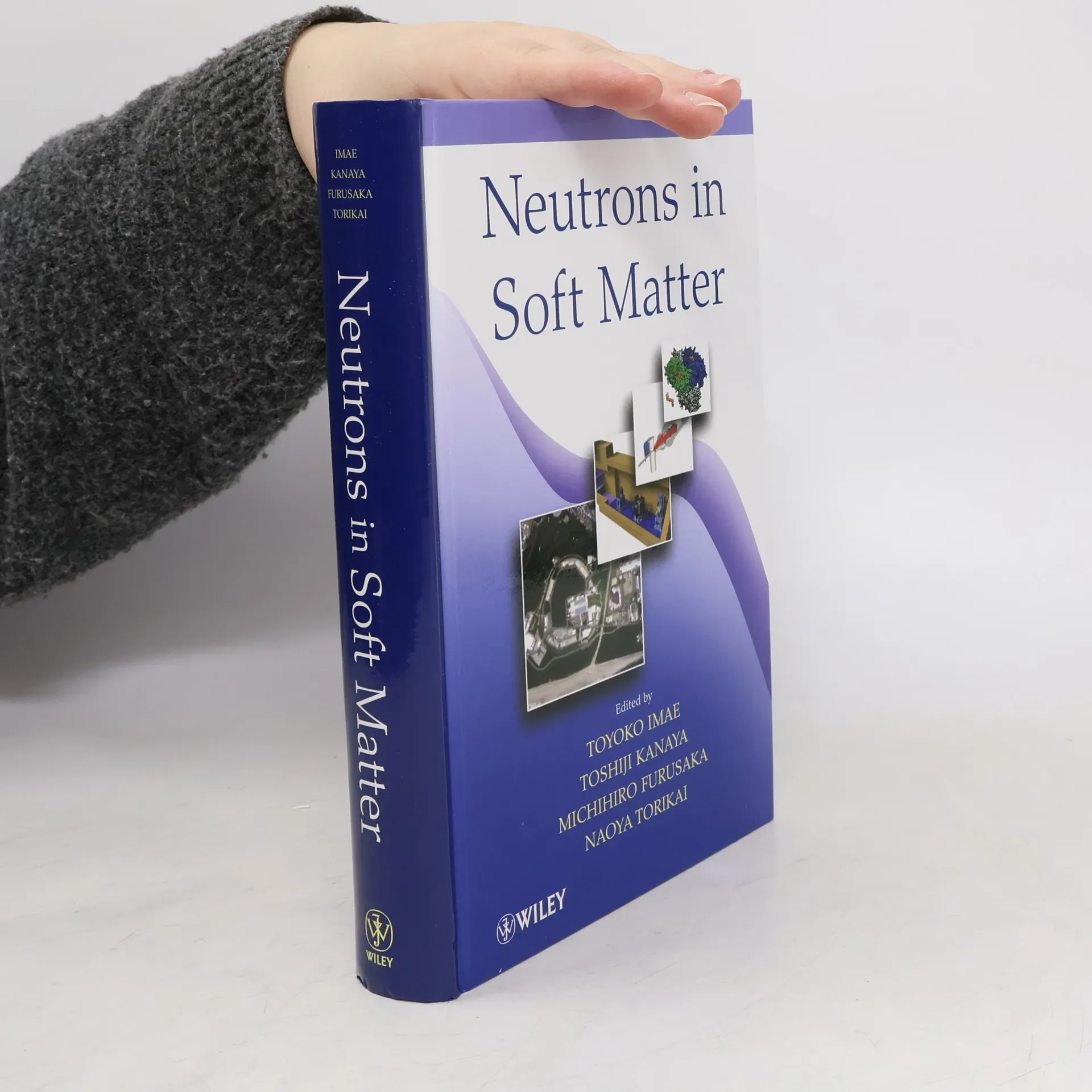
Neutrons in Soft Matter, Toyoko Imae, Toshiji Kanaya, Michihiro Furusaka, Naoya Torikai
- Langue

- Année de publication
- 2011
- Reliure
- (rigide)
Modes de paiement
Personne n'a encore évalué .
- Titre
- Neutrons in Soft Matter
- Langue
- Anglais
- Éditeur
- WILEY
- Publié
- 2011
- Format
- rigide
- Pages
- 672
- ISBN10
- 0470402520
- ISBN13
- 9780470402528
- Séries
- Description
- Neutron and synchrotron facilities, which are beyond the scale of the laboratory, and supported on a national level in countries throughout the world. These tools for probing micro- and nano-structure research and on fast dynamics research of atomic location in materials have been key in the development of new polymer-based materials. Different from several existing professional books on neutron science, this book focuses on theory, instrumentation, an applications.The book is divided into five Part 1 describes the underlying theory of neutron scattering. Part 2 describes the various instruments that exist and the various techniques used to achieve neutron scattering or bombardment. Part 3 discusses data treatment and simulation methods as well as how to assess the environment of the sample (temperature, pressure, shear, and external fields). Part 4 addresses the myriad applications of small and large molecules, biomolecules, and gels. Part 5 describes the various global neutron sources that exist and provides an overview of the different reactors.