

En savoir plus sur le livre
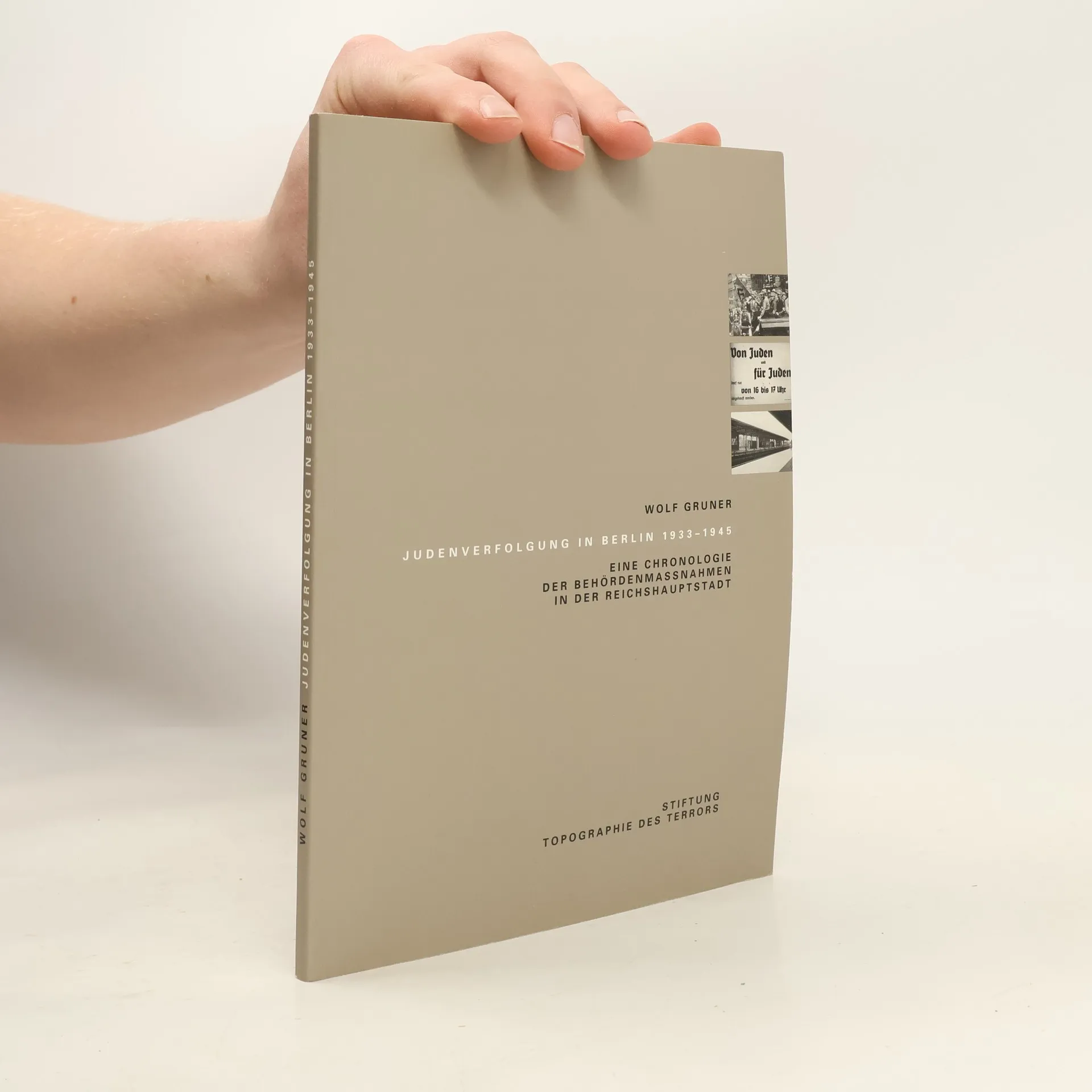
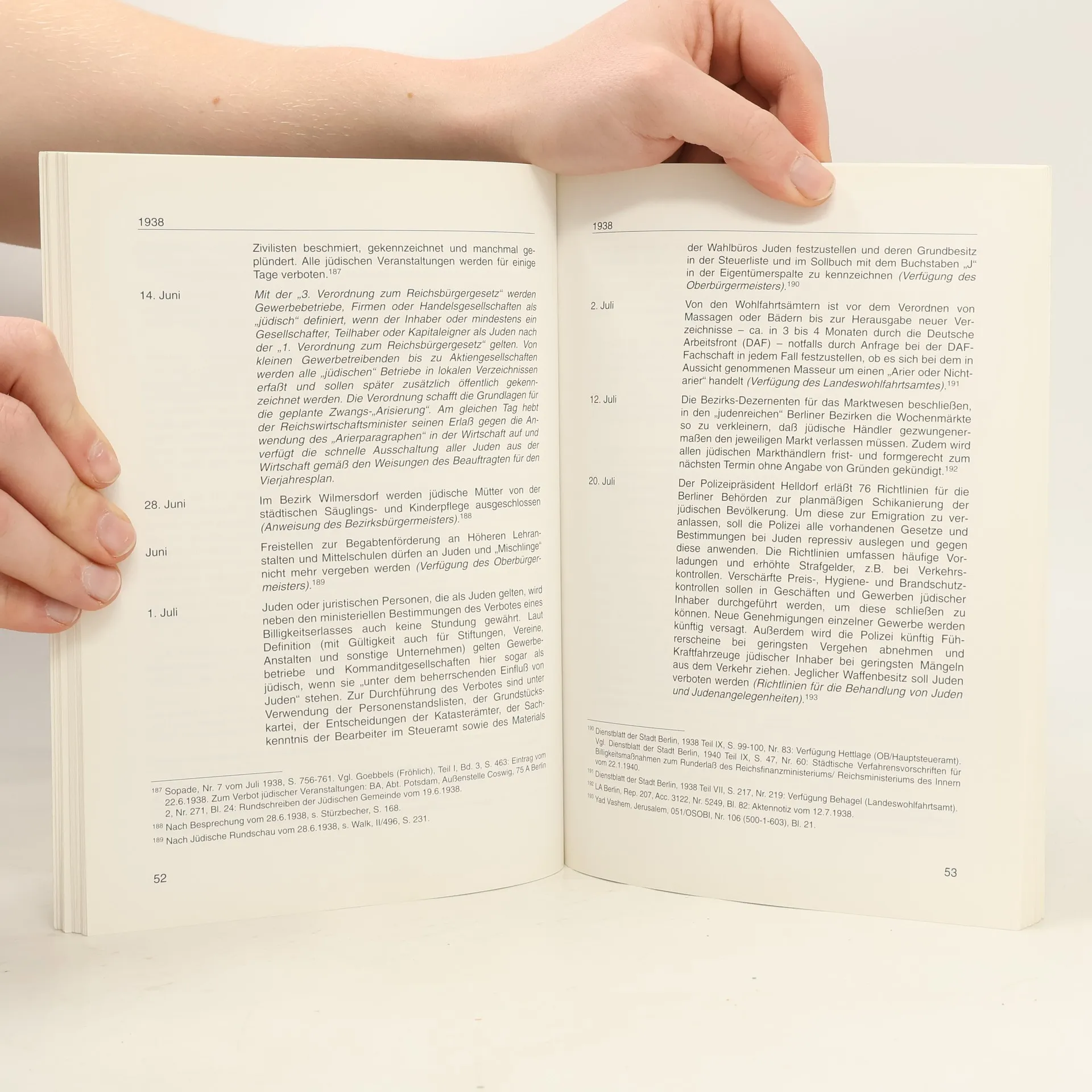
A chronology of the measures taken by the Nazi authorities in Berlin between 1933-45 against the Jews, based on material collected for the exhibition "Jüdische Geschichte in Berlin" in 1995. Stresses the active participation of the municipality, which influenced and accelerated the planning of discriminatory steps. Surveys the gradual deterioration of the situation of the Jews: the boycott, the Nuremberg Laws, the "Kristallnacht" pogrom, forced labor, resettlement in "Jewish houses", the yellow star, and deportations. In 1933, 160,564 Jews lived in Berlin; 80,000 managed to emigrate by 1939. In 1945, with the liberation, ca. 7,000 Jews lived in Berlin, among them 4,000 partners in mixed marriages, 1,900 survivors from the camps, and 1,400 who survived in hiding in Berlin.
Achat du livre
Judenverfolgung in Berlin 1933-1945, Wolf Gruner
- Langue

- Année de publication
- 1996
- Reliure
- (souple)
Modes de paiement
Personne n'a encore évalué .
- Titre
- Judenverfolgung in Berlin 1933-1945
- Sous-titre
- Eine Chronologie der Behördenmassnahmen in der Reichshauptstadt
- Langue
- Allemand
- Auteurs
- Wolf Gruner
- Éditeur
- Ed. Hentrich
- Publié
- 1996
- Format
- souple
- Pages
- 110
- ISBN10
- 3894682388
- ISBN13
- 9783894682385
- Séries
- Catégories
- Mots clés
- Thème historique, Berlin, Juifs, NSDAP
- Description
- A chronology of the measures taken by the Nazi authorities in Berlin between 1933-45 against the Jews, based on material collected for the exhibition "Jüdische Geschichte in Berlin" in 1995. Stresses the active participation of the municipality, which influenced and accelerated the planning of discriminatory steps. Surveys the gradual deterioration of the situation of the Jews: the boycott, the Nuremberg Laws, the "Kristallnacht" pogrom, forced labor, resettlement in "Jewish houses", the yellow star, and deportations. In 1933, 160,564 Jews lived in Berlin; 80,000 managed to emigrate by 1939. In 1945, with the liberation, ca. 7,000 Jews lived in Berlin, among them 4,000 partners in mixed marriages, 1,900 survivors from the camps, and 1,400 who survived in hiding in Berlin.