

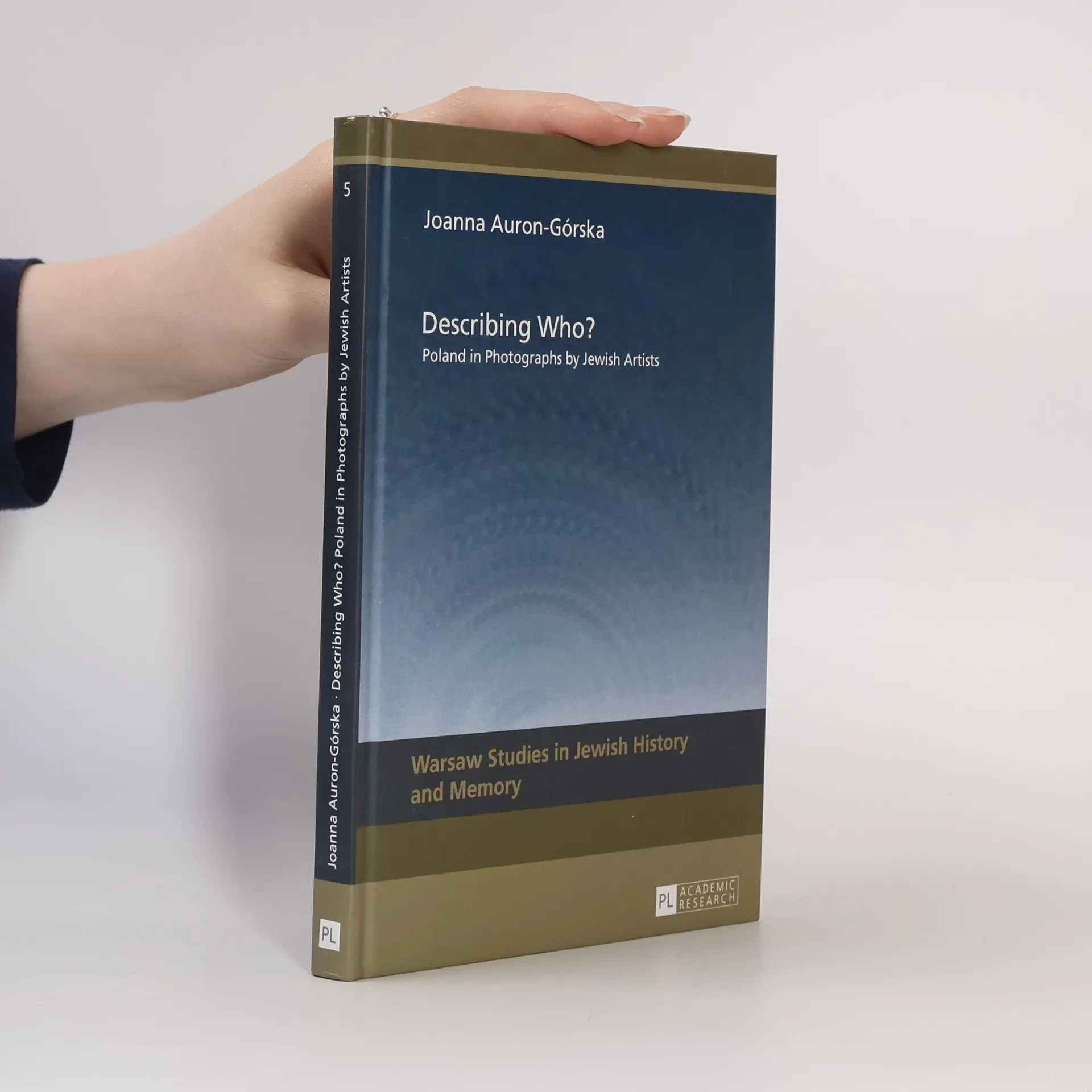
Warsaw Studies in Jewish History and Memory - 5: Describing Who?
Poland in Photographs by Jewish Artists
Auteurs
Paramètres
- 167pages
- 6 heures de lecture
En savoir plus sur le livre
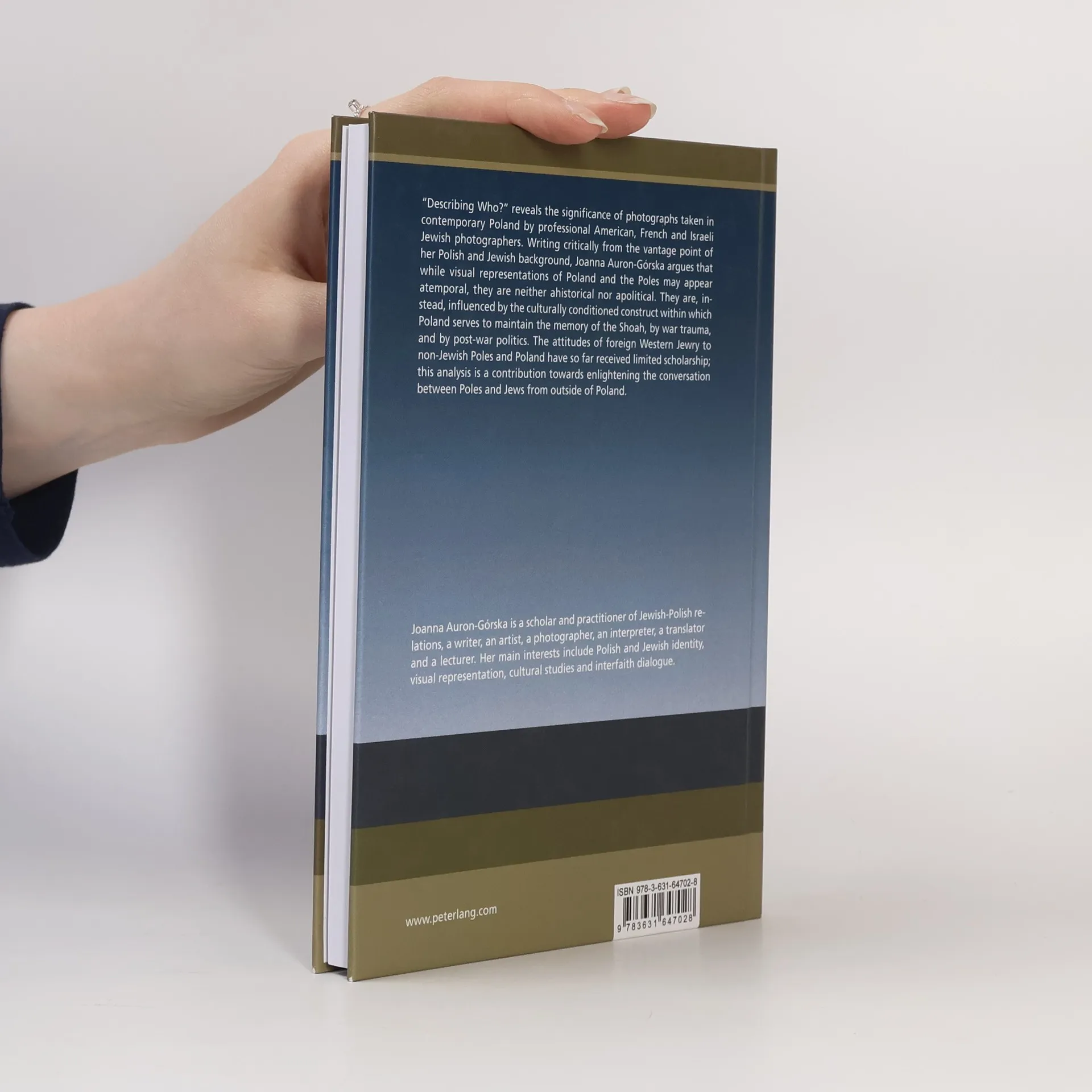
«Describing Who?» reveals the significance of photographs taken in contemporary Poland by professional American, French and Israeli Jewish photographers. Writing critically from the vantage point of her Polish and Jewish background, Joanna Auron-Górska argues that while visual representations of Poland and the Poles may appear atemporal, they are neither ahistorical nor apolitical. They are, instead, influenced by the culturally conditioned construct within which Poland serves to maintain the memory of the Shoah, by war trauma, and by post-war politics. The attitudes of foreign Western Jewry to non-Jewish Poles and Poland have so far received limited scholarship; this analysis is a contribution towards enlightening the conversation between Poles and Jews from outside of Poland.
Achat du livre
Warsaw Studies in Jewish History and Memory - 5: Describing Who?, Joanna Auron-Górska
- Langue

- Année de publication
- 2014
- Reliure
- (rigide)
Modes de paiement
Personne n'a encore évalué .
- Titre
- Warsaw Studies in Jewish History and Memory - 5: Describing Who?
- Sous-titre
- Poland in Photographs by Jewish Artists
- Langue
- Anglais
- Auteurs
- Joanna Auron-Górska
- Éditeur
- PL Acad. Research
- Publié
- 2014
- Format
- rigide
- Pages
- 167
- ISBN10
- 3631647026
- ISBN13
- 9783631647028
- Séries
- Mots clés
- Thème historique, 20e siècle, Seconde Guerre mondiale, Europe, Histoire de l'Europe, 21e siècle, Littérature juive, Critique, Artistes, Pologne, Traumatisme, Histoire sociale, Ethnologie, Europe de l'Est, Aspects sociaux, Photographie documentaire, Histoire orale
- Description
- «Describing Who?» reveals the significance of photographs taken in contemporary Poland by professional American, French and Israeli Jewish photographers. Writing critically from the vantage point of her Polish and Jewish background, Joanna Auron-Górska argues that while visual representations of Poland and the Poles may appear atemporal, they are neither ahistorical nor apolitical. They are, instead, influenced by the culturally conditioned construct within which Poland serves to maintain the memory of the Shoah, by war trauma, and by post-war politics. The attitudes of foreign Western Jewry to non-Jewish Poles and Poland have so far received limited scholarship; this analysis is a contribution towards enlightening the conversation between Poles and Jews from outside of Poland.