


Paramètres
- 258pages
- 10 heures de lecture
En savoir plus sur le livre
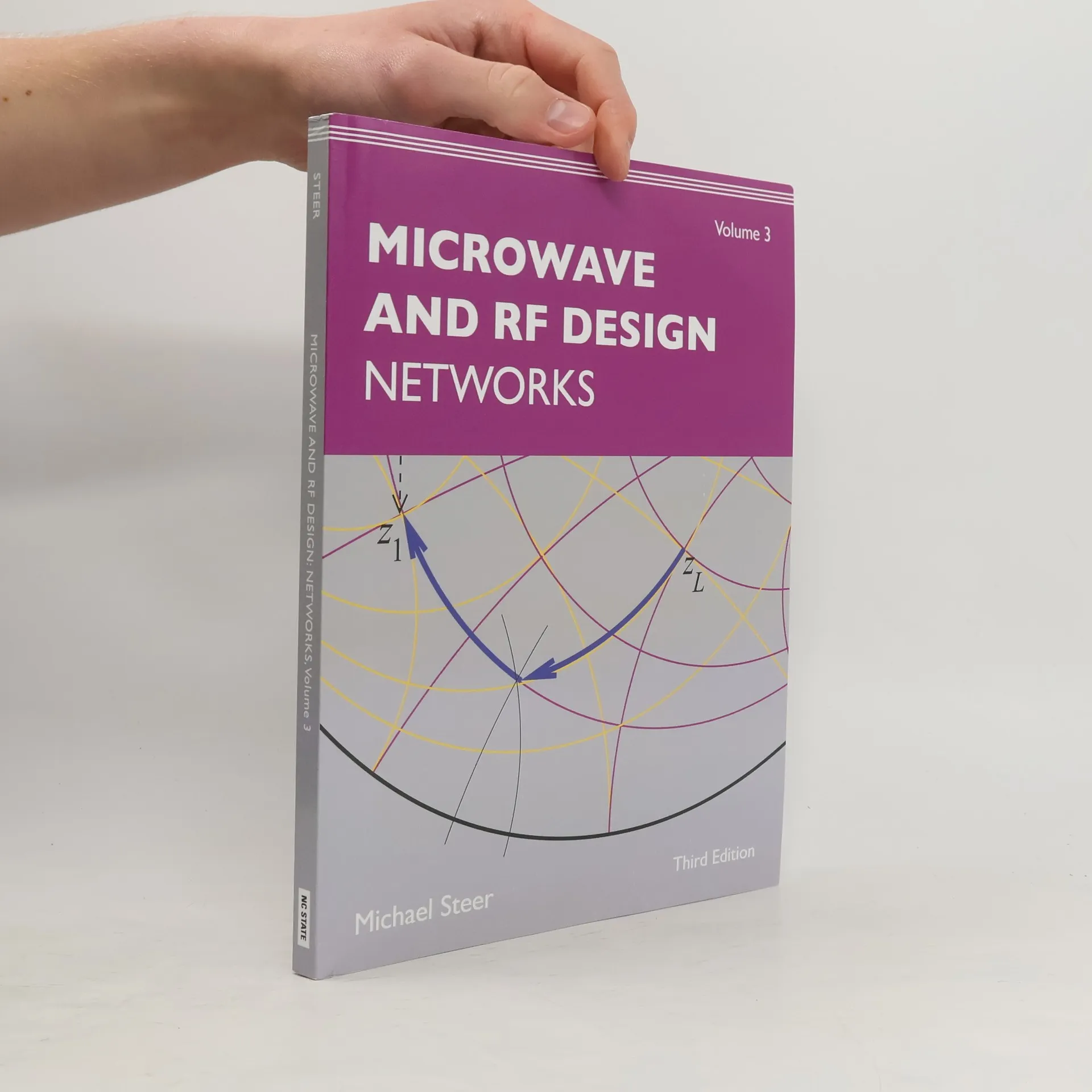
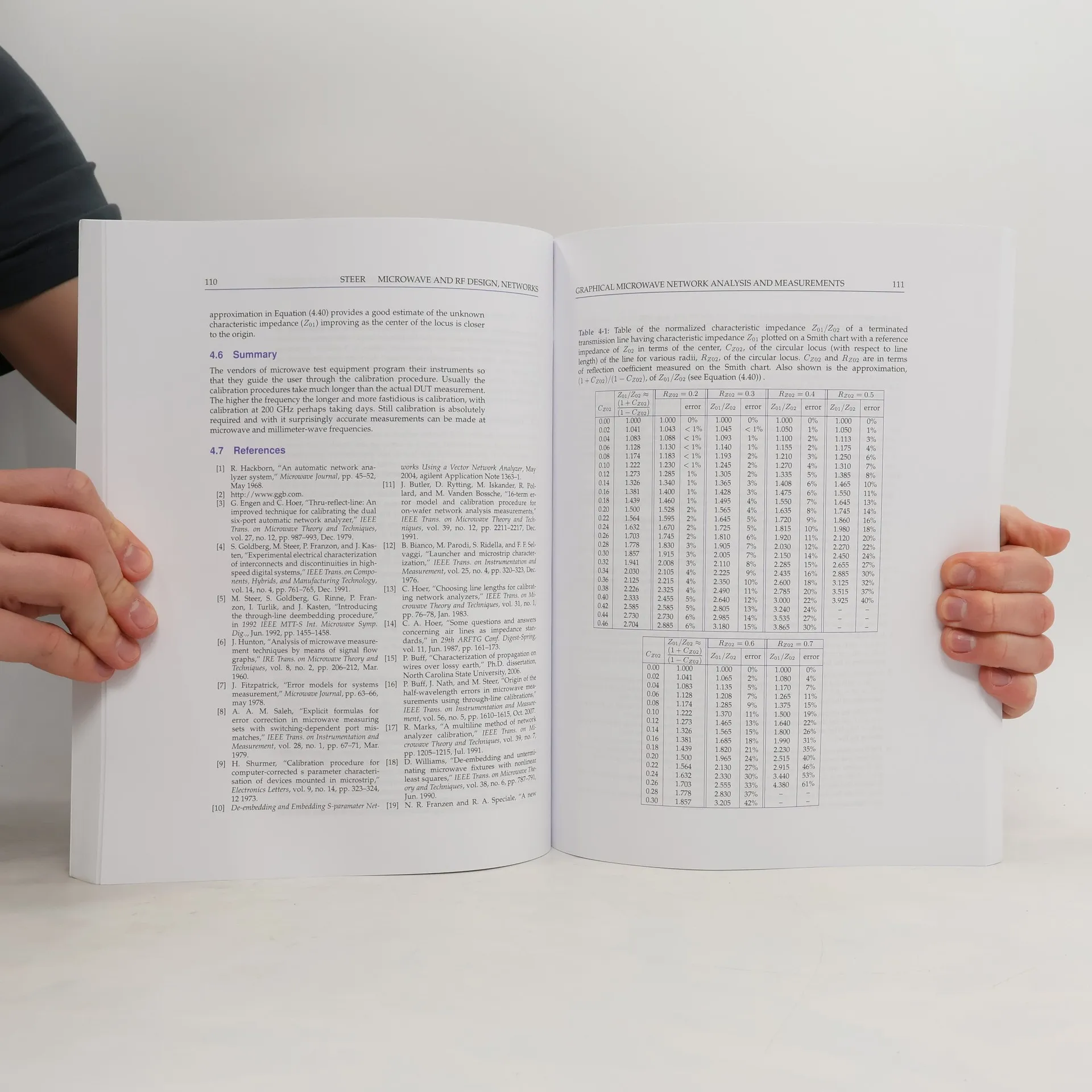
Microwave and RF Design: Networks presents the tools and techniques required to analyze and design microwave and RF circuits. Because of the finite speed of light, microwave circuits must be considered to be spatially distributed and so there is not a single ground. As such metrics that can be used to describe power flow are of most use. The topics covered include scattering parameters, signal flow graphs, and Smith charts. Acquiring expertise in these is the biggest barriers to a successful career in microwave and RF engineering. This book is suitable as both an undergraduate and graduate textbook, as well as a career-long reference book. Key Features * The third volume of a comprehensive series on microwave and RF design * Open access ebook editions are hosted by NC State University Libraries at https: // repository.lib.ncsu.edu/handle/1840.2... * 49 worked examples * An average of 30 exercises per chapter * Answers to selected exercises * Detailed coverage of Smith charts and how they are used in design and in interpretation * Extensive treatment of broadband matching * A companion book, Fundamentals of Microwave and RF Design, is suitable as a comprehensive undergraduate textbook on microwave engineering
Achat du livre
Microwave and RF Design, Volume 3, Michael Steer
- Langue

- Année de publication
- 2019
- Reliure
- (souple)
Modes de paiement
Personne n'a encore évalué .
- Titre
- Microwave and RF Design, Volume 3
- Sous-titre
- Networks - Third Edition
- Langue
- Anglais
- Auteurs
- Michael Steer
- Éditeur
- NC State University
- Publié
- 2019
- Format
- souple
- Pages
- 258
- ISBN10
- 1469656949
- ISBN13
- 9781469656946
- Séries
- Mots clés
- Manuels universitaires, Science, Technologie, Ingénierie, Électronique
- Description
- Microwave and RF Design: Networks presents the tools and techniques required to analyze and design microwave and RF circuits. Because of the finite speed of light, microwave circuits must be considered to be spatially distributed and so there is not a single ground. As such metrics that can be used to describe power flow are of most use. The topics covered include scattering parameters, signal flow graphs, and Smith charts. Acquiring expertise in these is the biggest barriers to a successful career in microwave and RF engineering. This book is suitable as both an undergraduate and graduate textbook, as well as a career-long reference book. Key Features * The third volume of a comprehensive series on microwave and RF design * Open access ebook editions are hosted by NC State University Libraries at https: // repository.lib.ncsu.edu/handle/1840.2... * 49 worked examples * An average of 30 exercises per chapter * Answers to selected exercises * Detailed coverage of Smith charts and how they are used in design and in interpretation * Extensive treatment of broadband matching * A companion book, Fundamentals of Microwave and RF Design, is suitable as a comprehensive undergraduate textbook on microwave engineering