


Paramètres
- 497pages
- 18 heures de lecture
En savoir plus sur le livre
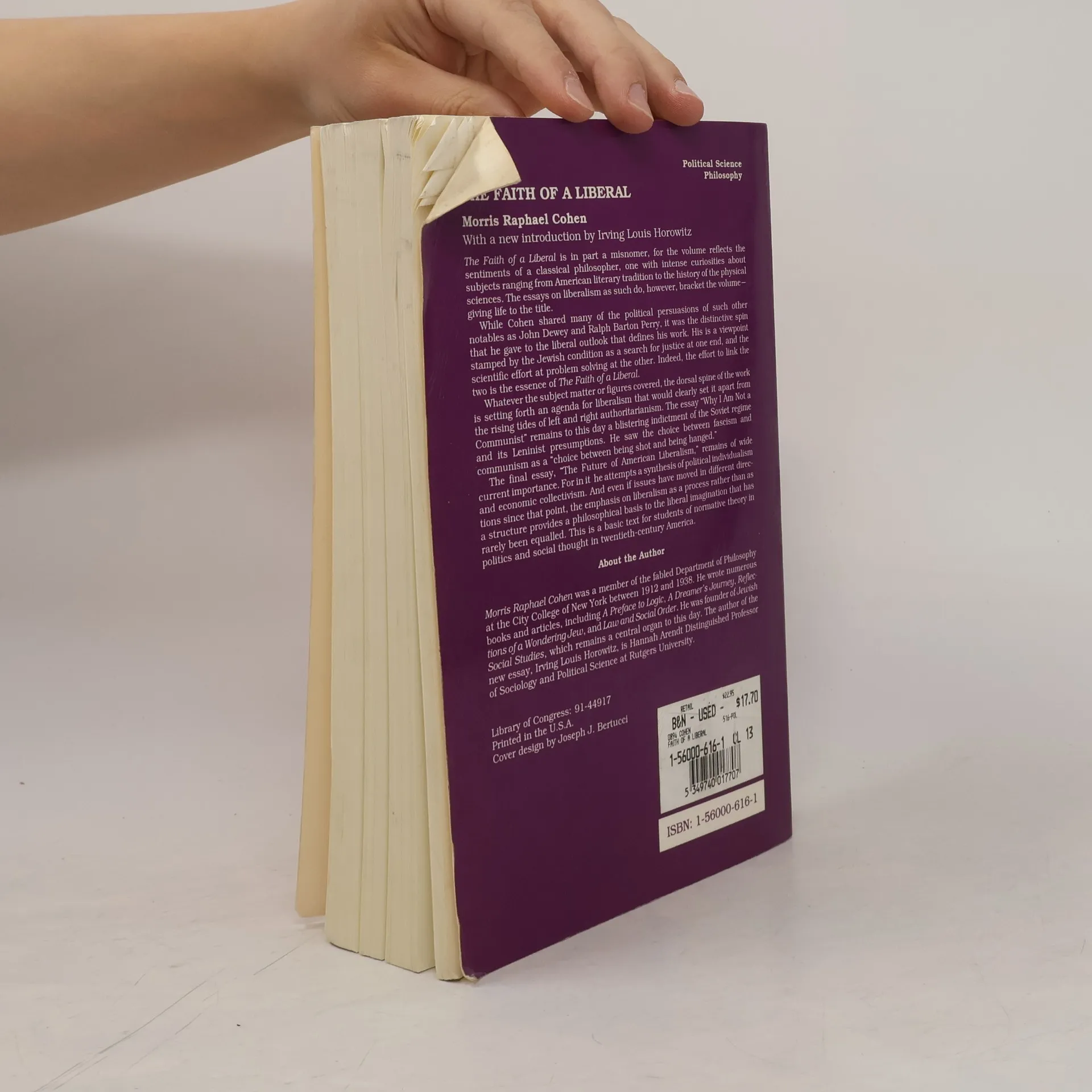
The Faith of a Liberal is somewhat of a misnomer, as the volume embodies the sentiments of a classical philosopher with deep interests ranging from American literary tradition to the history of physical sciences. While the essays on liberalism frame the work, it is Cohen's unique interpretation of the liberal outlook that truly defines it. His perspective is shaped by the Jewish condition, balancing a quest for justice with a scientific approach to problem-solving. The essence of the work lies in linking these two aspects. Regardless of the topics discussed, the core agenda of the work advocates for a form of liberalism that distinguishes itself from the encroaching authoritarianism of both left and right. The essay "Why I Am Not a Communist" serves as a powerful critique of the Soviet regime and its Leninist ideologies, framing the choice between fascism and communism as a grim dilemma. The concluding essay, "The Future of American Liberalism," remains relevant today as it seeks to reconcile political individualism with economic collectivism. Although the issues have evolved since its publication, the emphasis on liberalism as a dynamic process rather than a static structure provides a philosophical foundation for the liberal imagination that is rarely matched. This work is essential for students of normative theory in politics and social thought in twentieth-century America.
Achat du livre
The Faith of a Liberal - With a New Introduction by Irving Louis Horowitz, Morris R. Cohen, Irving Louis Horowitz
- Langue

- Année de publication
- 1993
- Reliure
- (souple)
Modes de paiement
Personne n'a encore évalué .
- Titre
- The Faith of a Liberal - With a New Introduction by Irving Louis Horowitz
- Langue
- Anglais
- Auteurs
- Morris R. Cohen, Irving Louis Horowitz
- Éditeur
- Routledge
- Publié
- 1993
- Format
- souple
- Pages
- 497
- ISBN10
- 1560006161
- ISBN13
- 9781560006169
- Séries
- Catégories
- Mots clés
- Problèmes sociaux, Littérature juive
- Description
- The Faith of a Liberal is somewhat of a misnomer, as the volume embodies the sentiments of a classical philosopher with deep interests ranging from American literary tradition to the history of physical sciences. While the essays on liberalism frame the work, it is Cohen's unique interpretation of the liberal outlook that truly defines it. His perspective is shaped by the Jewish condition, balancing a quest for justice with a scientific approach to problem-solving. The essence of the work lies in linking these two aspects. Regardless of the topics discussed, the core agenda of the work advocates for a form of liberalism that distinguishes itself from the encroaching authoritarianism of both left and right. The essay "Why I Am Not a Communist" serves as a powerful critique of the Soviet regime and its Leninist ideologies, framing the choice between fascism and communism as a grim dilemma. The concluding essay, "The Future of American Liberalism," remains relevant today as it seeks to reconcile political individualism with economic collectivism. Although the issues have evolved since its publication, the emphasis on liberalism as a dynamic process rather than a static structure provides a philosophical foundation for the liberal imagination that is rarely matched. This work is essential for students of normative theory in politics and social thought in twentieth-century America.