

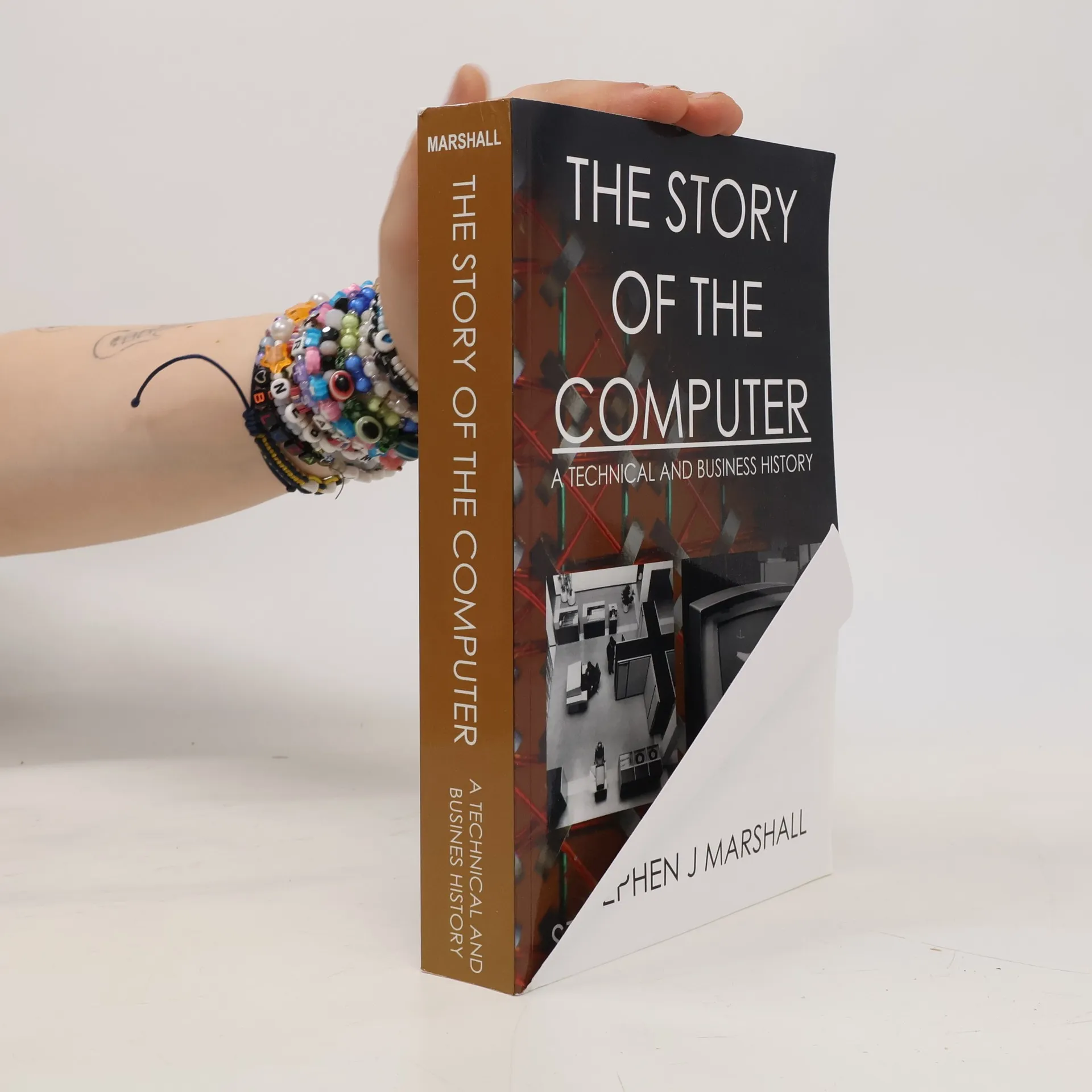
The Story of the Computer
A Technical and Business History
Auteurs
En savoir plus sur le livre
Electronic computers are arguably the greatest invention of the 20th century, enabling many technologies that the developed world relies on today. Their societal impact is immense, and the story of their creation encompasses significant advances in engineering, mathematics, and the physical sciences over the past 400 years. This comprehensive treatment examines the subject from both technical and business perspectives, charting the complex evolutionary process that led to modern computers. It highlights key innovations and discoveries that contributed to the knowledge pool, considering both business drivers and technical breakthroughs. The narrative is structured into four parts. The first part explores humanity's early attempts to automate calculations through mechanical, electromechanical, and electronic means. The second part details the shift from sequence-controlled calculators to stored-program computers and the emergence of the computer industry. In the third part, the industry matures, with new market segments for faster or smaller computers arising from solid-state components. The final part brings the story to the present, covering the rise of mass-produced personal computers, computer graphics, and the World Wide Web. Written in an accessible style with illustrations, this work offers a rewarding read for both specialists and general readers.
Achat du livre
The Story of the Computer, Stephen J Marshall
- Langue

- Année de publication
- 2017
- Reliure
- (souple)
Modes de paiement
Personne n'a encore évalué .
- Titre
- The Story of the Computer
- Sous-titre
- A Technical and Business History
- Langue
- Anglais
- Auteurs
- Stephen J Marshall
- Publié
- 2017
- Format
- souple
- Pages
- 592
- ISBN10
- 1546849076
- ISBN13
- 9781546849070
- Séries
- Mots clés
- Thème historique, Commerce, Technologie
- Description
- Electronic computers are arguably the greatest invention of the 20th century, enabling many technologies that the developed world relies on today. Their societal impact is immense, and the story of their creation encompasses significant advances in engineering, mathematics, and the physical sciences over the past 400 years. This comprehensive treatment examines the subject from both technical and business perspectives, charting the complex evolutionary process that led to modern computers. It highlights key innovations and discoveries that contributed to the knowledge pool, considering both business drivers and technical breakthroughs. The narrative is structured into four parts. The first part explores humanity's early attempts to automate calculations through mechanical, electromechanical, and electronic means. The second part details the shift from sequence-controlled calculators to stored-program computers and the emergence of the computer industry. In the third part, the industry matures, with new market segments for faster or smaller computers arising from solid-state components. The final part brings the story to the present, covering the rise of mass-produced personal computers, computer graphics, and the World Wide Web. Written in an accessible style with illustrations, this work offers a rewarding read for both specialists and general readers.