

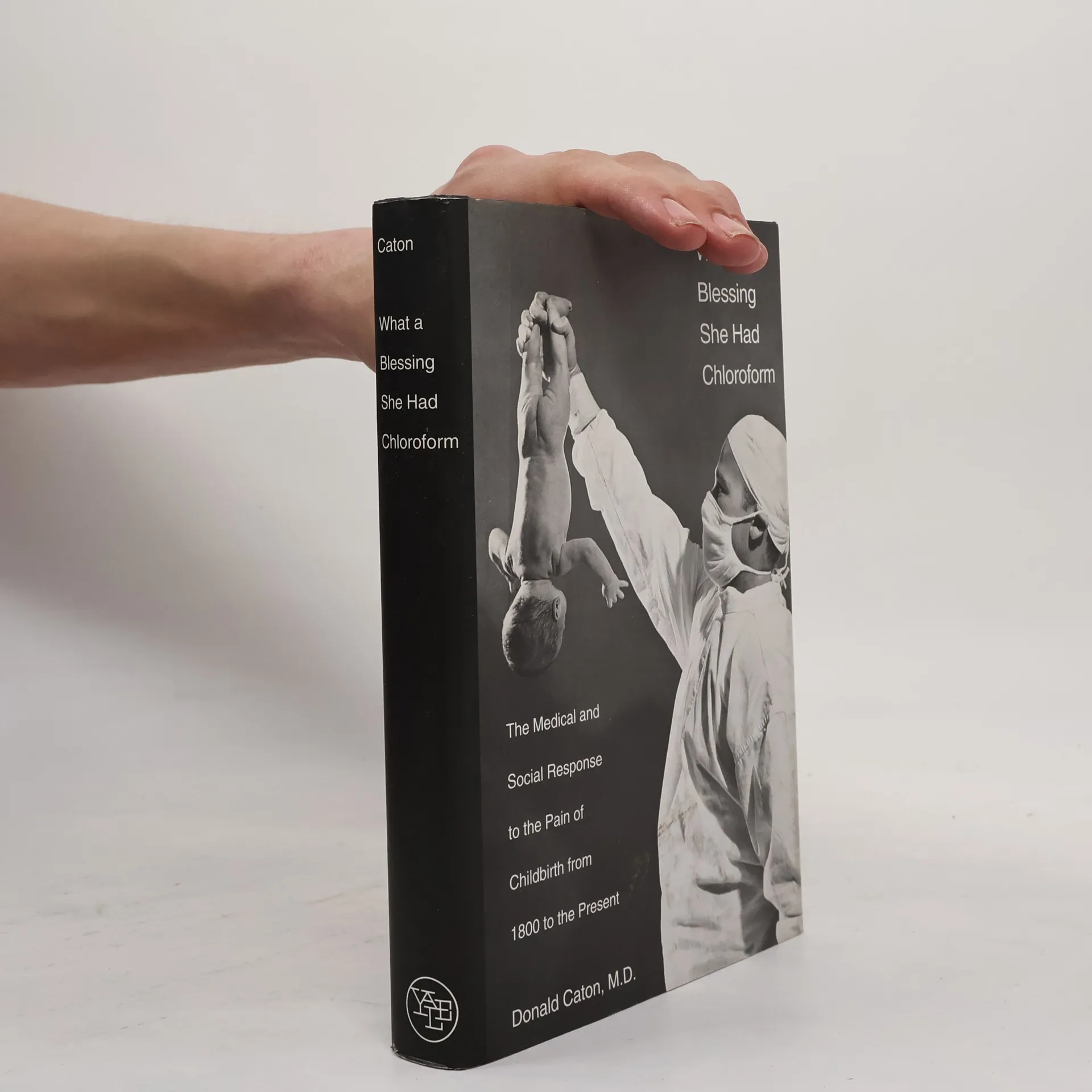
What a Blessing She Had Chloroform
The Medical and Social Response to the Pain of Childbirth from 1800 to the Present
Auteurs
En savoir plus sur le livre
This book describes in fascinating detail the history of the use of anesthesia in childbirth and in so doing offers a unique perspective on the interaction between medical science and social values. Dr. Donald Caton traces the responses of physicians and their patients to the pain of childbirth from the popularization of anesthesia to the natural childbirth movement and beyond. He finds that physicians discovered what could be done to manage pain, and patients decided what would be done.Dr. Caton discusses how nineteenth-century physicians began to think and act like scientists; how people learned to reject the belief that pain and suffering are inevitable components of life; and how a later generation came to think that pain may have important functions for the individual and society. Finally he shows the extent to which cultural and social values have influenced "scientific" medical decisions.
Achat du livre
What a Blessing She Had Chloroform, Donald Caton
- Langue

- Année de publication
- 1999
- Reliure
- (rigide)
Modes de paiement
Personne n'a encore évalué .
- Titre
- What a Blessing She Had Chloroform
- Sous-titre
- The Medical and Social Response to the Pain of Childbirth from 1800 to the Present
- Langue
- Anglais
- Auteurs
- Donald Caton
- Éditeur
- Yale University Press
- Publié
- 1999
- Format
- rigide
- Pages
- 288
- ISBN10
- 0300075979
- ISBN13
- 9780300075977
- Séries
- Catégories
- Mots clés
- Thème historique, Relations, Médecine, 20e siècle, Histoire sociale, Douleur, Prévention, Anesthésie
- Description
- This book describes in fascinating detail the history of the use of anesthesia in childbirth and in so doing offers a unique perspective on the interaction between medical science and social values. Dr. Donald Caton traces the responses of physicians and their patients to the pain of childbirth from the popularization of anesthesia to the natural childbirth movement and beyond. He finds that physicians discovered what could be done to manage pain, and patients decided what would be done.Dr. Caton discusses how nineteenth-century physicians began to think and act like scientists; how people learned to reject the belief that pain and suffering are inevitable components of life; and how a later generation came to think that pain may have important functions for the individual and society. Finally he shows the extent to which cultural and social values have influenced "scientific" medical decisions.