


En savoir plus sur le livre
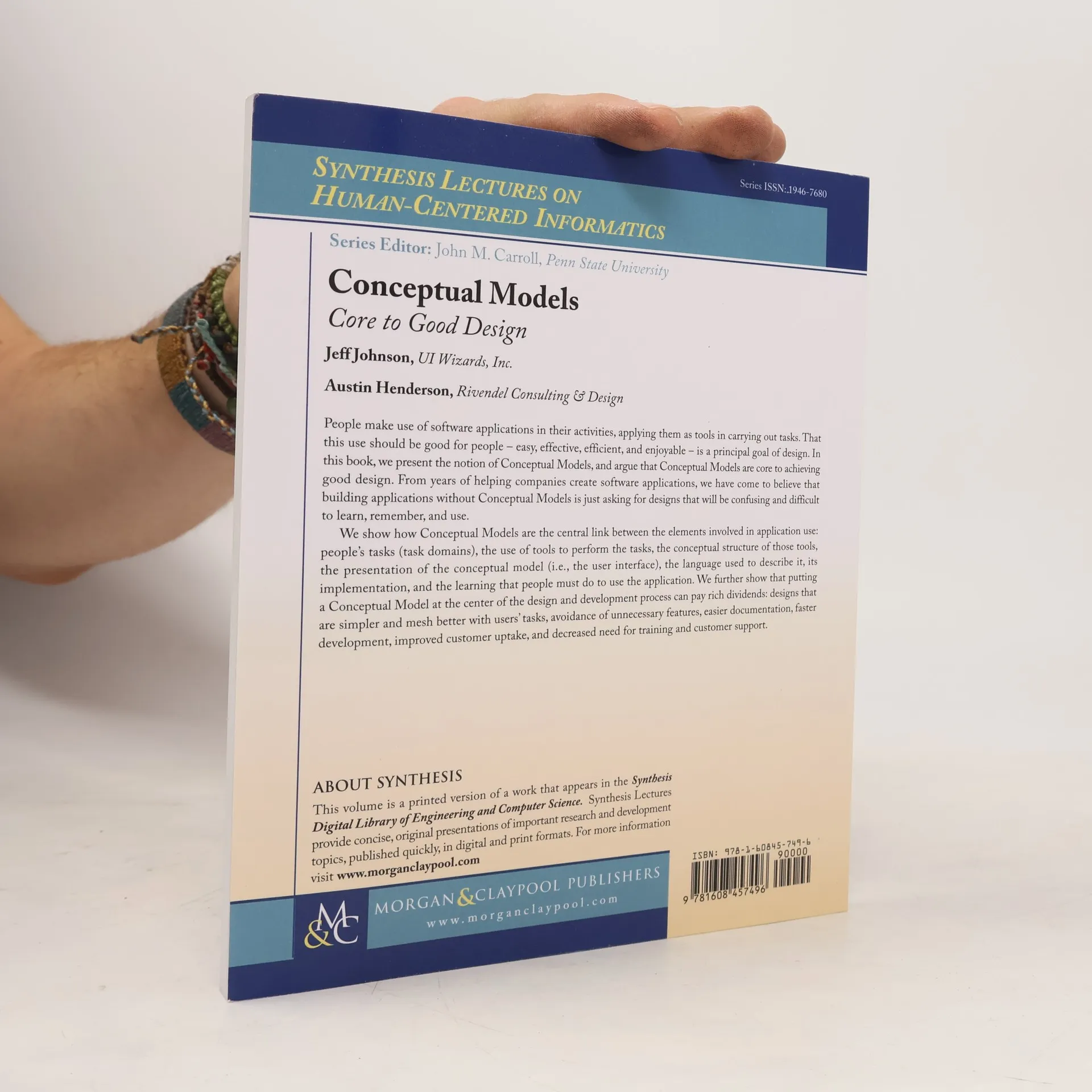
People make use of software applications in their activities, applying them as tools in carrying out tasks. That this use should be good for people--easy, effective, efficient, and enjoyable--is a principal goal of design. In this book, we present the notion of Conceptual Models, and argue that Conceptual Models are core to achieving good design. From years of helping companies create software applications, we have come to believe that building applications without Conceptual Models is just asking for designs that will be confusing and difficult to learn, remember, and use.We show how Conceptual Models are the central link between the elements involved in application use: people's tasks (task domains), the use of tools to perform the tasks, the conceptual structure of those tools, the presentation of the conceptual model (i.e., the user interface), the language used to describe it, its implementation, and the learning that people must do to use the application. We further show that putting a Conceptual Model at the center of the design and development process can pay rich dividends: designs that are simpler and mesh better with users' tasks, avoidance of unnecessary features, easier documentation, faster development, improved customer uptake, and decreased need for training and customer support.
Achat du livre
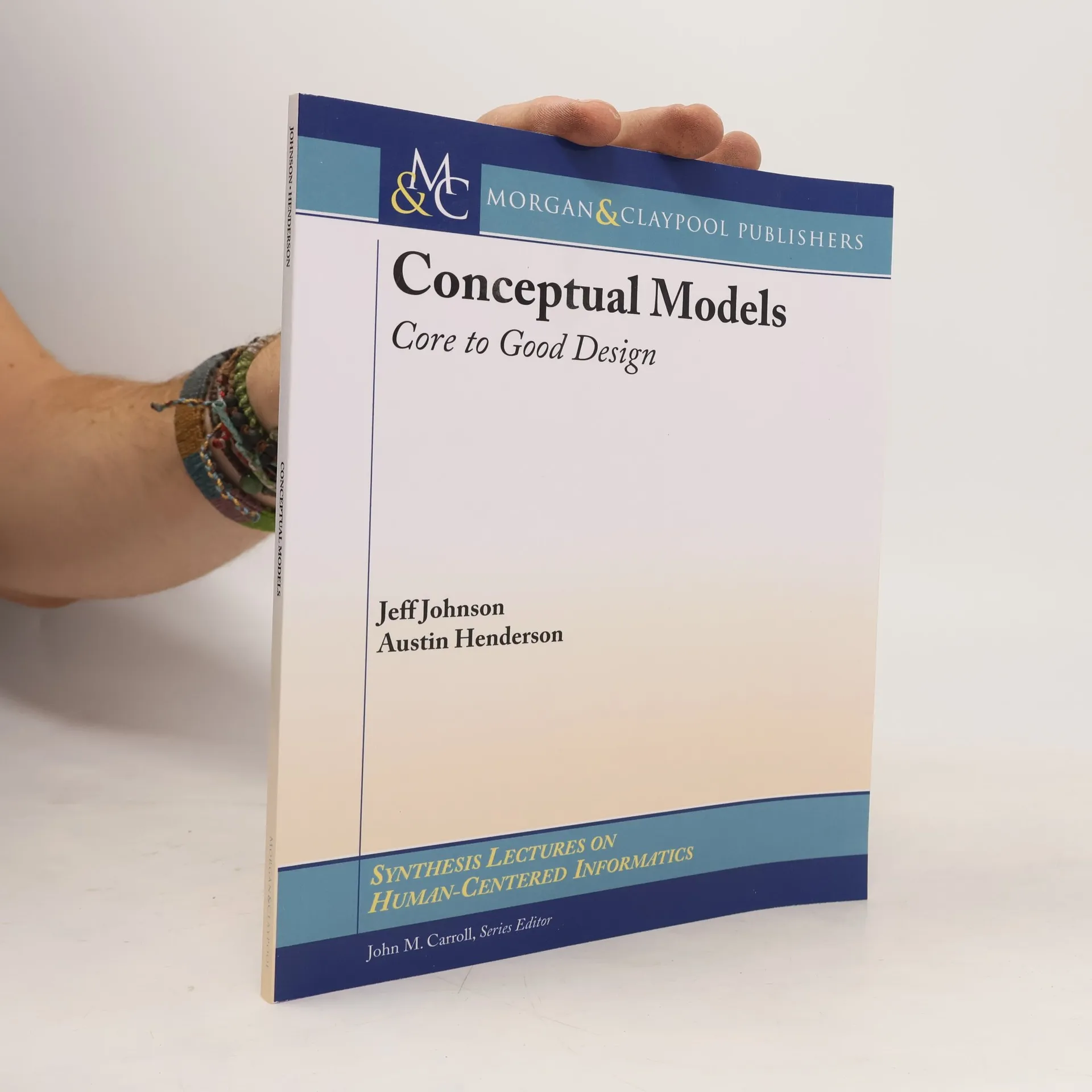
Synthesis Lectures on Human-Centered Informatics: Conceptual Models, Jeff Johnson, Austin Henderson, John M. Carroll
- Langue

- Année de publication
- 2011
- Reliure
- (souple)
Modes de paiement
Personne n'a encore évalué .
- Titre
- Synthesis Lectures on Human-Centered Informatics: Conceptual Models
- Sous-titre
- Core to Good Design
- Langue
- Anglais
- Auteurs
- Jeff Johnson, Austin Henderson, John M. Carroll
- Éditeur
- Morgan & Claypool Publishers
- Publié
- 2011
- Format
- souple
- Pages
- 110
- ISBN10
- 1608457494
- ISBN13
- 9781608457496
- Séries
- Catégories
- Mots clés
- Description
- People make use of software applications in their activities, applying them as tools in carrying out tasks. That this use should be good for people--easy, effective, efficient, and enjoyable--is a principal goal of design. In this book, we present the notion of Conceptual Models, and argue that Conceptual Models are core to achieving good design. From years of helping companies create software applications, we have come to believe that building applications without Conceptual Models is just asking for designs that will be confusing and difficult to learn, remember, and use.We show how Conceptual Models are the central link between the elements involved in application use: people's tasks (task domains), the use of tools to perform the tasks, the conceptual structure of those tools, the presentation of the conceptual model (i.e., the user interface), the language used to describe it, its implementation, and the learning that people must do to use the application. We further show that putting a Conceptual Model at the center of the design and development process can pay rich dividends: designs that are simpler and mesh better with users' tasks, avoidance of unnecessary features, easier documentation, faster development, improved customer uptake, and decreased need for training and customer support.