



Paramètres
- 340pages
- 12 heures de lecture
En savoir plus sur le livre
Websites, like any software system, accumulate “cruft” over time, leading to slower performance, broken links, and various compatibility and security issues. While rebuilding from scratch is ideal, it's often impractical due to time and budget constraints. Fortunately, refactoring offers a solution. This guide details how to enhance any website or application using proven techniques and tools from software development. The author provides insights for both programmers and non-programmers, demonstrating how to refactor for improved reliability, performance, usability, security, accessibility, and search engine optimization. Step-by-step instructions help migrate outdated code to modern standards like XHTML, CSS, and REST, addressing common issues such as presentation-based markup and “tag soup.” The book features an extensive catalog of detailed refactorings and practical recipes organized for quick access, enabling users to enhance site performance efficiently and ensure easier maintenance and scalability in the future. Key topics include identifying problematic Web code, transforming old HTML into valid XHTML, modernizing layouts with CSS, updating Web forms, and restructuring sites without altering user-facing URLs. This resource is invaluable for Web designers, developers, project managers, and anyone involved in maintaining or updating websites, particularly those looking to refresh their knowledge of current standar
Achat du livre
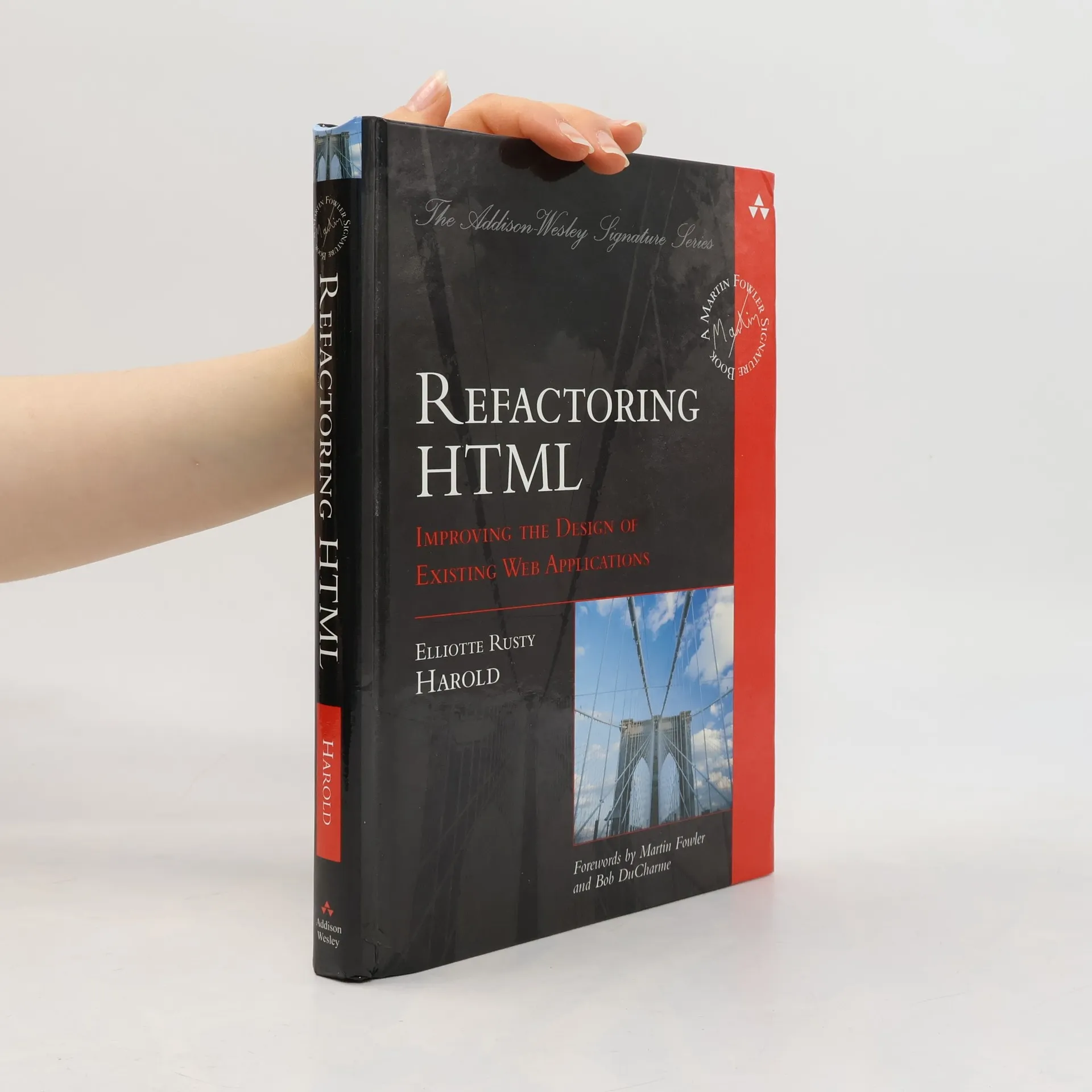
Refactoring HTML, Elliotte Rusty Harold, Martin Fowler, Bob DuCharme
- Langue

- Année de publication
- 2008
- Reliure
- (rigide),
- État du livre
- Bon
- Prix
- 2,79 €
Modes de paiement
Personne n'a encore évalué .
- Titre
- Refactoring HTML
- Sous-titre
- Improving the Design of Existing Web Applications
- Langue
- Anglais
- Éditeur
- Addison-Wesley Professional
- Publié
- 2008
- Format
- rigide
- Pages
- 340
- ISBN10
- 0321503635
- ISBN13
- 9780321503633
- Séries
- Catégories
- Mots clés
- Architecture, Technologie, Logiciel
- Description
- Websites, like any software system, accumulate “cruft” over time, leading to slower performance, broken links, and various compatibility and security issues. While rebuilding from scratch is ideal, it's often impractical due to time and budget constraints. Fortunately, refactoring offers a solution. This guide details how to enhance any website or application using proven techniques and tools from software development. The author provides insights for both programmers and non-programmers, demonstrating how to refactor for improved reliability, performance, usability, security, accessibility, and search engine optimization. Step-by-step instructions help migrate outdated code to modern standards like XHTML, CSS, and REST, addressing common issues such as presentation-based markup and “tag soup.” The book features an extensive catalog of detailed refactorings and practical recipes organized for quick access, enabling users to enhance site performance efficiently and ensure easier maintenance and scalability in the future. Key topics include identifying problematic Web code, transforming old HTML into valid XHTML, modernizing layouts with CSS, updating Web forms, and restructuring sites without altering user-facing URLs. This resource is invaluable for Web designers, developers, project managers, and anyone involved in maintaining or updating websites, particularly those looking to refresh their knowledge of current standar