



Paramètres
- 897pages
- 32 heures de lecture
En savoir plus sur le livre
A crisis looms for those relying on math and science, as the classical model of probability has been faltering, exposing its limitations across various fields such as economics and epidemiology. A new approach has uncovered a non-classical principle underlying numerous 'anomalous' laws, including Pareto’s law of elite incomes, Zipf’s law of word frequencies, and Moore’s law of computing costs. These laws illustrate a general pattern known as the "decline effect," where as systems age or expand, the rules of probability shift. This shift leads to increased entropy, rarer rare items, and declining average performance measures. The human implications of this decline can be both positive—such as reduced costs and lower epidemic mortality—and negative, including diminished customer loyalty and decreased efficiency. Notably, all epidemic diseases show a decline in infectiousness and lethality over time. For instance, HIV-AIDS transformed from a highly fatal disease to a manageable condition, and COVID-19's death rate significantly decreased from 7 percent in early 2020 to under 2 percent by 2022. Additionally, hereditary dynasties and political parties have experienced smooth declines in lifespan and control, respectively, highlighting the pervasive nature of this mathematical pattern.
Achat du livre
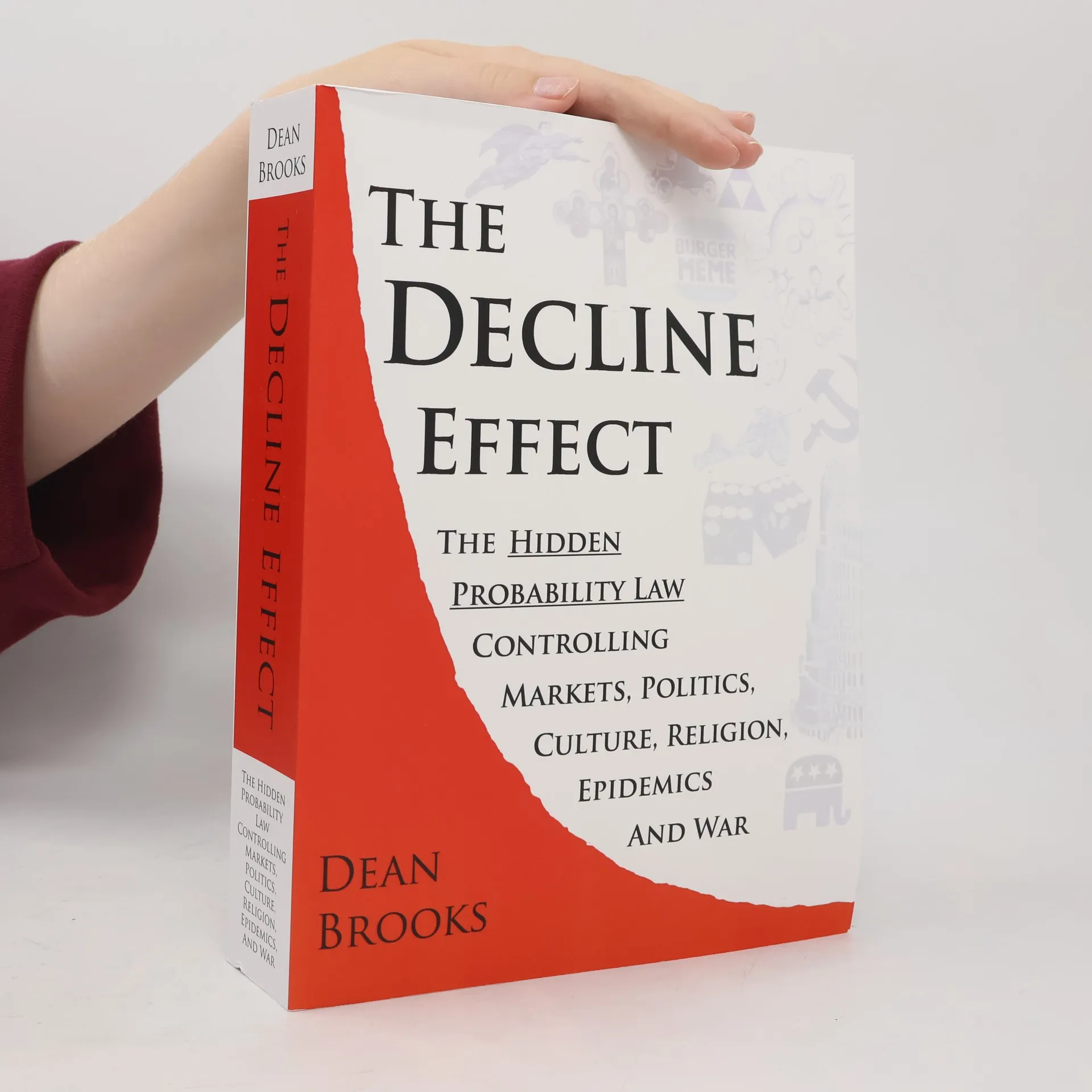
The Decline Effect, Dean Brooks
- Langue

- Année de publication
- 2023
- Reliure
- (souple),
- État du livre
- Bon
- Prix
- 7,99 €
Modes de paiement
Personne n'a encore évalué .
- Titre
- The Decline Effect
- Sous-titre
- The Hidden Probability Law Controlling Markets, Politics, Culture, Religion, Epidemics And War
- Langue
- Anglais
- Auteurs
- Dean Brooks
- Éditeur
- FriesenPress
- Publié
- 2023
- Format
- souple
- Pages
- 897
- ISBN10
- 1039151876
- ISBN13
- 9781039151871
- Séries
- Catégories
- Mots clés
- Commerce, Science, Prognostique, Cybernétique
- Description
- A crisis looms for those relying on math and science, as the classical model of probability has been faltering, exposing its limitations across various fields such as economics and epidemiology. A new approach has uncovered a non-classical principle underlying numerous 'anomalous' laws, including Pareto’s law of elite incomes, Zipf’s law of word frequencies, and Moore’s law of computing costs. These laws illustrate a general pattern known as the "decline effect," where as systems age or expand, the rules of probability shift. This shift leads to increased entropy, rarer rare items, and declining average performance measures. The human implications of this decline can be both positive—such as reduced costs and lower epidemic mortality—and negative, including diminished customer loyalty and decreased efficiency. Notably, all epidemic diseases show a decline in infectiousness and lethality over time. For instance, HIV-AIDS transformed from a highly fatal disease to a manageable condition, and COVID-19's death rate significantly decreased from 7 percent in early 2020 to under 2 percent by 2022. Additionally, hereditary dynasties and political parties have experienced smooth declines in lifespan and control, respectively, highlighting the pervasive nature of this mathematical pattern.