

Paramètres
- 288pages
- 11 heures de lecture
En savoir plus sur le livre
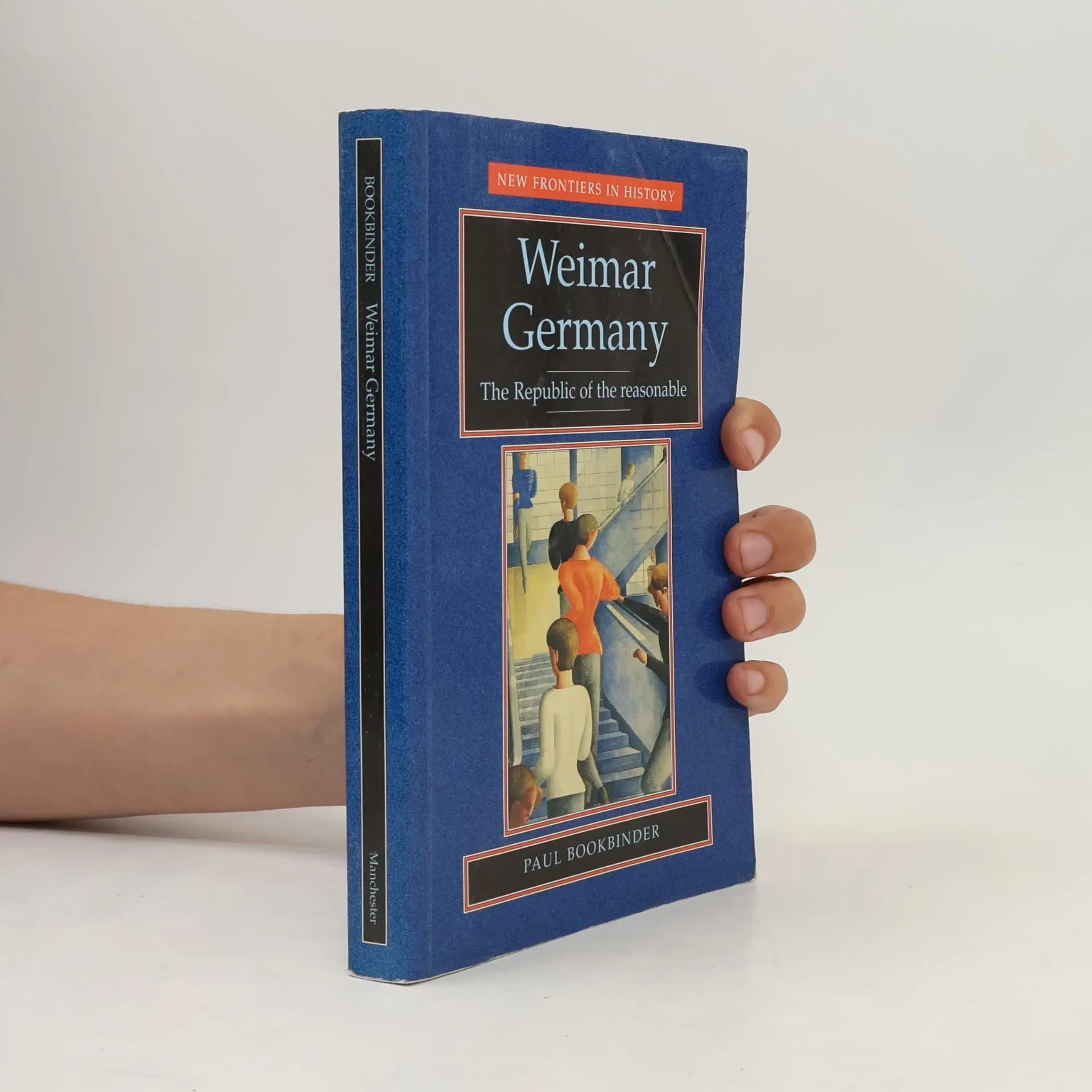
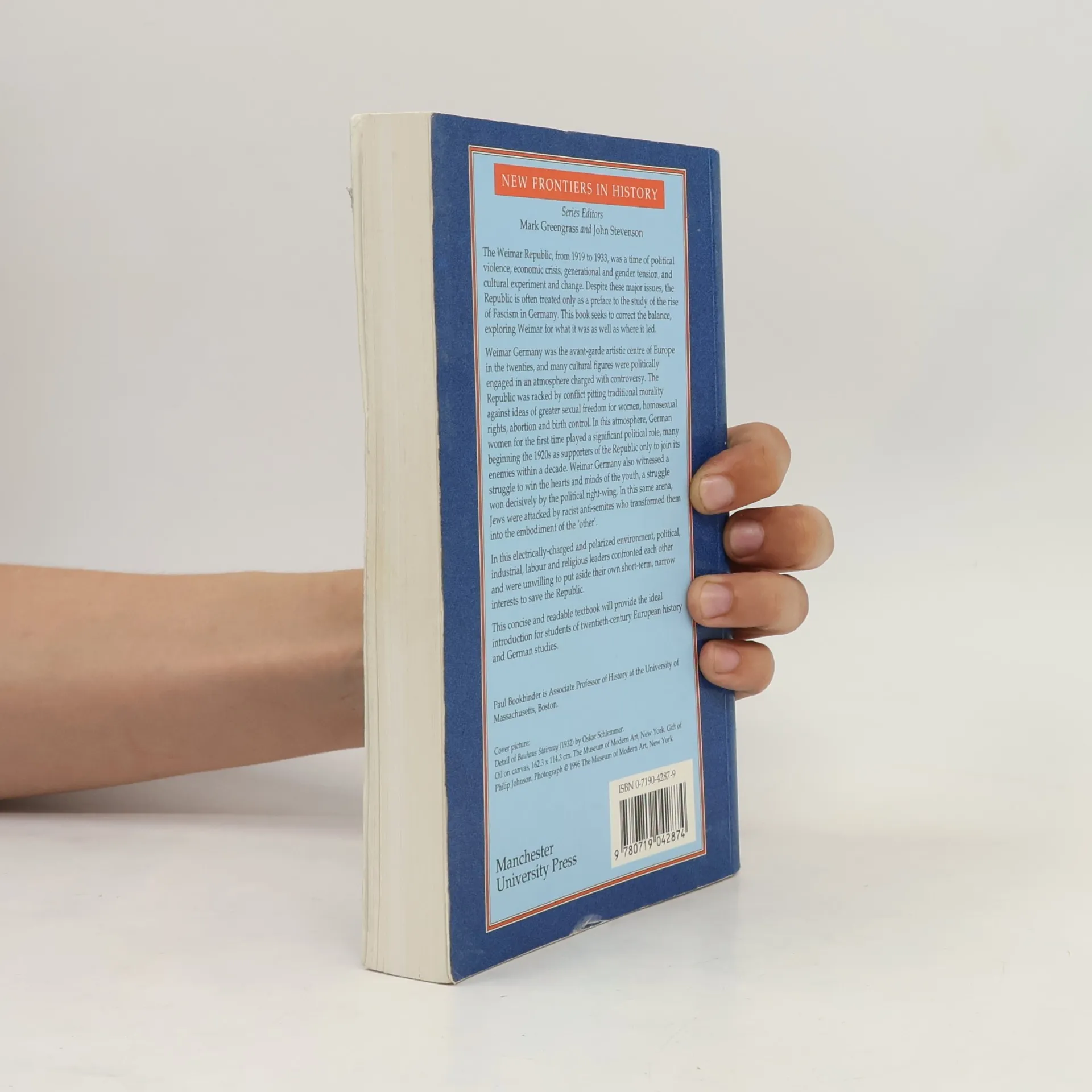
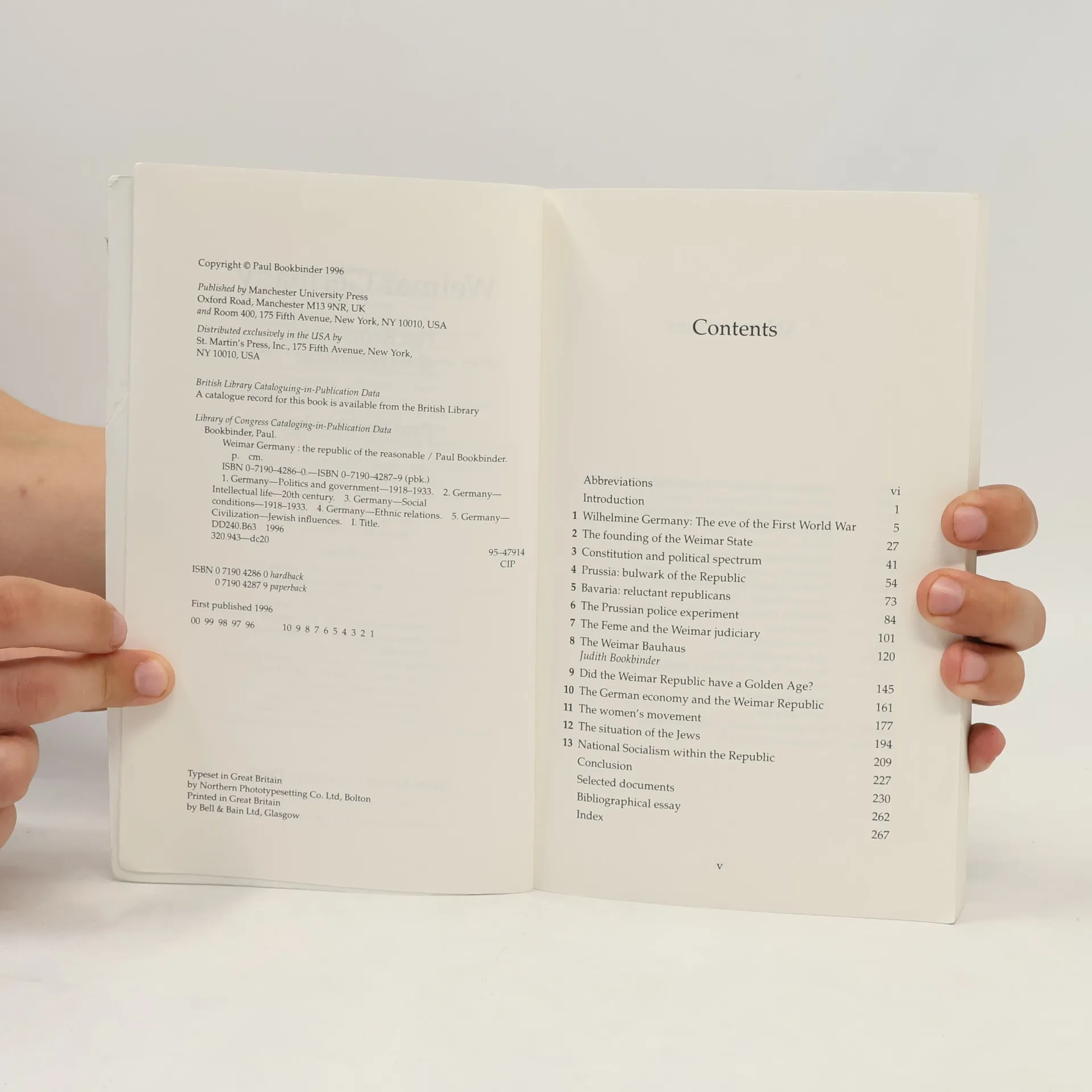
The Weimar period, which extended from 1919 to 1933, was a time of political violence, economic crisis, generational and gender tension, and cultural experiment and change in Germany. Despite these major issues, the Republic is often treated only as a preface to the study of the rise of Fascism. This text seeks to restore the balance, exploring the Weimar period in its own right. Amongst the topics discussed are: Weimar as the avant-garde artistic centre of Europe in the 1920s when many cultural figures were politically engaged on both sides of the political spectrum; Weimar as a German state racked by conflict over questions of morality versus ideas of greater sexual freedom for women, homosexual rights, abortion and birth control; the struggle to win the hearts and minds of German youth, a struggle won decisively by the right-wing; and Weimar as the first German state in which women played a significant political role.
Achat du livre
New Frontiers in History: Weimar Germany, Paul Bookbinder
- Langue

- Année de publication
- 1996
- Reliure
- (souple)
Modes de paiement
Personne n'a encore évalué .
- Titre
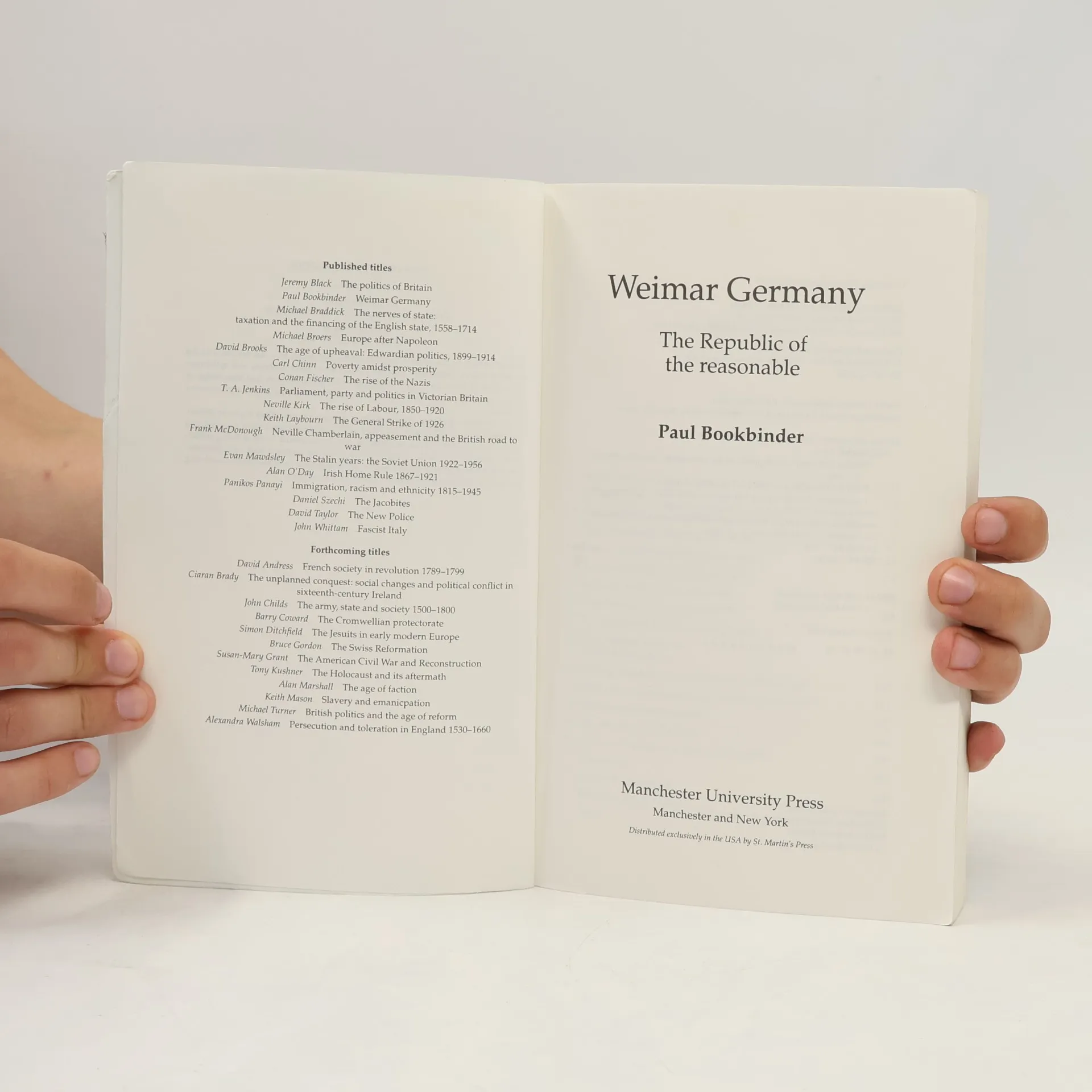
- New Frontiers in History: Weimar Germany
- Sous-titre
- The Republic of the Reasonable
- Langue
- Anglais
- Auteurs
- Paul Bookbinder
- Éditeur
- Manchester University Press
- Publié
- 1996
- Format
- souple
- Pages
- 288
- ISBN10
- 0719042879
- ISBN13
- 9780719042874
- Séries
- Catégories
- Mots clés
- Thème historique, Politique, Allemagne, 20e siècle, Europe, Culture et Société, Histoire de l'Europe, Théories politiques, Littérature juive, Europe de l'Ouest, République de Weimar, Dictature, Conditions Sociales, Vie Intellectuelle
- Description
- The Weimar period, which extended from 1919 to 1933, was a time of political violence, economic crisis, generational and gender tension, and cultural experiment and change in Germany. Despite these major issues, the Republic is often treated only as a preface to the study of the rise of Fascism. This text seeks to restore the balance, exploring the Weimar period in its own right. Amongst the topics discussed are: Weimar as the avant-garde artistic centre of Europe in the 1920s when many cultural figures were politically engaged on both sides of the political spectrum; Weimar as a German state racked by conflict over questions of morality versus ideas of greater sexual freedom for women, homosexual rights, abortion and birth control; the struggle to win the hearts and minds of German youth, a struggle won decisively by the right-wing; and Weimar as the first German state in which women played a significant political role.