




Paramètres
- 952pages
- 34 heures de lecture
En savoir plus sur le livre
International arbitration is the preferred method for resolving international business disputes, functioning as a private, autonomous mechanism independent of national laws. This comprehensive treatise addresses significant issues related to international arbitration from an international and comparative perspective, referencing major treaties, arbitration rules, and national laws. The authors explore the realities of arbitration practice, detailing the roles of parties and arbitrators, the arbitration agreement, the formation and functions of the tribunal, and the importance of the arbitration award, supported by published awards and national court decisions. The text highlights the conceptual legal conflict between the international character of arbitration and the national laws of the involved parties, the arbitration's location, and the enforcement of the award. It reviews these issues in the context of national constitutional systems, the impact of mandatory laws, and relevant European and international law, including human rights instruments. The treatise also discusses the participation of states and state entities in international arbitration and the interplay between commercial and investment arbitrations. By analyzing various structures, procedures, and legal implications, this work serves as a guide for lawyers engaged in international arbitration, regardless of party nationality or tribunal composition. It is an
Achat du livre
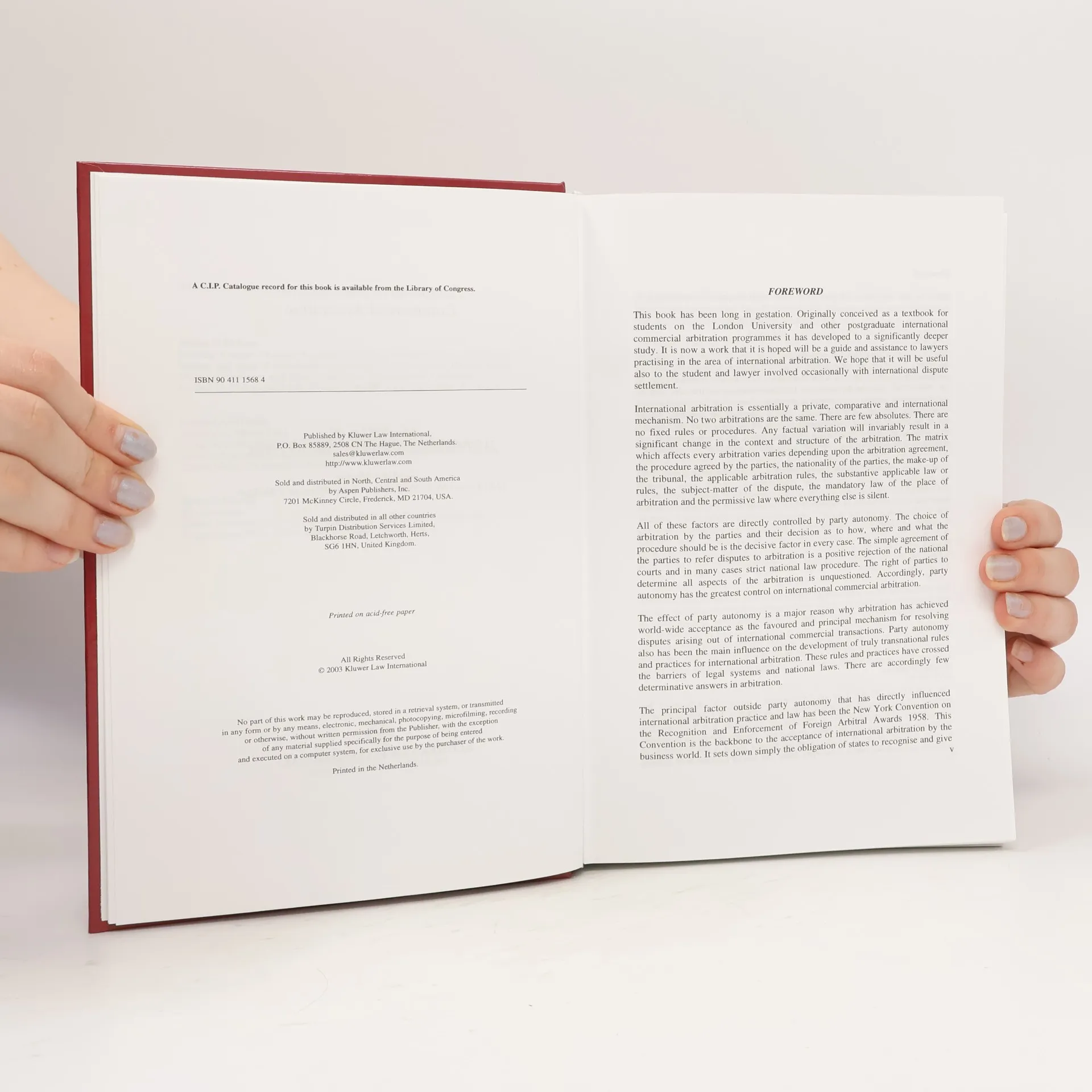
Comparative International Commercial Arbitration, Julian D. M. Lew, Loukas A. Mistelis, Stefan Michael Kröll
- Langue

- Année de publication
- 2001
- Reliure
- (rigide),
- État du livre
- Très bon
- Prix
- 38,49 €
Modes de paiement
Personne n'a encore évalué .
- Titre
- Comparative International Commercial Arbitration
- Langue
- Anglais
- Éditeur
- Springer
- Publié
- 2001
- Format
- rigide
- Pages
- 952
- ISBN10
- 9041115684
- ISBN13
- 9789041115683
- Séries
- Mots clés
- Commerce, Thématique juridique, Droit commercial, Droit international, Arbitrage international
- Description
- International arbitration is the preferred method for resolving international business disputes, functioning as a private, autonomous mechanism independent of national laws. This comprehensive treatise addresses significant issues related to international arbitration from an international and comparative perspective, referencing major treaties, arbitration rules, and national laws. The authors explore the realities of arbitration practice, detailing the roles of parties and arbitrators, the arbitration agreement, the formation and functions of the tribunal, and the importance of the arbitration award, supported by published awards and national court decisions. The text highlights the conceptual legal conflict between the international character of arbitration and the national laws of the involved parties, the arbitration's location, and the enforcement of the award. It reviews these issues in the context of national constitutional systems, the impact of mandatory laws, and relevant European and international law, including human rights instruments. The treatise also discusses the participation of states and state entities in international arbitration and the interplay between commercial and investment arbitrations. By analyzing various structures, procedures, and legal implications, this work serves as a guide for lawyers engaged in international arbitration, regardless of party nationality or tribunal composition. It is an