



En savoir plus sur le livre
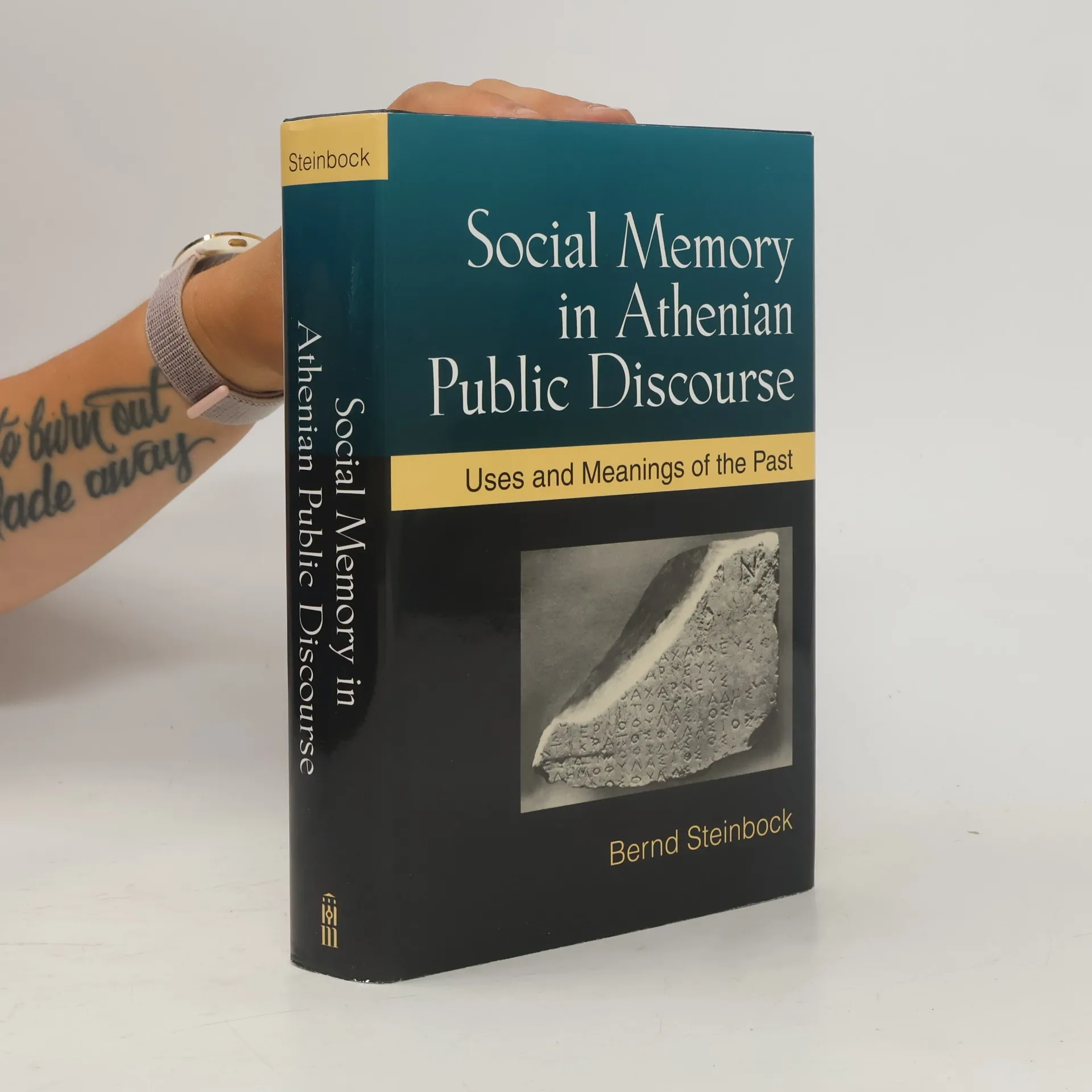
Prompted by historical allusions in Athenian political discourse, Bernd Steinbock analyzes the uses and meanings of the past in fourth-century Athens, focusing on Thebes’ role in Athenian memory. This study posits that Athenian social memory—a shared, often idealized image of the past—should be seen as a crucial aspect of Athenian mentality rather than an unreliable counterpart to history. It challenges the view that orators’ references to the past are merely rhetorical devices or propaganda for Realpolitik, asserting instead that the past served as significant political capital. By employing theories of social memory, the study contextualizes orators’ historical references within the audience's complex web of remembrances and beliefs, assessing their ideological and emotive impact. Integrating literary, epigraphic, and archaeological evidence with contemporary scholarship on memory, identity, rhetoric, and international relations, this work deepens our understanding of memory's role in Athenian public discourse and the history of Athenian-Theban relations. It appeals not only to students of Greek history and oratory but also to those interested in memory studies, Athenian democracy, and political decision-making.
Achat du livre
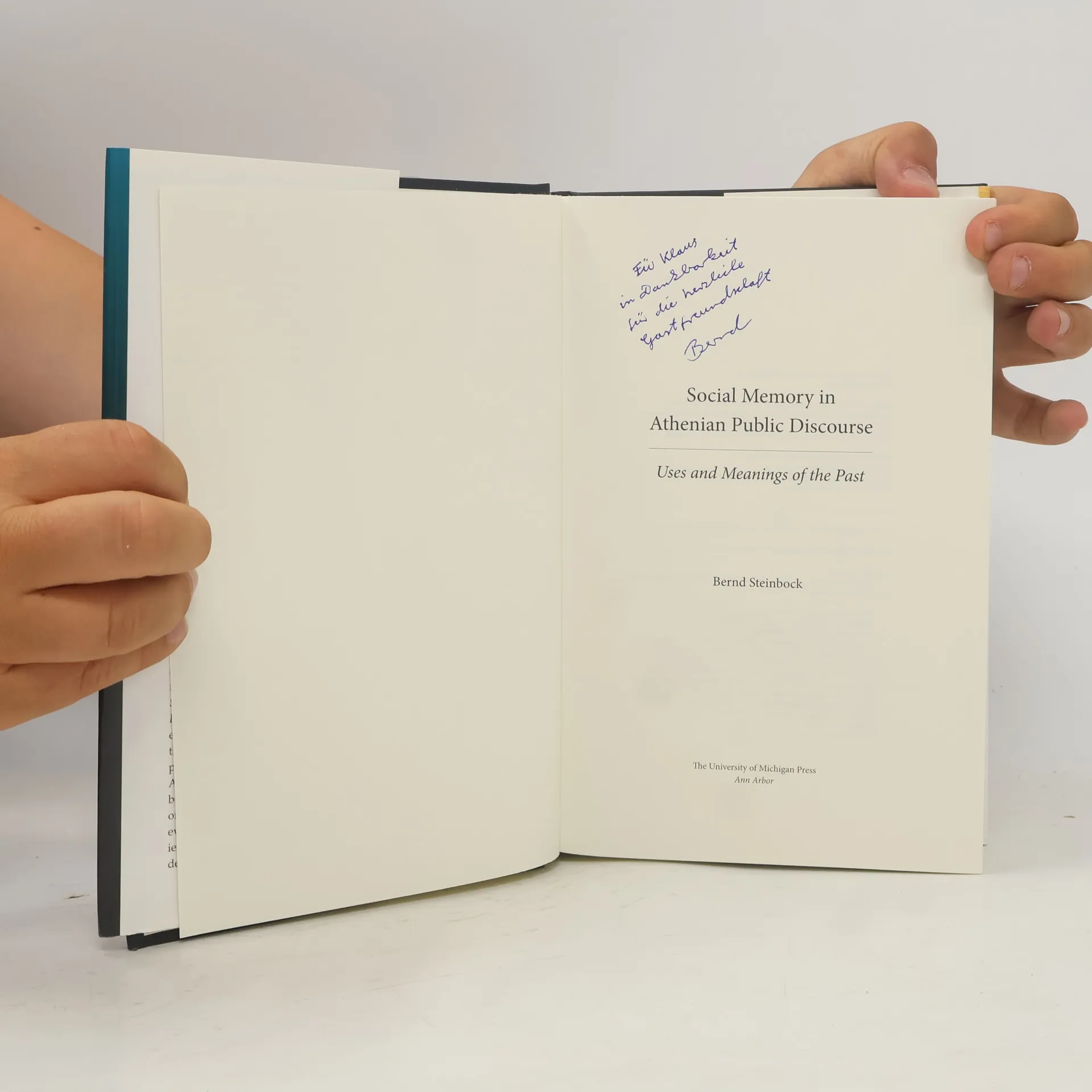
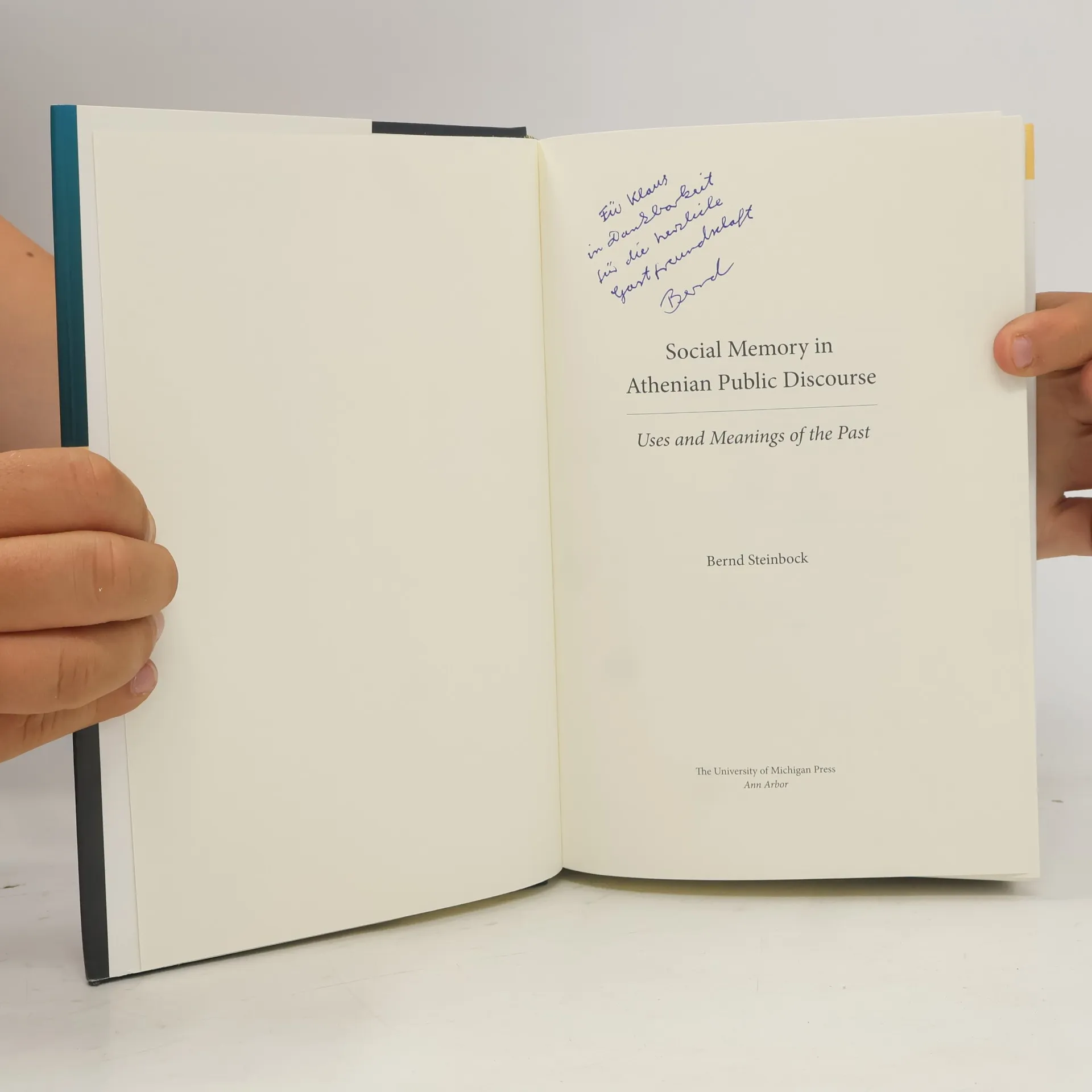
Social Memory in Athenian Public Discourse, Bernd Steinbock
- Langue

- Année de publication
- 2012
- Reliure
- (rigide),
- État du livre
- Bon
- Prix
- 44,31 €
Modes de paiement
Personne n'a encore évalué .
- Titre
- Social Memory in Athenian Public Discourse
- Sous-titre
- Uses and Meanings of the Past
- Langue
- Anglais
- Auteurs
- Bernd Steinbock
- Éditeur
- University of Michigan Press
- Publié
- 2012
- Format
- rigide
- Pages
- 424
- ISBN10
- 0472118323
- ISBN13
- 9780472118328
- Séries
- Catégories
- Mots clés
- Thème historique, États-Unis, Époque antique, Grèce, Europe de l'Ouest, Histoire sociale, Grèce antique, Athènes, Thèbes
- Description
- Prompted by historical allusions in Athenian political discourse, Bernd Steinbock analyzes the uses and meanings of the past in fourth-century Athens, focusing on Thebes’ role in Athenian memory. This study posits that Athenian social memory—a shared, often idealized image of the past—should be seen as a crucial aspect of Athenian mentality rather than an unreliable counterpart to history. It challenges the view that orators’ references to the past are merely rhetorical devices or propaganda for Realpolitik, asserting instead that the past served as significant political capital. By employing theories of social memory, the study contextualizes orators’ historical references within the audience's complex web of remembrances and beliefs, assessing their ideological and emotive impact. Integrating literary, epigraphic, and archaeological evidence with contemporary scholarship on memory, identity, rhetoric, and international relations, this work deepens our understanding of memory's role in Athenian public discourse and the history of Athenian-Theban relations. It appeals not only to students of Greek history and oratory but also to those interested in memory studies, Athenian democracy, and political decision-making.