



En savoir plus sur le livre
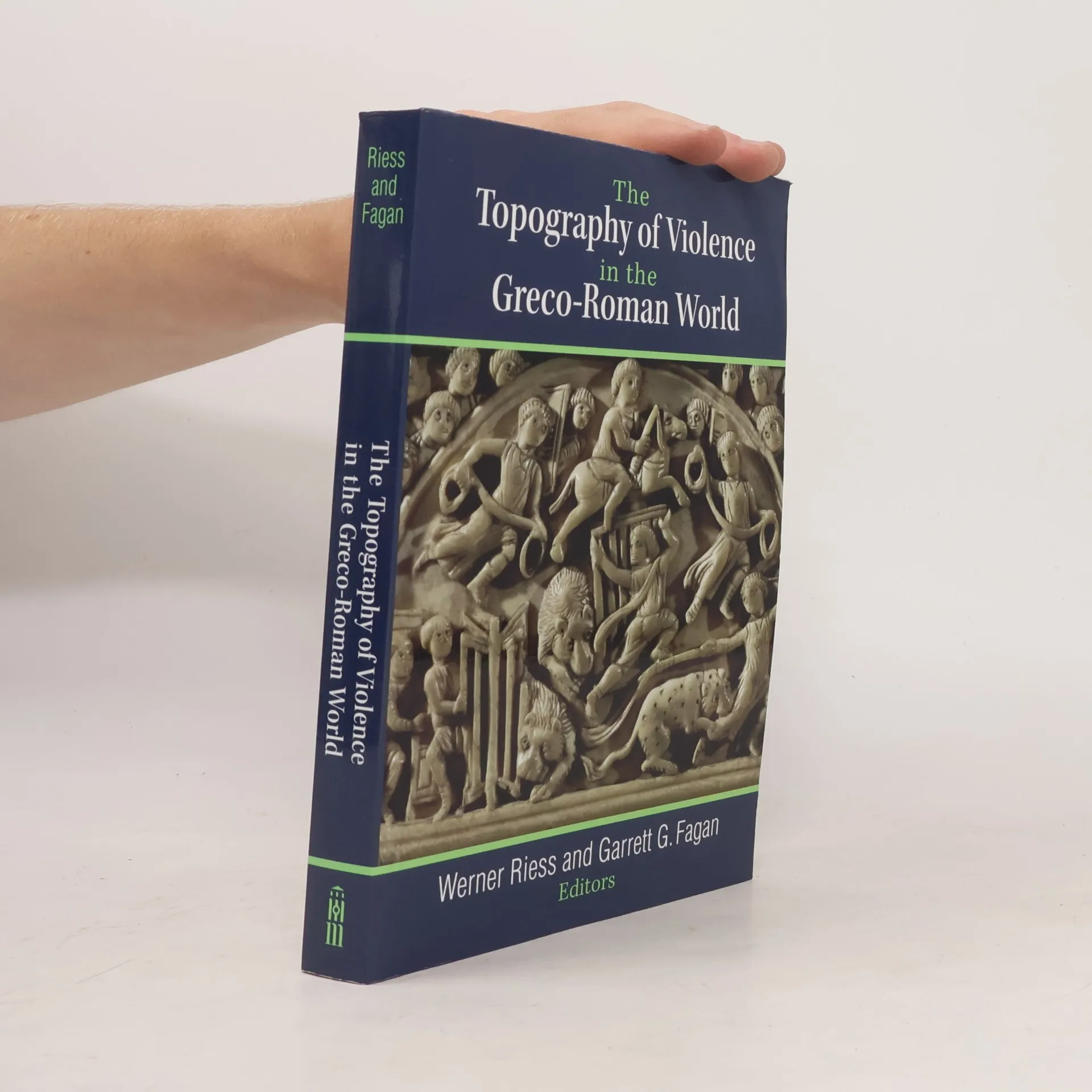
What soldiers do on the battlefield or boxers do in the ring would be treated as criminal acts if carried out in an everyday setting. Perpetrators of violence in the classical world knew this and chose their venues and targets with care: killing Julius Caesar at a meeting of the Senate was deliberate. That location asserted Senatorial superiority over a perceived tyrant, and so proclaimed the pure republican principles of the assassins. The contributors to The Topography of Violence in the Greco-Roman World take on a task not yet addressed in classical scholarship: they examine how topography shaped the perception and interpretation of violence in Greek and Roman antiquity. After an introduction explaining the “spatial turn” in the theoretical study of violence, “paired” chapters review political assassination, the battlefield, violence against women and slaves, and violence at Greek and Roman dinner parties. No other book either adopts the spatial theoretical framework or pairs the examination of different classes of violence in classical antiquity in this way. Both undergraduate and graduate students of classics, history, and political science will benefit from the collection, as will specialists in those disciplines. The papers are original and stimulating, and they are accessible to the educated general reader with some grounding in classical history.
Achat du livre
The Topography of Violence in the Greco-Roman World, Garrett G. Fagan, Werner Riess
- Langue

- Année de publication
- 2020
- Reliure
- (souple)
Modes de paiement
Personne n'a encore évalué .
- Titre
- The Topography of Violence in the Greco-Roman World
- Langue
- Anglais
- Auteurs
- Garrett G. Fagan, Werner Riess
- Éditeur
- University of Michigan Press
- Publié
- 2020
- Format
- souple
- Pages
- 422
- ISBN10
- 0472038443
- ISBN13
- 9780472038442
- Séries
- Catégories
- Mots clés
- Thème historique, Époque antique, Égypte, Grèce, Égypte ancienne, Grèce antique
- Description
- What soldiers do on the battlefield or boxers do in the ring would be treated as criminal acts if carried out in an everyday setting. Perpetrators of violence in the classical world knew this and chose their venues and targets with care: killing Julius Caesar at a meeting of the Senate was deliberate. That location asserted Senatorial superiority over a perceived tyrant, and so proclaimed the pure republican principles of the assassins. The contributors to The Topography of Violence in the Greco-Roman World take on a task not yet addressed in classical scholarship: they examine how topography shaped the perception and interpretation of violence in Greek and Roman antiquity. After an introduction explaining the “spatial turn” in the theoretical study of violence, “paired” chapters review political assassination, the battlefield, violence against women and slaves, and violence at Greek and Roman dinner parties. No other book either adopts the spatial theoretical framework or pairs the examination of different classes of violence in classical antiquity in this way. Both undergraduate and graduate students of classics, history, and political science will benefit from the collection, as will specialists in those disciplines. The papers are original and stimulating, and they are accessible to the educated general reader with some grounding in classical history.