


Paramètres
- 352pages
- 13 heures de lecture
En savoir plus sur le livre
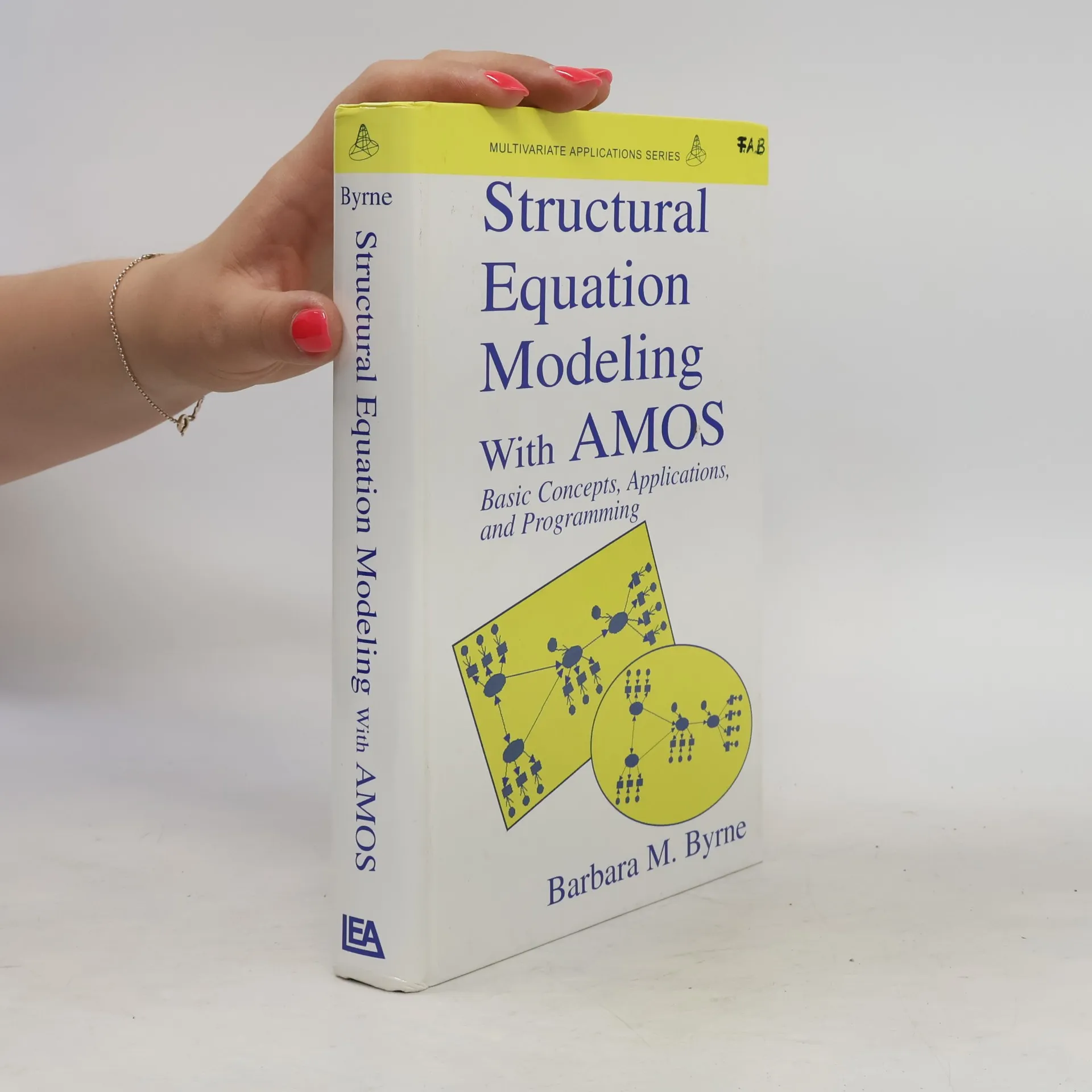
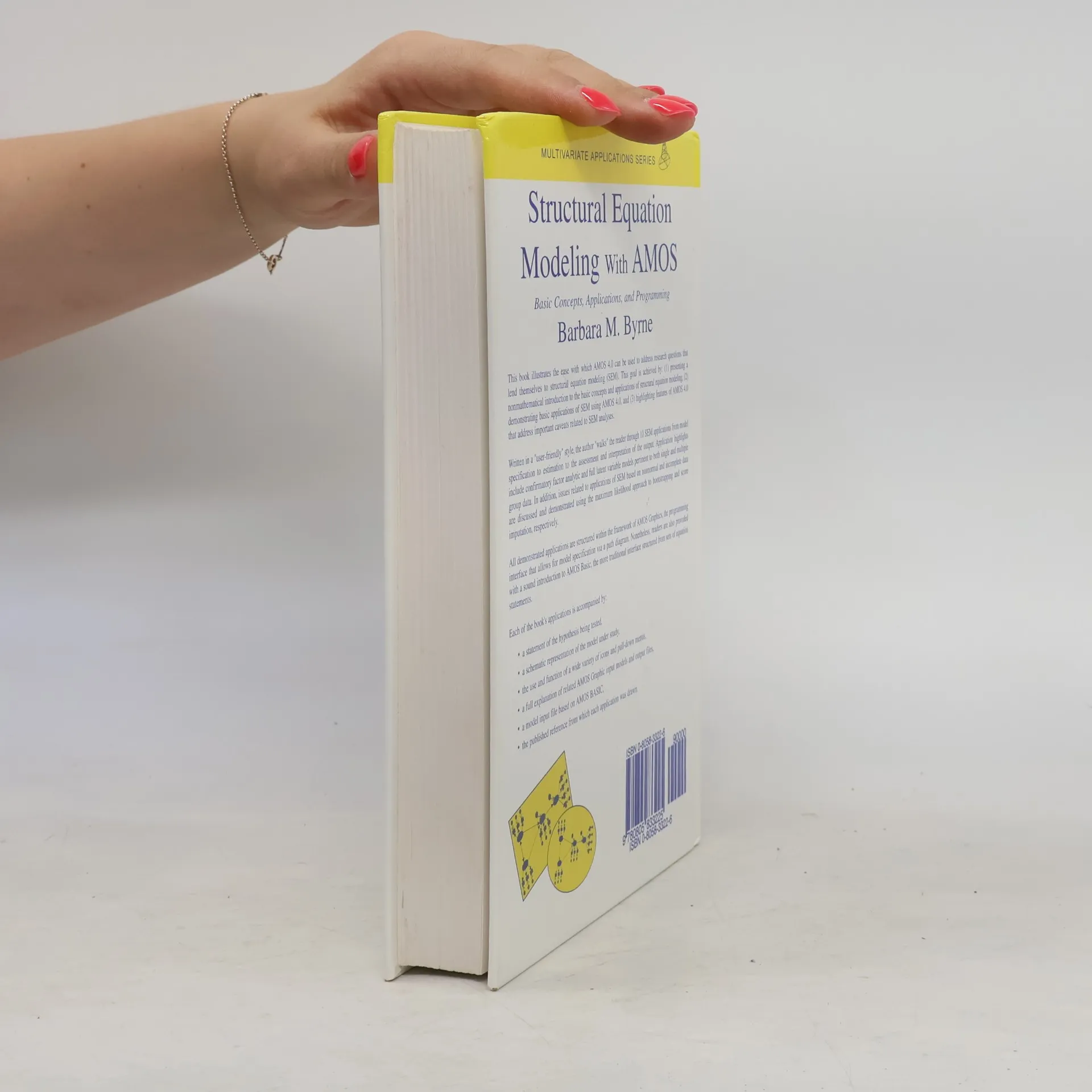
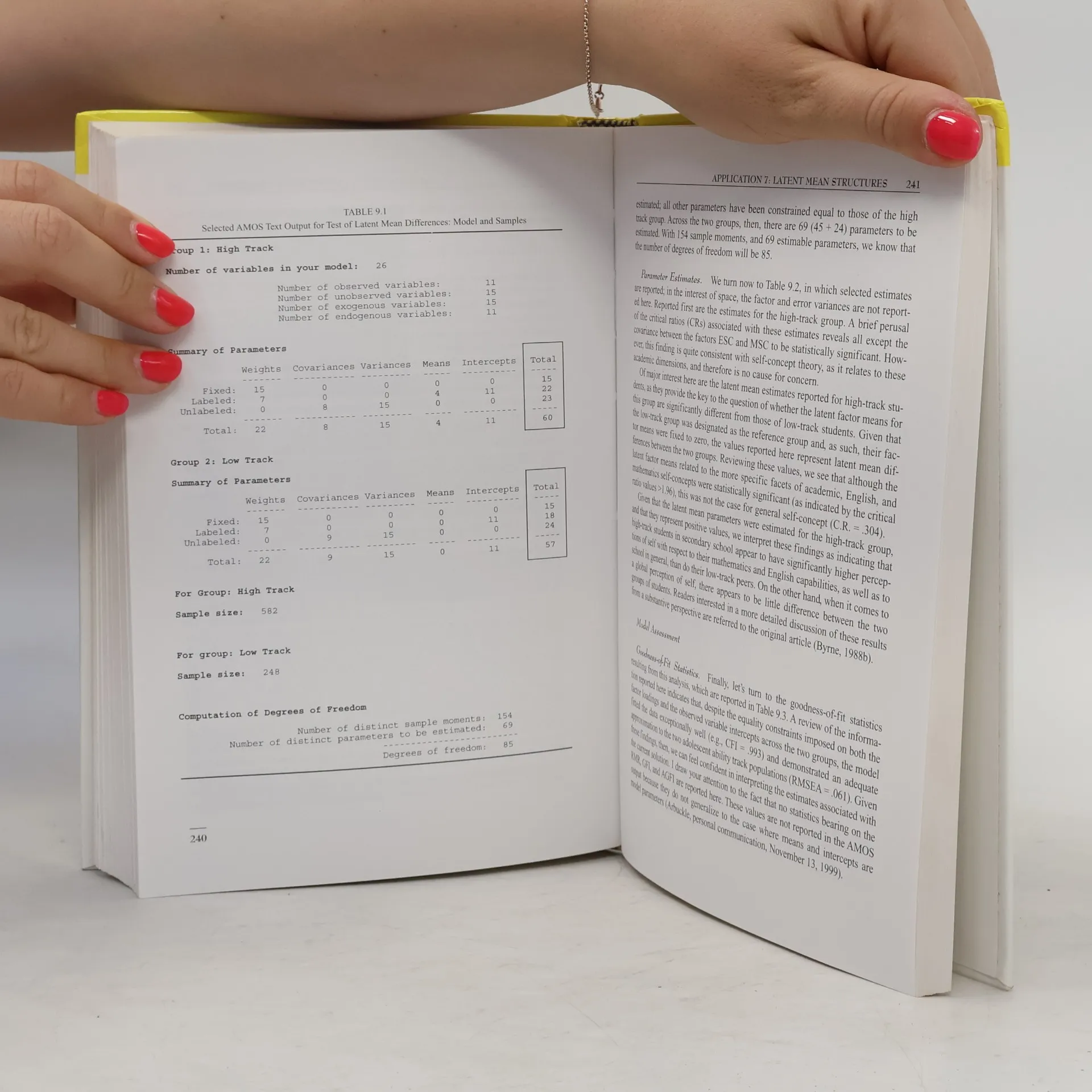
This book illustrates the ease with which AMOS 4.0 can be used to address research questions that lend themselves to structural equation modeling (SEM). This goal is achieved by: 1) presenting a nonmathematical introduction to the basic concepts and applications of structural equation modeling; 2) demonstrating basic applications of SEM using AMOS 4.0; and 3) highlighting features of AMOS 4.0 that address important caveats related to SEM analyses. Written in a "user-friendly" style, the author "walks" the reader through 10 SEM applications from model specification to estimation to the assessment and interpretation of the output. Each of the book's applications is accompanied by: a statement of the hypothesis being tested; a schematic representation of the model under study; the use and function of a wide variety of icons and pull-down menus; a full explanation of related AMOS Graphic input models and output files; a model input file based on AMOS BASIC; and the published reference from which each application was drawn.
Achat du livre
Structural Equation Modeling with Amos, Barbara M. Byrne
- Langue

- Année de publication
- 2001
- Reliure
- (rigide),
- État du livre
- Bon
- Prix
- 8,99 €
Modes de paiement
Personne n'a encore évalué .
- Titre
- Structural Equation Modeling with Amos
- Sous-titre
- Basic Concepts, Applications, and Programming
- Langue
- Anglais
- Auteurs
- Barbara M. Byrne
- Éditeur
- Psychology Press
- Publié
- 2001
- Format
- rigide
- Pages
- 352
- ISBN10
- 0805833226
- ISBN13
- 9780805833225
- Séries
- Catégories
- Mots clés
- Thèmes psychologiques, Manuels et guides, États-Unis, Éducation, système scolaire, Psychologie de l'éducation
- Description
- This book illustrates the ease with which AMOS 4.0 can be used to address research questions that lend themselves to structural equation modeling (SEM). This goal is achieved by: 1) presenting a nonmathematical introduction to the basic concepts and applications of structural equation modeling; 2) demonstrating basic applications of SEM using AMOS 4.0; and 3) highlighting features of AMOS 4.0 that address important caveats related to SEM analyses. Written in a "user-friendly" style, the author "walks" the reader through 10 SEM applications from model specification to estimation to the assessment and interpretation of the output. Each of the book's applications is accompanied by: a statement of the hypothesis being tested; a schematic representation of the model under study; the use and function of a wide variety of icons and pull-down menus; a full explanation of related AMOS Graphic input models and output files; a model input file based on AMOS BASIC; and the published reference from which each application was drawn.