

En savoir plus sur le livre
In statistical film analysis, shot length frequencies reveal a discernible pattern rather than random distribution. This monograph addresses two primary questions: Are shot lengths in Soviet feature films regularly distributed, and can these distributions be framed within a broader theoretical context? Additionally, is shot length connected to another formal aspect of film, specifically film length? These inquiries draw parallels with research in other semiotic systems, particularly quantitative linguistics, positing that film and language share similar underlying mechanisms. In linguistics, frequency distributions arise from various interacting forces, notably the Zipfian principles of unification and diversification. An analysis of 70 Soviet feature films from the 1920s to the 1980s indicates that most shot length frequency distributions are regular and can be modeled using the Zipf-Alekseev function. This model can be interpreted within broader theoretical contexts, including general human behavior patterns and psychophysics. The second question suggests that shot lengths are interconnected with another formal feature: film length, measured by the number of shots. This relationship can be modeled by a power function, known in linguistics as the Menzerath-Altmann law, which also reflects a principle of economy. Overall, this study offers substantial support for the notion that filmic entities can be analyzed effectively with
Achat du livre
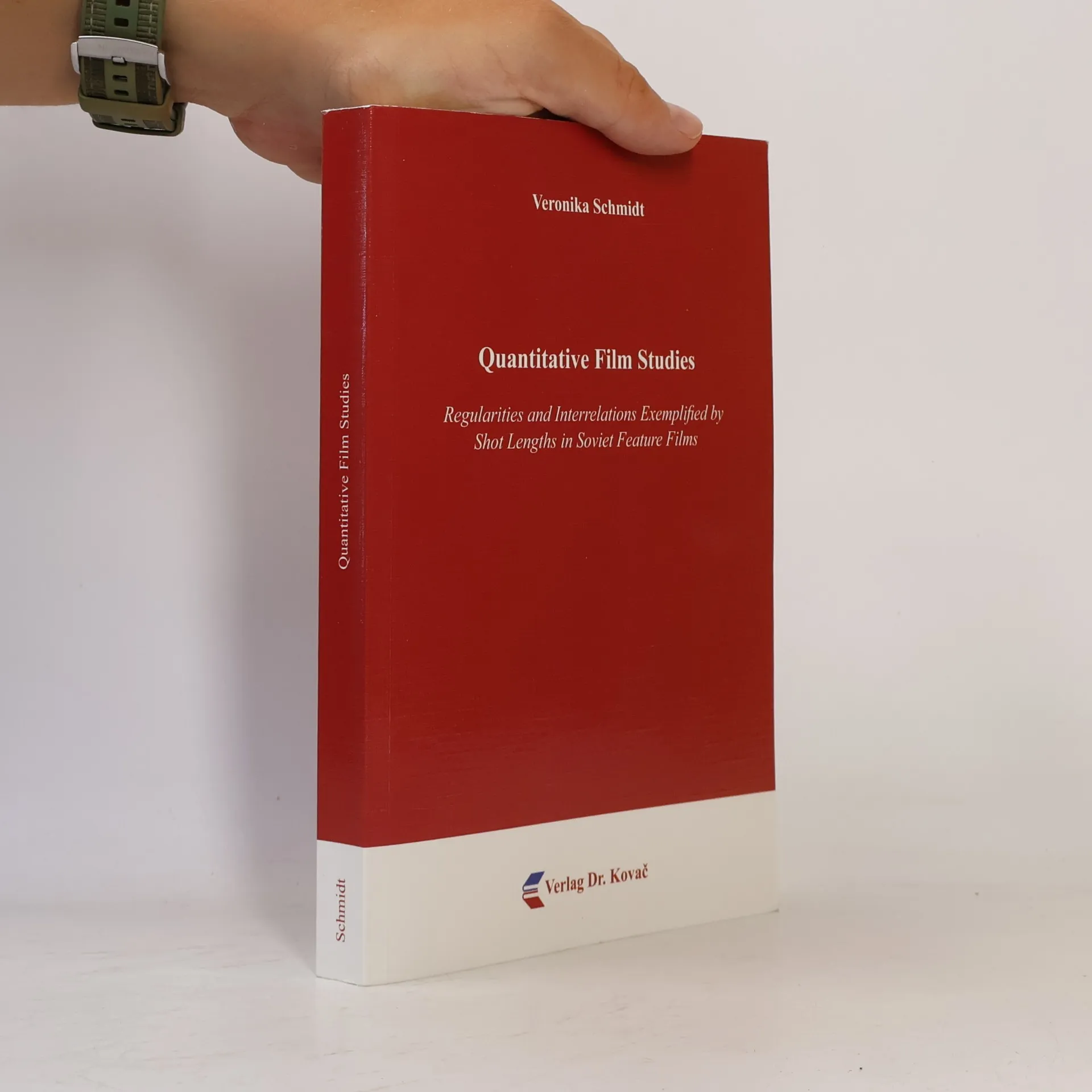
Quantitative Film Studies, Veronika Schmidt
- Langue

- Année de publication
- 2019
- Reliure
- (souple)
Modes de paiement
Personne n'a encore évalué .
- Titre
- Quantitative Film Studies
- Sous-titre
- Regularities and Interrelations Exemplified by Shot Lengths in Soviet Feature Films
- Langue
- Anglais
- Auteurs
- Veronika Schmidt
- Éditeur
- Verlag Dr. Kovač
- Publié
- 2019
- Format
- souple
- Pages
- 310
- ISBN10
- 3339100748
- ISBN13
- 9783339100740
- Séries
- Catégories
- Description
- In statistical film analysis, shot length frequencies reveal a discernible pattern rather than random distribution. This monograph addresses two primary questions: Are shot lengths in Soviet feature films regularly distributed, and can these distributions be framed within a broader theoretical context? Additionally, is shot length connected to another formal aspect of film, specifically film length? These inquiries draw parallels with research in other semiotic systems, particularly quantitative linguistics, positing that film and language share similar underlying mechanisms. In linguistics, frequency distributions arise from various interacting forces, notably the Zipfian principles of unification and diversification. An analysis of 70 Soviet feature films from the 1920s to the 1980s indicates that most shot length frequency distributions are regular and can be modeled using the Zipf-Alekseev function. This model can be interpreted within broader theoretical contexts, including general human behavior patterns and psychophysics. The second question suggests that shot lengths are interconnected with another formal feature: film length, measured by the number of shots. This relationship can be modeled by a power function, known in linguistics as the Menzerath-Altmann law, which also reflects a principle of economy. Overall, this study offers substantial support for the notion that filmic entities can be analyzed effectively with