

Exactement cet exemplaire ira dans le panier
Paramètres
- 132pages
- 5 heures de lecture
En savoir plus sur le livre
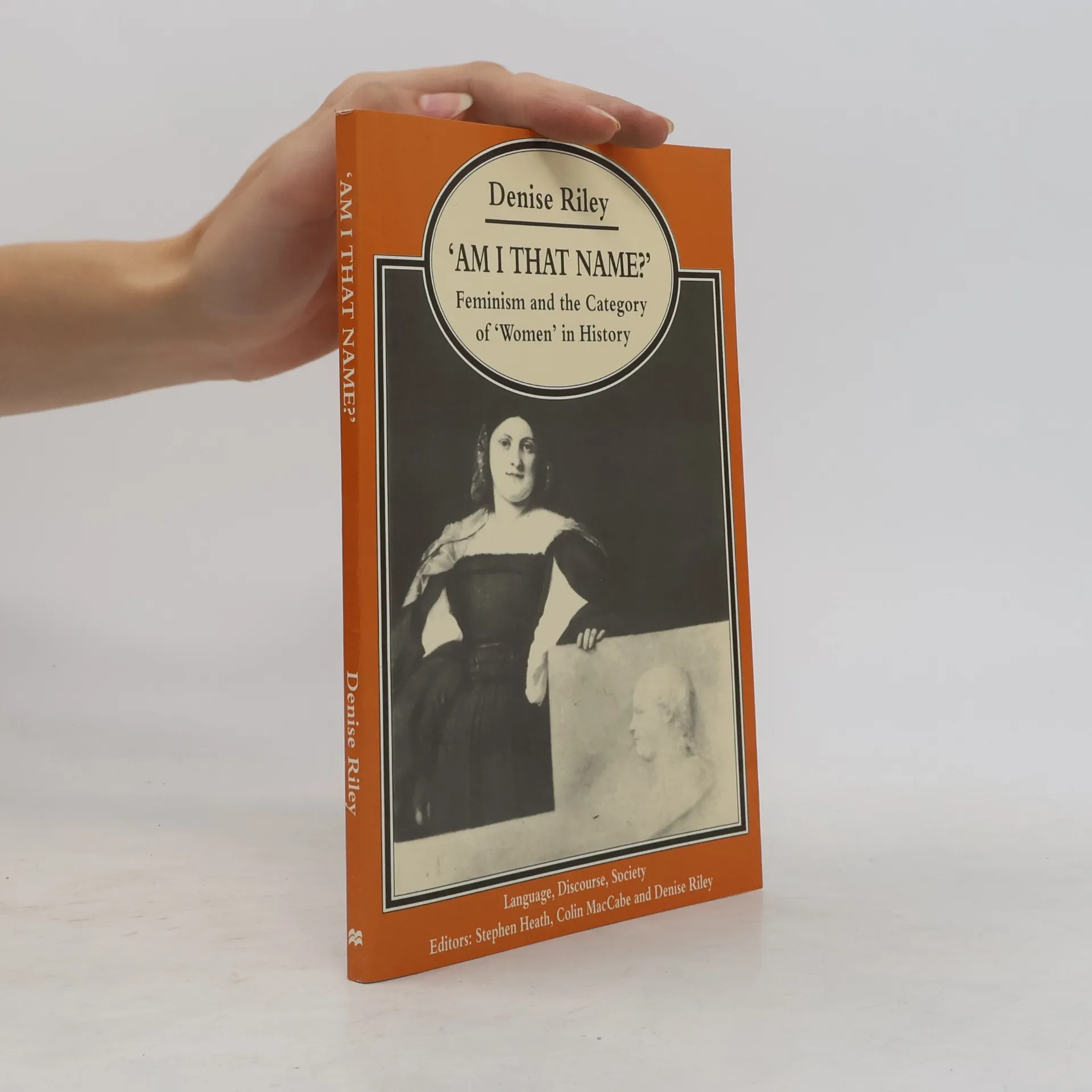
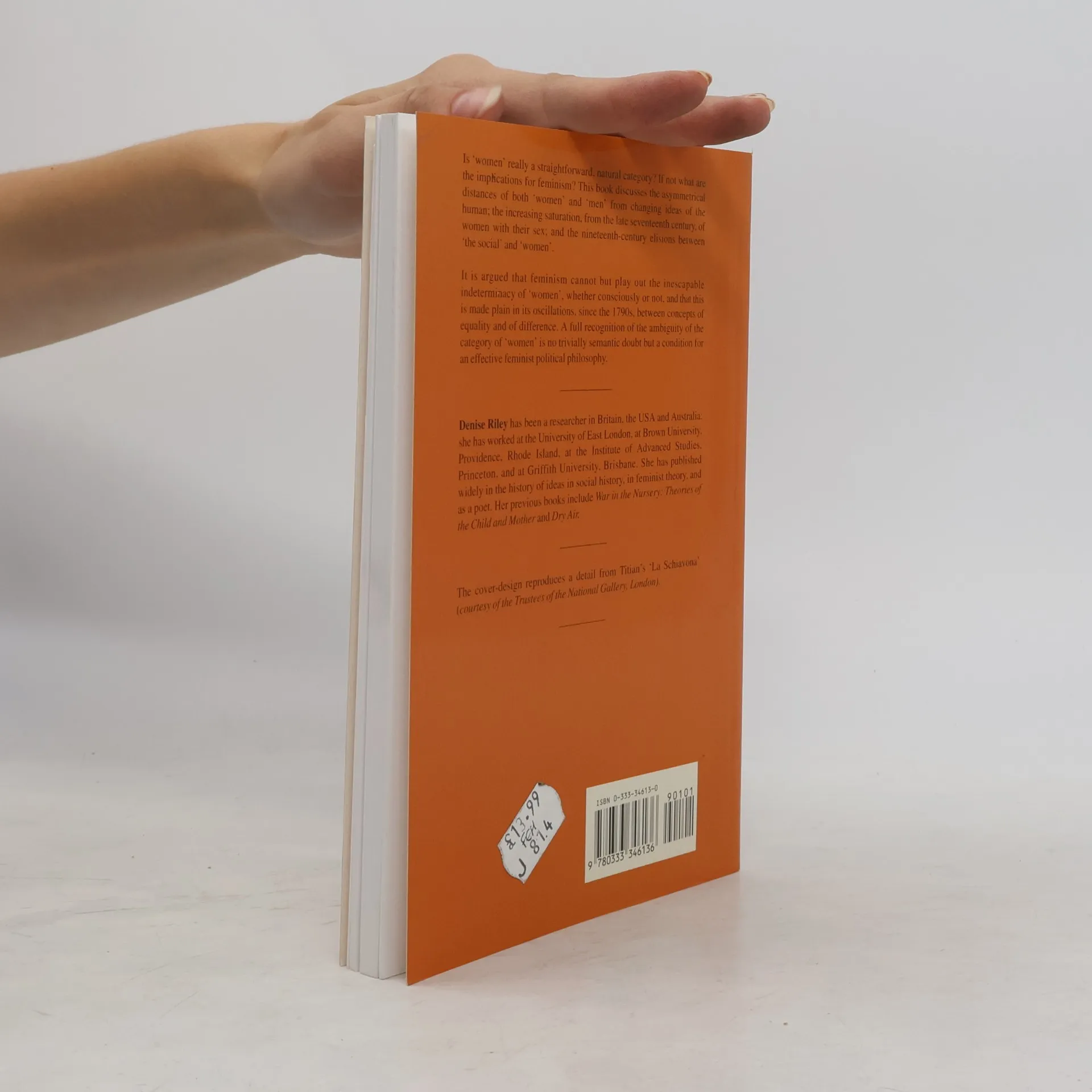
Writing about changes in the notion of womanhood, Denise Riley examines, in the manner of Foucault, shifting historical constructions of the category of "women" in relation to other categories central to concepts of personhood: the soul, the mind, the body, nature, the social. Feminist movements, Riley argues, have had no choice but to play out this indeterminacy of women. This is made plain in their oscillations, since the 1790s, between concepts of equality and of difference. To fully recognize the ambiguity of the category of "women" is, she contends, a necessary condition for an effective feminist political philosophy.
Achat du livre
Language, Discourse, Society: Am I That Name?, Denise Riley, Stephen Heath, Colin MacCabe
- Langue

- Année de publication
- 1988
- Reliure
- (souple),
- État du livre
- Bon
- Prix
- 18,99 €
Modes de paiement
Personne n'a encore évalué .
- Titre
- Language, Discourse, Society: Am I That Name?
- Sous-titre
- Feminism and the Category of 'Women' in History
- Langue
- Anglais
- Auteurs
- Denise Riley, Stephen Heath, Colin MacCabe
- Éditeur
- Palgrave Macmillan
- Publié
- 1988
- Format
- souple
- Pages
- 132
- ISBN10
- 0333346130
- ISBN13
- 9780333346136
- Séries
- Catégories
- Mots clés
- Thème historique, La nature, Thématique philosophique, Femmes, Politique, Science, Culture et Société, Féminisme, Histoire locale, Critique littéraire, Théories politiques, Écriture, Histoires culturelles, Théories scientifiques, Genre, Lectures obligatoires, Droit civil, Histoire sociale, Théorie littéraire, Esprit humain, Philosophie politique, Politique sociale, État social
- Description
- Writing about changes in the notion of womanhood, Denise Riley examines, in the manner of Foucault, shifting historical constructions of the category of "women" in relation to other categories central to concepts of personhood: the soul, the mind, the body, nature, the social. Feminist movements, Riley argues, have had no choice but to play out this indeterminacy of women. This is made plain in their oscillations, since the 1790s, between concepts of equality and of difference. To fully recognize the ambiguity of the category of "women" is, she contends, a necessary condition for an effective feminist political philosophy.