

Paramètres
- 350pages
- 13 heures de lecture
En savoir plus sur le livre
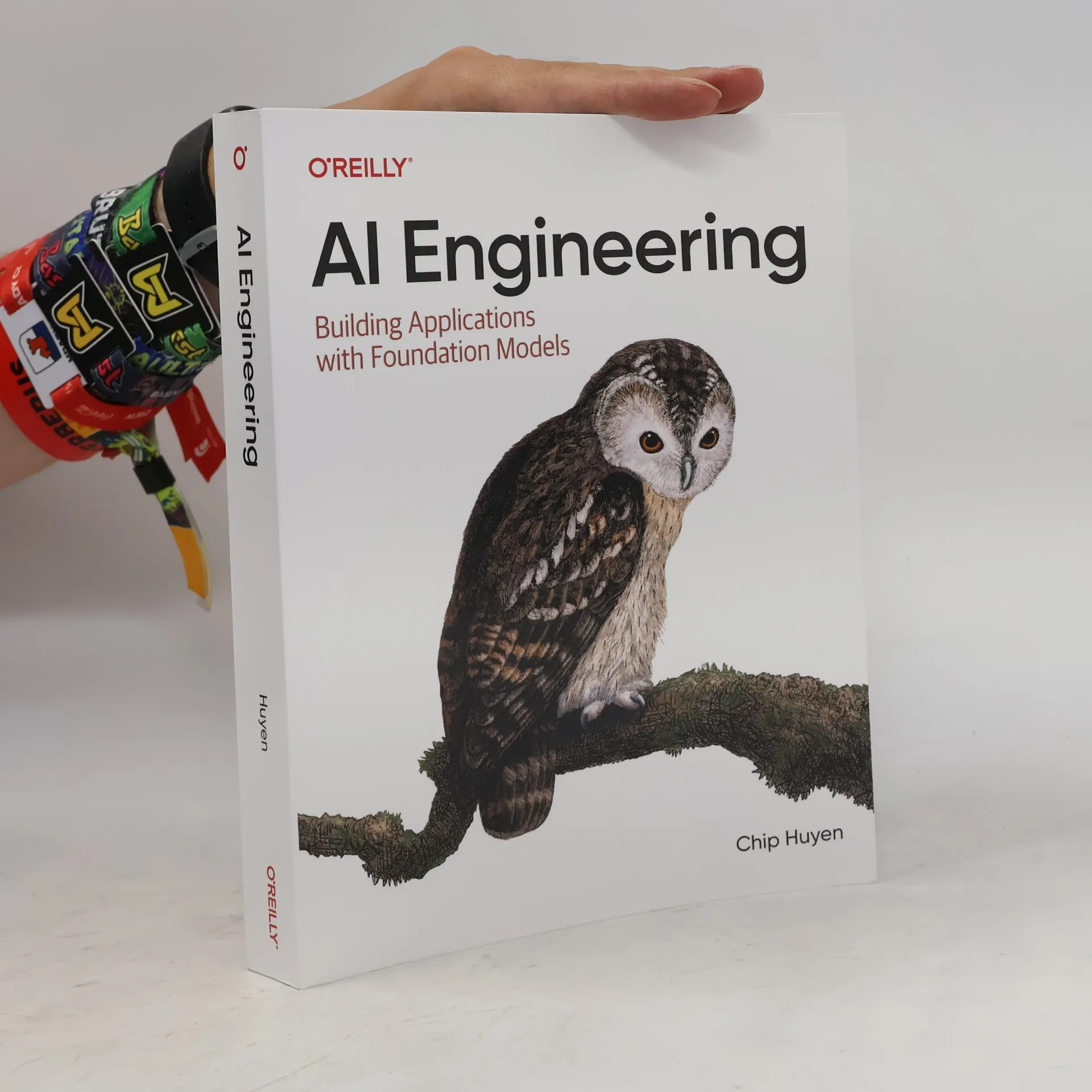
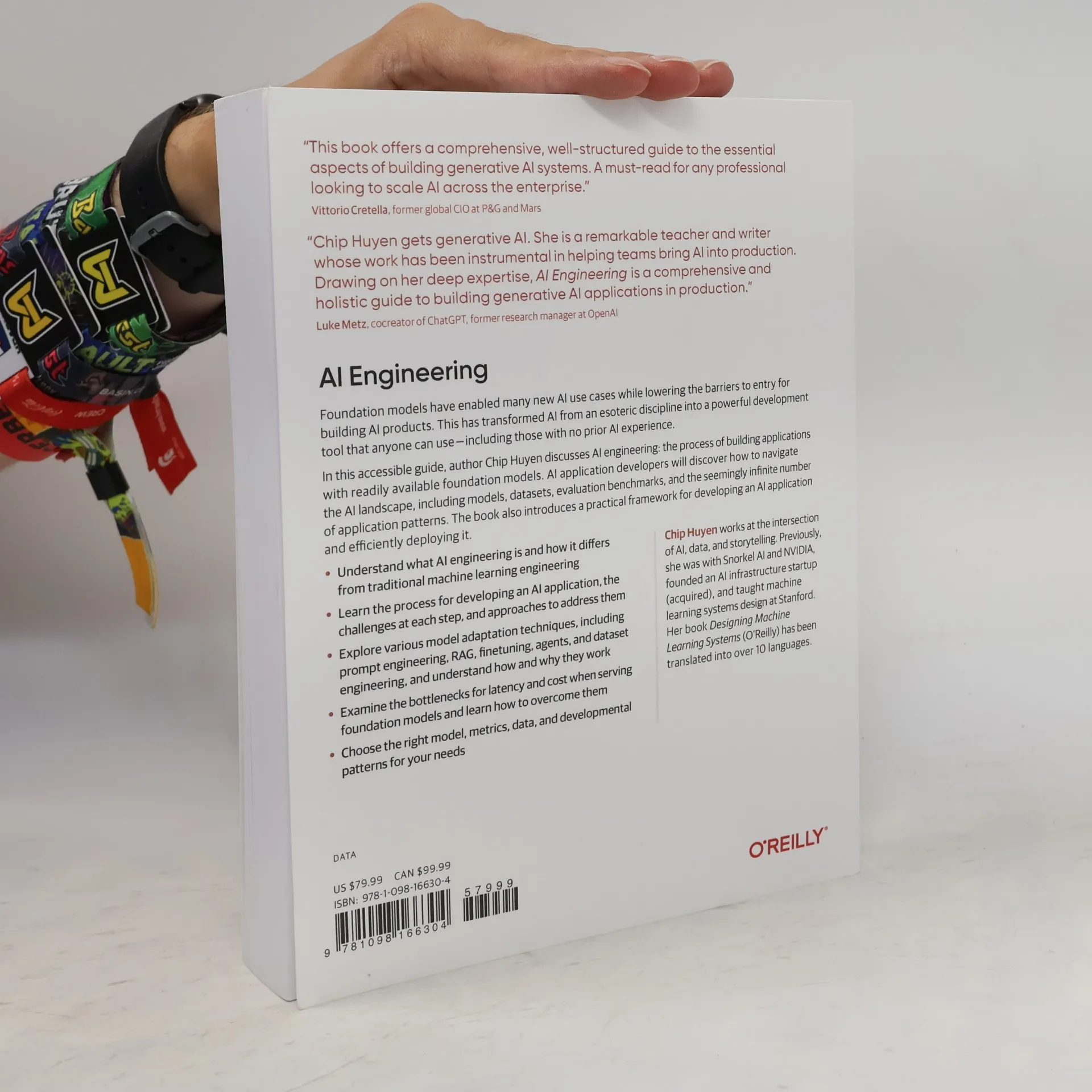
Recent breakthroughs in AI have increased demand for AI products and lowered entry barriers for developers. The model-as-a-service approach has made AI accessible, allowing even those with minimal experience to build applications. The author discusses AI engineering, focusing on the process of creating applications using readily available foundation models. The book begins with an overview of AI engineering, highlighting its differences from traditional ML engineering and the new AI stack. As AI usage grows, so do the risks of catastrophic failures, making evaluation crucial. Various approaches to evaluating open-ended models, including the emerging AI-as-a-judge method, are explored. Developers will learn to navigate the AI landscape, including models, datasets, evaluation benchmarks, and diverse use cases. A framework for developing AI applications is provided, progressing from simple techniques to more advanced methods, along with strategies for efficient deployment. Key topics include understanding AI engineering, overcoming challenges, exploring model adaptation techniques like prompt engineering and fine-tuning, addressing latency and cost bottlenecks, and selecting appropriate models and metrics. The author, Chip Huyen, has a background in accelerating data analytics on GPUs and has previously worked with Snorkel AI and NVIDIA.
Achat du livre
AI Engineering, Chip Huyen
- Langue

- Année de publication
- 2024
- Reliure
- (souple)
Modes de paiement
Personne n'a encore évalué .
- Titre
- AI Engineering
- Sous-titre
- Building Applications with Foundation Models
- Langue
- Anglais
- Auteurs
- Chip Huyen
- Éditeur
- O'Reilly Media
- Publié
- 2024
- Format
- souple
- Pages
- 350
- ISBN10
- 1098166302
- ISBN13
- 9781098166304
- Séries
- Description
- Recent breakthroughs in AI have increased demand for AI products and lowered entry barriers for developers. The model-as-a-service approach has made AI accessible, allowing even those with minimal experience to build applications. The author discusses AI engineering, focusing on the process of creating applications using readily available foundation models. The book begins with an overview of AI engineering, highlighting its differences from traditional ML engineering and the new AI stack. As AI usage grows, so do the risks of catastrophic failures, making evaluation crucial. Various approaches to evaluating open-ended models, including the emerging AI-as-a-judge method, are explored. Developers will learn to navigate the AI landscape, including models, datasets, evaluation benchmarks, and diverse use cases. A framework for developing AI applications is provided, progressing from simple techniques to more advanced methods, along with strategies for efficient deployment. Key topics include understanding AI engineering, overcoming challenges, exploring model adaptation techniques like prompt engineering and fine-tuning, addressing latency and cost bottlenecks, and selecting appropriate models and metrics. The author, Chip Huyen, has a background in accelerating data analytics on GPUs and has previously worked with Snorkel AI and NVIDIA.