




En savoir plus sur le livre
In contemporary Western society, despite strong pressures for social and racial integration, recent experiences indicate that increased intergroup contact may reinforce social distinctions and ethnic stereotypes. This collection of studies offers a broad sociological perspective on the face-to-face verbal exchanges typical of industrial societies, highlighting the role of communication in shaping and reinforcing social identity. The analysis method reveals crucial yet often overlooked subconscious processes of inference influenced by situational factors, social presuppositions, and discourse conventions. The first two chapters discuss the theoretical framework and analytical methods used, while the case studies focus on interviews, counseling sessions, and formal exchanges among diverse groups, including South Asians, West Indians, native English speakers in Britain, English natives and Chinese in Southeast Asia, Afro-Americans, Asians, and native English speakers in the U.S., as well as English and French speakers in Canada. The insights gained will be significant for linguists, anthropologists, psychologists, and professionals interested in communication, with implications for industrial and community relations and educational practices.
Achat du livre
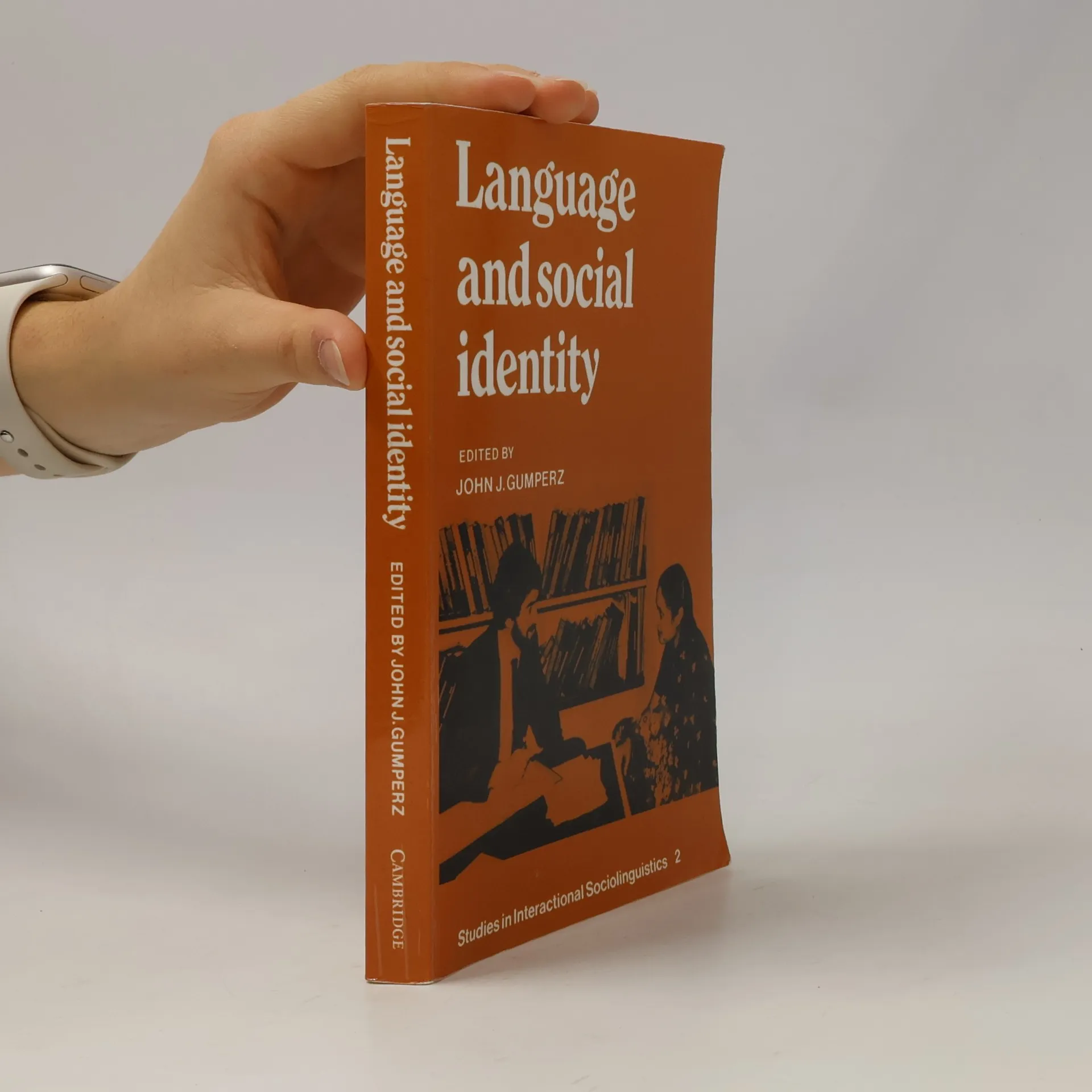
Studies in Interactional Sociolinguistics - 2: Language and Social Identity, John J. Gumperz
- Langue

- Année de publication
- 2002
- Reliure
- (souple),
- État du livre
- Bon
- Prix
- 7,79 €
Modes de paiement
Personne n'a encore évalué .
- Titre
- Studies in Interactional Sociolinguistics - 2: Language and Social Identity
- Langue
- Anglais
- Auteurs
- John J. Gumperz
- Éditeur
- Cambridge University Press
- Publié
- 2002
- Format
- souple
- Pages
- 288
- ISBN10
- 0521288975
- ISBN13
- 9780521288972
- Séries
- Mots clés
- Linguistique, Communication, Identité, Sociolinguistique
- Description
- In contemporary Western society, despite strong pressures for social and racial integration, recent experiences indicate that increased intergroup contact may reinforce social distinctions and ethnic stereotypes. This collection of studies offers a broad sociological perspective on the face-to-face verbal exchanges typical of industrial societies, highlighting the role of communication in shaping and reinforcing social identity. The analysis method reveals crucial yet often overlooked subconscious processes of inference influenced by situational factors, social presuppositions, and discourse conventions. The first two chapters discuss the theoretical framework and analytical methods used, while the case studies focus on interviews, counseling sessions, and formal exchanges among diverse groups, including South Asians, West Indians, native English speakers in Britain, English natives and Chinese in Southeast Asia, Afro-Americans, Asians, and native English speakers in the U.S., as well as English and French speakers in Canada. The insights gained will be significant for linguists, anthropologists, psychologists, and professionals interested in communication, with implications for industrial and community relations and educational practices.