

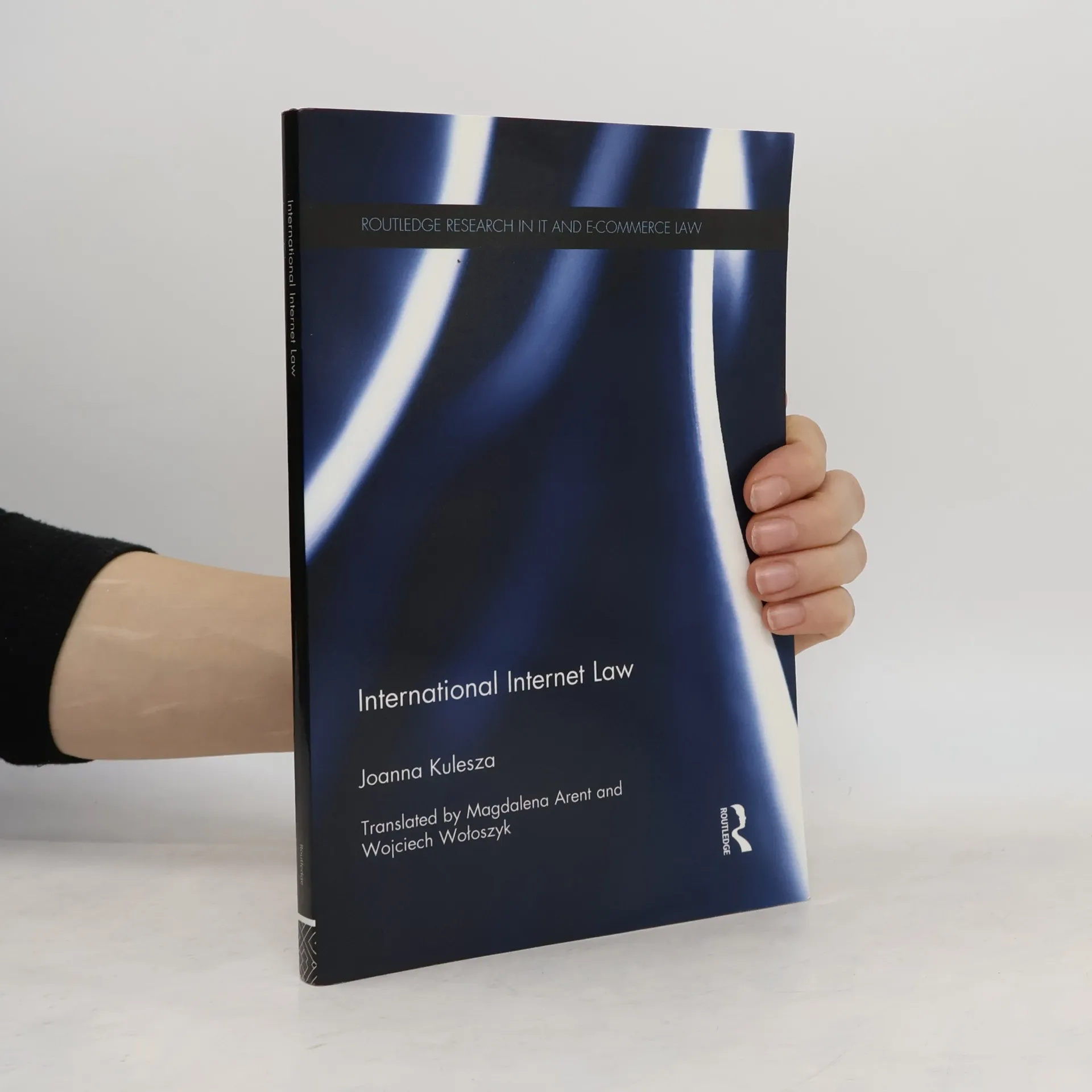


International Internet Law
Auteurs
Paramètres
- 224pages
- 8 heures de lecture
En savoir plus sur le livre
This book addresses the international legal issues surrounding Internet Governance and proposes a global solution. It covers a broad range of current debates on internet governance, highlighting urgent areas that require international attention to maintain the functionality of the global network essential to our information-driven society. Key topics include international copyright protection, state responsibility for cyber-attacks (cyberterrorism), and online privacy protection. By examining how various jurisdictions, such as the United States, the European Union, China, and Singapore, have approached Internet Governance, the author presents a practical solution and advocates for International Internet Law. Kulesza argues for an Internet Framework Convention, akin to International Environmental Law, to establish a basis for international cooperation and clarify state jurisdictional competences. This work is particularly relevant for legal scholars addressing current challenges in international law and relations, as well as law, international relations, and political science students. The issues explored are also pertinent to journalists and media professionals navigating the complexities of international developments in cyberspace.
Achat du livre
International Internet Law, Joanna Kulesza
- Langue

- Année de publication
- 2013
- Reliure
- (souple),
- État du livre
- Bon
- Prix
- 6,89 €
Modes de paiement
Personne n'a encore évalué .
- Titre
- International Internet Law
- Langue
- Anglais
- Auteurs
- Joanna Kulesza
- Éditeur
- Routledge
- Publié
- 2013
- Format
- souple
- Pages
- 224
- ISBN10
- 0415730570
- ISBN13
- 9780415730570
- Séries
- Mots clés
- Thématique juridique, Espace, Droit international, Société civile
- Description
- This book addresses the international legal issues surrounding Internet Governance and proposes a global solution. It covers a broad range of current debates on internet governance, highlighting urgent areas that require international attention to maintain the functionality of the global network essential to our information-driven society. Key topics include international copyright protection, state responsibility for cyber-attacks (cyberterrorism), and online privacy protection. By examining how various jurisdictions, such as the United States, the European Union, China, and Singapore, have approached Internet Governance, the author presents a practical solution and advocates for International Internet Law. Kulesza argues for an Internet Framework Convention, akin to International Environmental Law, to establish a basis for international cooperation and clarify state jurisdictional competences. This work is particularly relevant for legal scholars addressing current challenges in international law and relations, as well as law, international relations, and political science students. The issues explored are also pertinent to journalists and media professionals navigating the complexities of international developments in cyberspace.