



En savoir plus sur le livre
This rigorous but brilliantly lucid book presents a self-contained treatment of modern economic dynamics. Stokey, Lucas, and Prescott develop the basic methods of recursive analysis and illustrate the many areas where they can usefully be applied.After presenting an overview of the recursive approach, the authors develop economic applications for deterministic dynamic programming and the stability theory of first-order difference equations. They then treat stochastic dynamic programming and the convergence theory of discrete-time Markov processes, illustrating each with additional economic applications. They also derive a strong law of large numbers for Markov processes. Finally, they present the two fundamental theorems of welfare economics and show how to apply the methods developed earlier to general equilibrium systems.The authors go on to apply their methods to many areas of economics. Models of firm and industry investment, household consumption behavior, long-run growth, capital accumulation, job search, job matching, inventory behavior, asset pricing, and money demand are among those they use to show how predictions can he made about individual and social behavior. Researchers and graduate students in economic theory will find this book essential.--back cover
Achat du livre
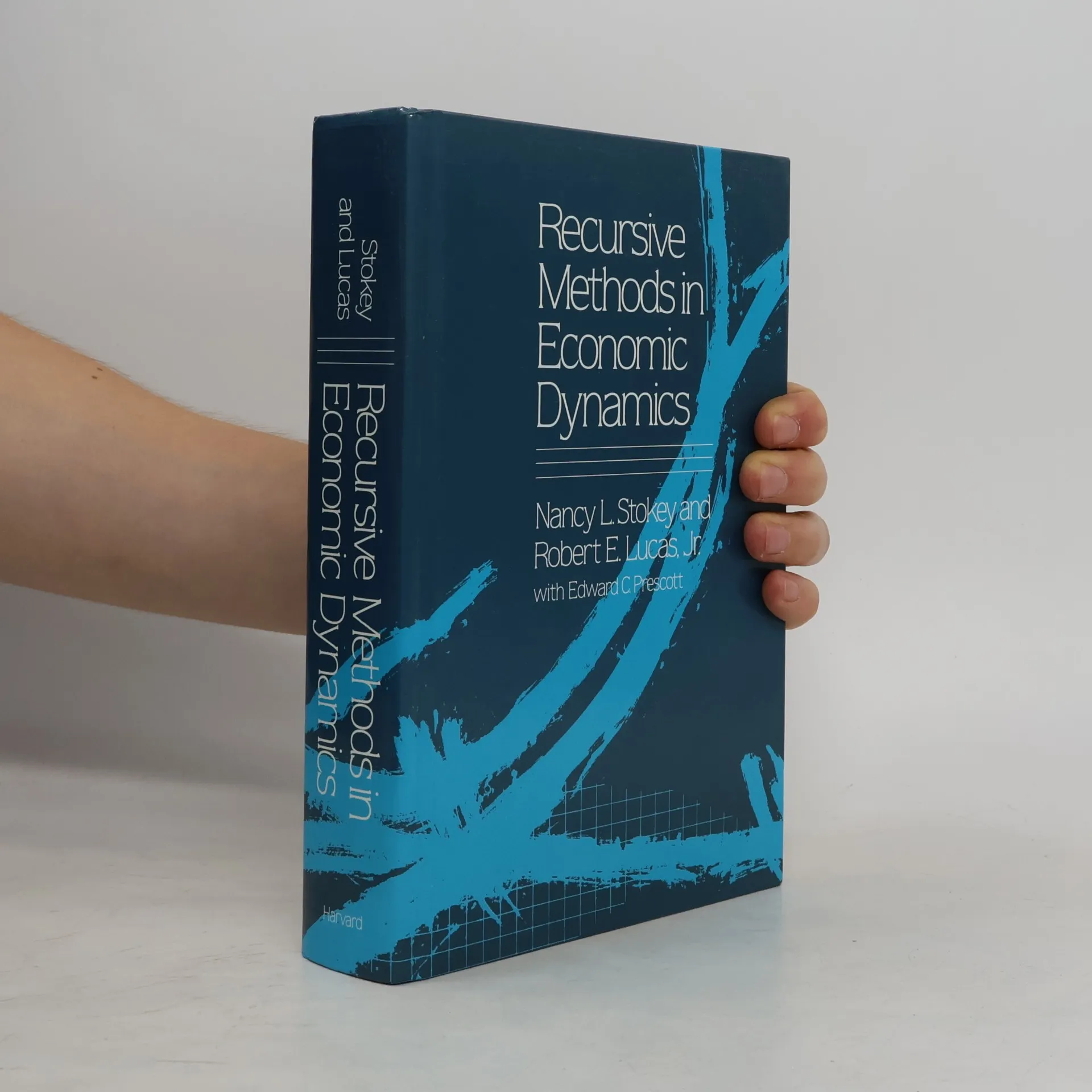
Recursive Methods in Economic Dynamics, Edward C. Prescott, Robert E. Lucas Jr., Nancy L. Stokey
- Langue

- Année de publication
- 1989
- Reliure
- (rigide),
- État du livre
- Très bon
- Prix
- 49,99 €
Modes de paiement
Personne n'a encore évalué .
- Titre
- Recursive Methods in Economic Dynamics
- Langue
- Anglais
- Éditeur
- Harvard University Press
- Publié
- 1989
- Format
- rigide
- Pages
- 608
- ISBN10
- 0674750969
- ISBN13
- 9780674750968
- Séries
- Catégories
- Mots clés
- États-Unis
- Description
- This rigorous but brilliantly lucid book presents a self-contained treatment of modern economic dynamics. Stokey, Lucas, and Prescott develop the basic methods of recursive analysis and illustrate the many areas where they can usefully be applied.After presenting an overview of the recursive approach, the authors develop economic applications for deterministic dynamic programming and the stability theory of first-order difference equations. They then treat stochastic dynamic programming and the convergence theory of discrete-time Markov processes, illustrating each with additional economic applications. They also derive a strong law of large numbers for Markov processes. Finally, they present the two fundamental theorems of welfare economics and show how to apply the methods developed earlier to general equilibrium systems.The authors go on to apply their methods to many areas of economics. Models of firm and industry investment, household consumption behavior, long-run growth, capital accumulation, job search, job matching, inventory behavior, asset pricing, and money demand are among those they use to show how predictions can he made about individual and social behavior. Researchers and graduate students in economic theory will find this book essential.--back cover