

Paramètres
- 168pages
- 6 heures de lecture
En savoir plus sur le livre
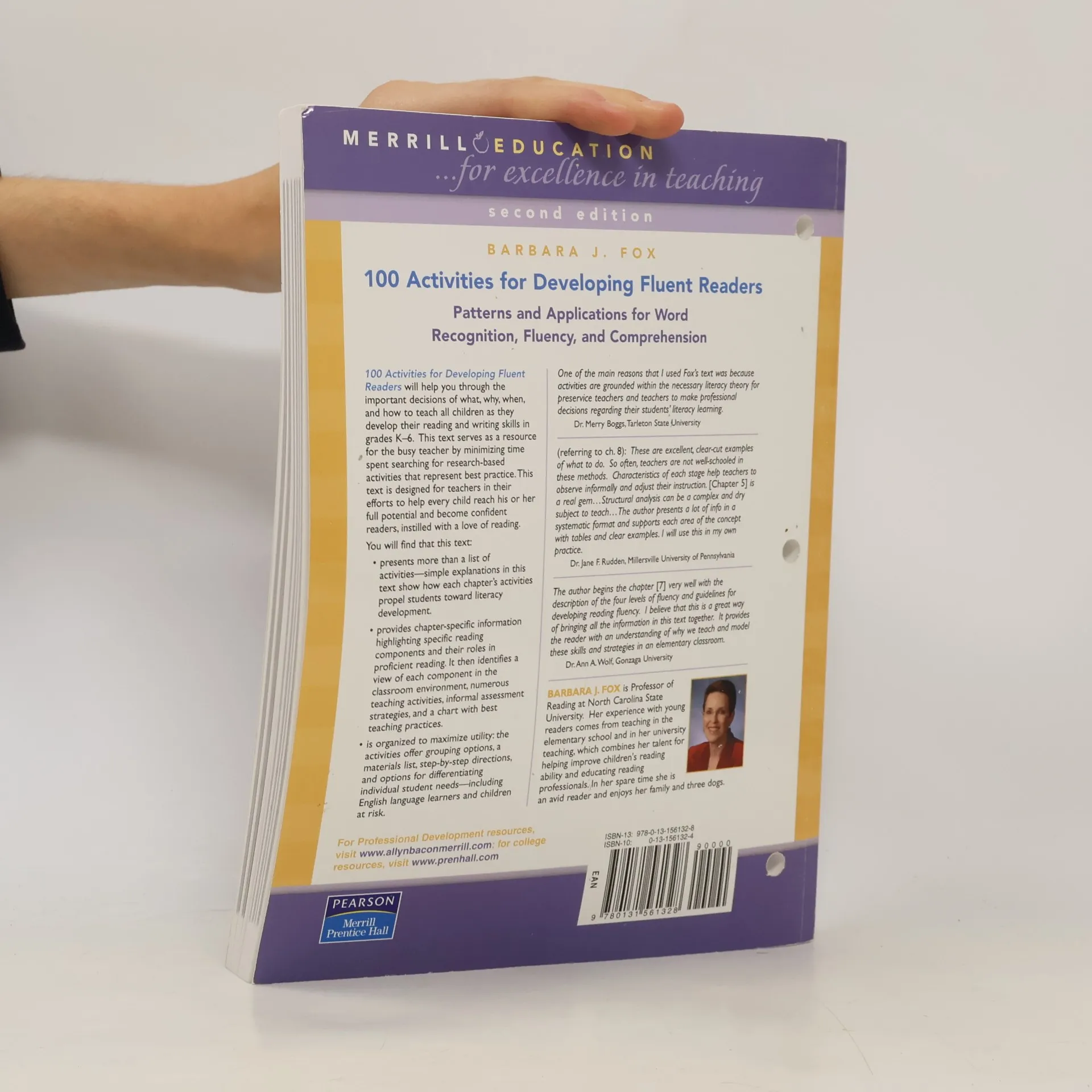
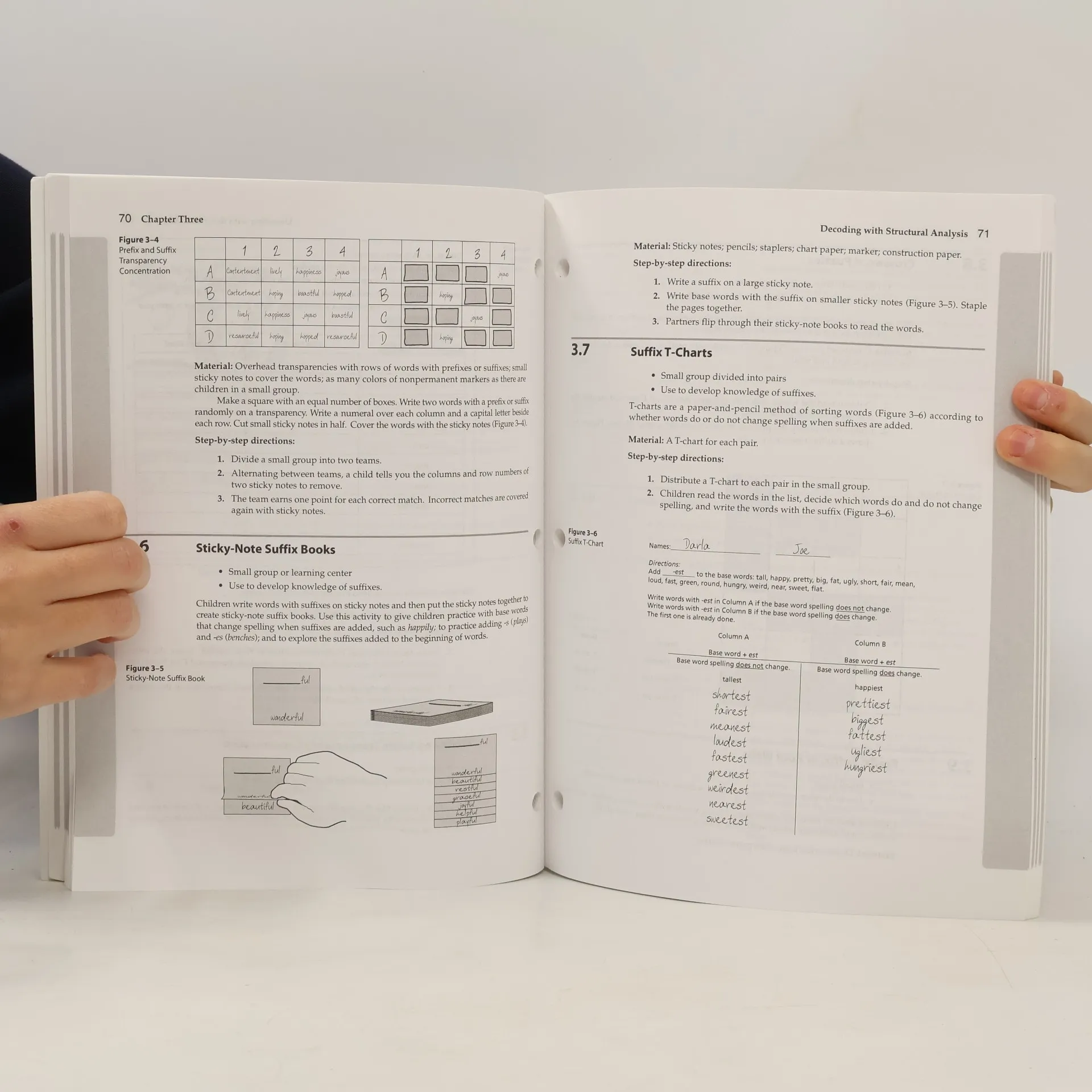
This book offers readers a plethora of activities for teaching the five components of a good reading phonemic awareness, phonics, vocabulary, fluency, and comprehension. Unlike other books that describe a series of activities without any clear point, each chapter in this book explains how activities contribute to fluent reading. New and practicing teachers will find an overview of what each component looks like from a classroom perspective with suggestions for informal assessment. Also included are best practices for teaching each of the five components, best practices for teaching English language learners, and best practices for working with struggling readers. The book is full of citations from professional literature, which makes it appropriate for teachers who are expected to make instructional choices based on research evidence.
Achat du livre
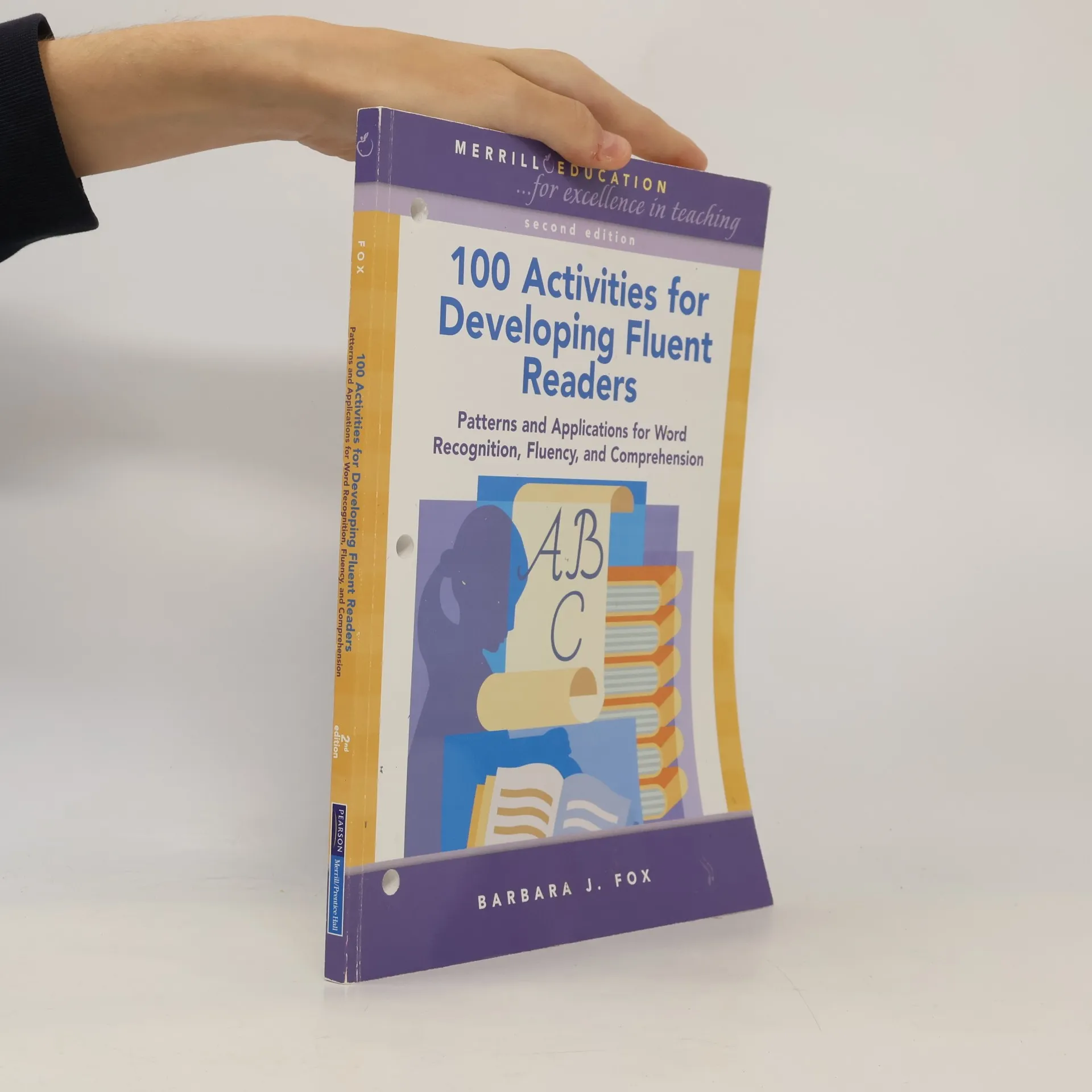
100 Activities for Developing Fluent Readers, Barbara J. Fox
- Langue

- Année de publication
- 2008
- Reliure
- (souple),
- État du livre
- Bon
- Prix
- 10,49 €
Modes de paiement
Personne n'a encore évalué .
- Titre
- 100 Activities for Developing Fluent Readers
- Sous-titre
- Patterns and Applications for Word Recognition, Fluency, and Comprehension - Second Edition
- Langue
- Anglais
- Auteurs
- Barbara J. Fox
- Éditeur
- Pearson
- Publié
- 2008
- Format
- souple
- Pages
- 168
- ISBN10
- 0131561324
- ISBN13
- 9780131561328
- Séries
- Mots clés
- États-Unis, Éducation, système scolaire, Linguistique, Éducation au travail, Lecture, Anthologies, Phonologie
- Description
- This book offers readers a plethora of activities for teaching the five components of a good reading phonemic awareness, phonics, vocabulary, fluency, and comprehension. Unlike other books that describe a series of activities without any clear point, each chapter in this book explains how activities contribute to fluent reading. New and practicing teachers will find an overview of what each component looks like from a classroom perspective with suggestions for informal assessment. Also included are best practices for teaching each of the five components, best practices for teaching English language learners, and best practices for working with struggling readers. The book is full of citations from professional literature, which makes it appropriate for teachers who are expected to make instructional choices based on research evidence.