




En savoir plus sur le livre
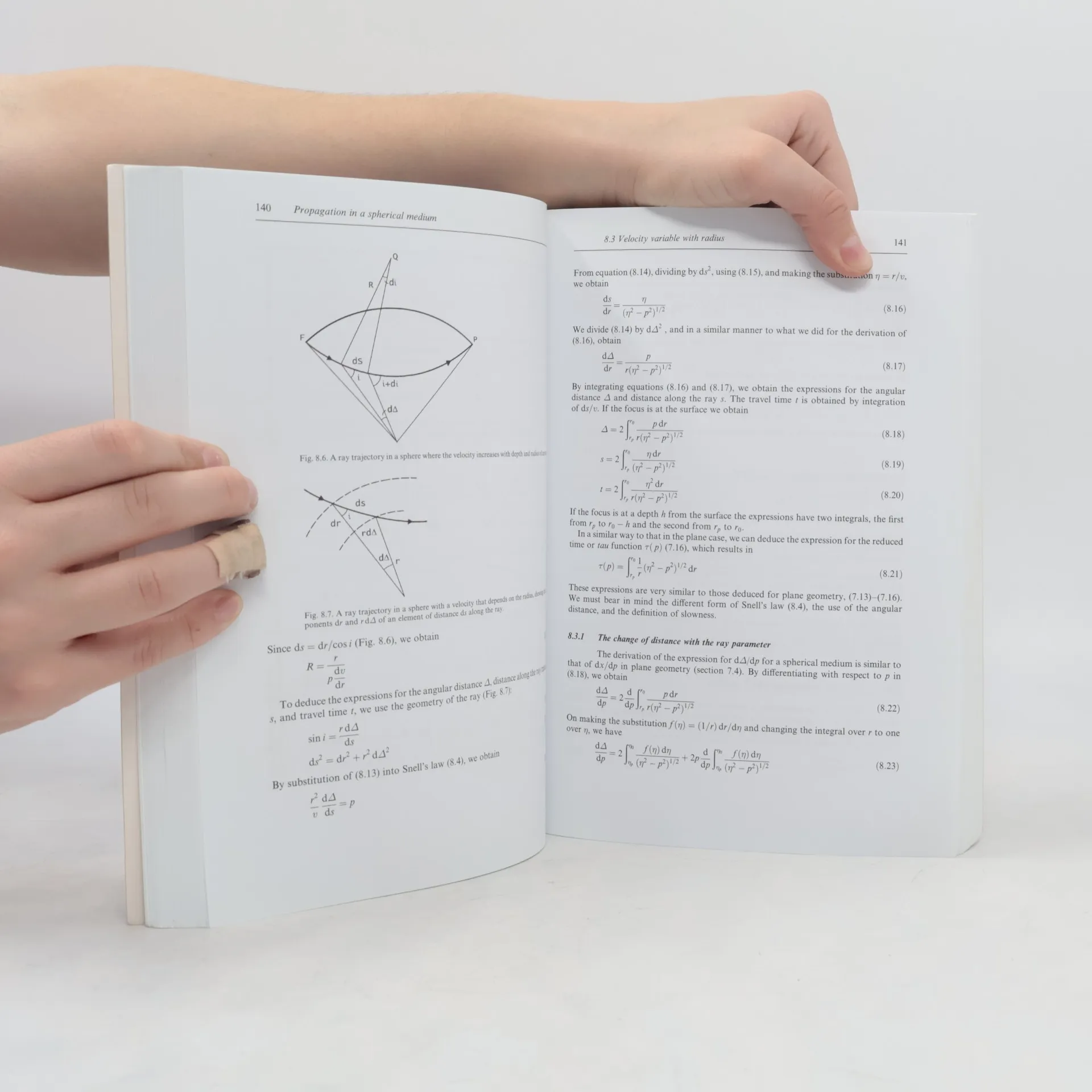
This textbook for upper division undergraduates and graduate students provides the ideal introduction to seismology. A student-friendly text fully details the fundamental concepts and includes a step-by-step development of the relevant mathematics. Beginning with clear examples of introductory topics such as one-dimensional problems and liquid media, the book goes on to cover most of the fundamental concepts in seismology. The author describes the application of seismology to the knowledge of the structure of the earth's interior and the origin and nature of earthquakes. Coverage includes seismic wave propagation, normal mode theory, ray theory approximation, body and surface waves, source mechanisms and kinematic and dynamic models. The book also contains appendices on useful mathematical tools and includes extensive problems that help students to understand the basic concepts in this area.
Achat du livre
Principles of Seismology, Agustín Udías Vallina
- Langue

- Année de publication
- 1999
- Reliure
- (souple),
- État du livre
- Bon
- Prix
- 64,99 €
Modes de paiement
Personne n'a encore évalué .
- Titre
- Principles of Seismology
- Langue
- Anglais
- Auteurs
- Agustín Udías Vallina
- Éditeur
- Cambridge University Press
- Publié
- 1999
- Format
- souple
- Pages
- 492
- ISBN10
- 0521624789
- ISBN13
- 9780521624787
- Séries
- Mots clés
- La nature, Science, Littérature spécialisée, Géologie, Sismologie
- Description
- This textbook for upper division undergraduates and graduate students provides the ideal introduction to seismology. A student-friendly text fully details the fundamental concepts and includes a step-by-step development of the relevant mathematics. Beginning with clear examples of introductory topics such as one-dimensional problems and liquid media, the book goes on to cover most of the fundamental concepts in seismology. The author describes the application of seismology to the knowledge of the structure of the earth's interior and the origin and nature of earthquakes. Coverage includes seismic wave propagation, normal mode theory, ray theory approximation, body and surface waves, source mechanisms and kinematic and dynamic models. The book also contains appendices on useful mathematical tools and includes extensive problems that help students to understand the basic concepts in this area.