



The Thermoballistic Transport Model
A Novel Approach to Charge Carrier Transport in Semiconductors
Paramètres
- 161pages
- 6 heures de lecture
En savoir plus sur le livre
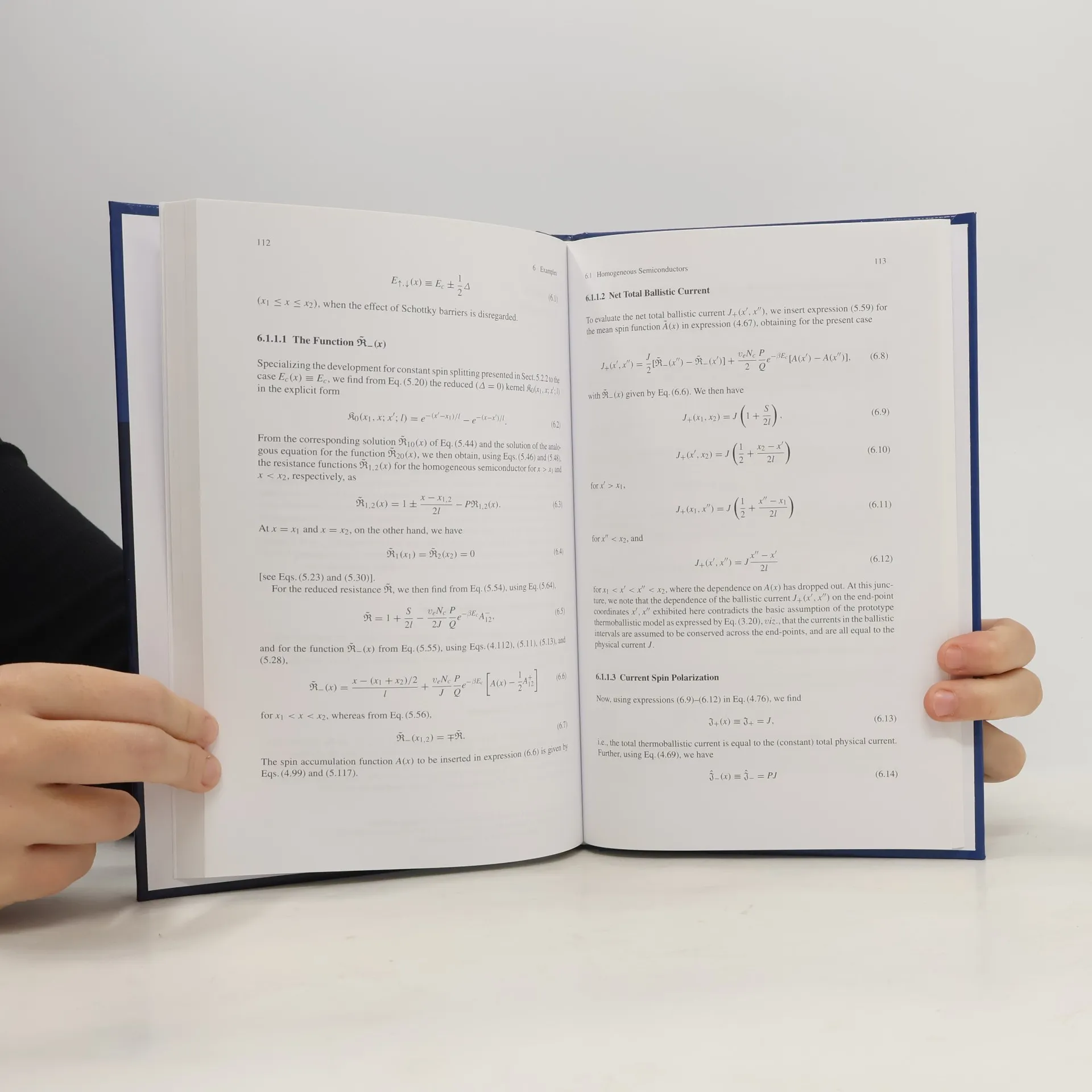
The book presents a comprehensive survey of the thermoballistic approach to charge carrier transport in semiconductors. This semi-classical approach, which the authors have developed over the past decade, bridges the gap between the opposing drift-diffusion and ballistic models of carrier transport. While incorporating basic features of the latter two models, the physical concept underlying the thermoballistic approach constitutes a novel, unifying scheme. It is based on the introduction of "ballistic configurations" arising from a random partitioning of the length of a semiconducting sample into ballistic transport intervals. Stochastic averaging of the ballistic carrier currents over the ballistic configurations results in a position-dependent thermoballistic current, which is the key element of the thermoballistic concept and forms the point of departure for the calculation of all relevant transport properties. In the book, the thermoballistic concept and its implementation are developed in great detail and specific examples of interest to current research in semiconductor physics and spintronics are worked out.
Achat du livre
The Thermoballistic Transport Model, Uwe Wille, Reinhard Lipperheide
- Langue

- Année de publication
- 2014
- Reliure
- (rigide),
- État du livre
- Très bon
- Prix
- 34,89 €
Modes de paiement
Personne n'a encore évalué .
- Titre
- The Thermoballistic Transport Model
- Sous-titre
- A Novel Approach to Charge Carrier Transport in Semiconductors
- Langue
- Anglais
- Auteurs
- Uwe Wille, Reinhard Lipperheide
- Éditeur
- Springer
- Publié
- 2014
- Format
- rigide
- Pages
- 161
- ISBN10
- 3319059238
- ISBN13
- 9783319059235
- Séries
- Mots clés
- Sciences naturelles, Science, Technologie, Littérature spécialisée, Ingénierie, Europe de l'Ouest, Électronique, Nanotechnologie, Semi-conducteurs
- Description
- The book presents a comprehensive survey of the thermoballistic approach to charge carrier transport in semiconductors. This semi-classical approach, which the authors have developed over the past decade, bridges the gap between the opposing drift-diffusion and ballistic models of carrier transport. While incorporating basic features of the latter two models, the physical concept underlying the thermoballistic approach constitutes a novel, unifying scheme. It is based on the introduction of "ballistic configurations" arising from a random partitioning of the length of a semiconducting sample into ballistic transport intervals. Stochastic averaging of the ballistic carrier currents over the ballistic configurations results in a position-dependent thermoballistic current, which is the key element of the thermoballistic concept and forms the point of departure for the calculation of all relevant transport properties. In the book, the thermoballistic concept and its implementation are developed in great detail and specific examples of interest to current research in semiconductor physics and spintronics are worked out.