


Paramètres
- 406pages
- 15 heures de lecture
En savoir plus sur le livre
Drawing on a systematic, empirical analysis of four key Southern European countries, Portugal, Spain, Greece, and Italy, this insightful study identifies several key aspects of democratic consensus and legitimization, party system and party organization, and the ways in which organized and non-organized interests are related to parties and the institutions of state. This book offers the first extensive, comparative analysis of consolidation and crisis in these countries, and features a wealth of up-to-date information on party organizations, interest associations, the media, and public opinion. Although clearly focusing on Southern Europe, the author's findings are extremely relevant for understanding the politics of several other regions, including Eastern Europe, Latin America, and South East Asia.
Achat du livre
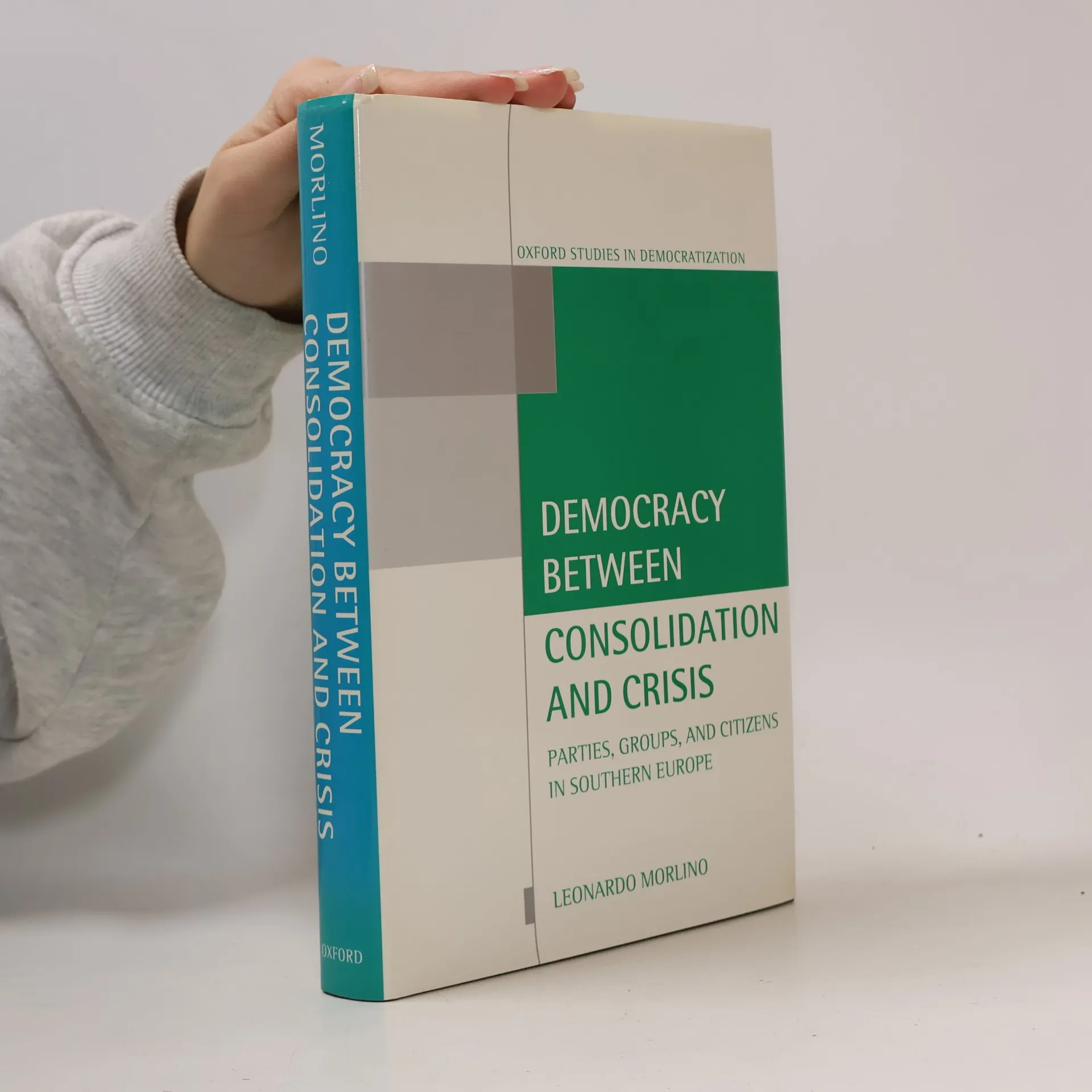
Oxford Studies in Democratization: Democracy Between Consolidation and Crisis, Leonardo Morlino
- Langue

- Année de publication
- 1998
- Reliure
- (rigide),
- État du livre
- Très bon
- Prix
- 113,39 €
Modes de paiement
Personne n'a encore évalué .
- Titre
- Oxford Studies in Democratization: Democracy Between Consolidation and Crisis
- Sous-titre
- Parties, Groups, and Citizens in Southern Europe
- Langue
- Anglais
- Auteurs
- Leonardo Morlino
- Éditeur
- Oxford University Press
- Publié
- 1998
- Format
- rigide
- Pages
- 406
- ISBN10
- 0198280823
- ISBN13
- 9780198280828
- Séries
- Mots clés
- Politique, Europe du Sud, Littérature spécialisée, Relations internationales, Europe de l'Ouest, Démocratie, Histoire politique, Partis politiques
- Description
- Drawing on a systematic, empirical analysis of four key Southern European countries, Portugal, Spain, Greece, and Italy, this insightful study identifies several key aspects of democratic consensus and legitimization, party system and party organization, and the ways in which organized and non-organized interests are related to parties and the institutions of state. This book offers the first extensive, comparative analysis of consolidation and crisis in these countries, and features a wealth of up-to-date information on party organizations, interest associations, the media, and public opinion. Although clearly focusing on Southern Europe, the author's findings are extremely relevant for understanding the politics of several other regions, including Eastern Europe, Latin America, and South East Asia.