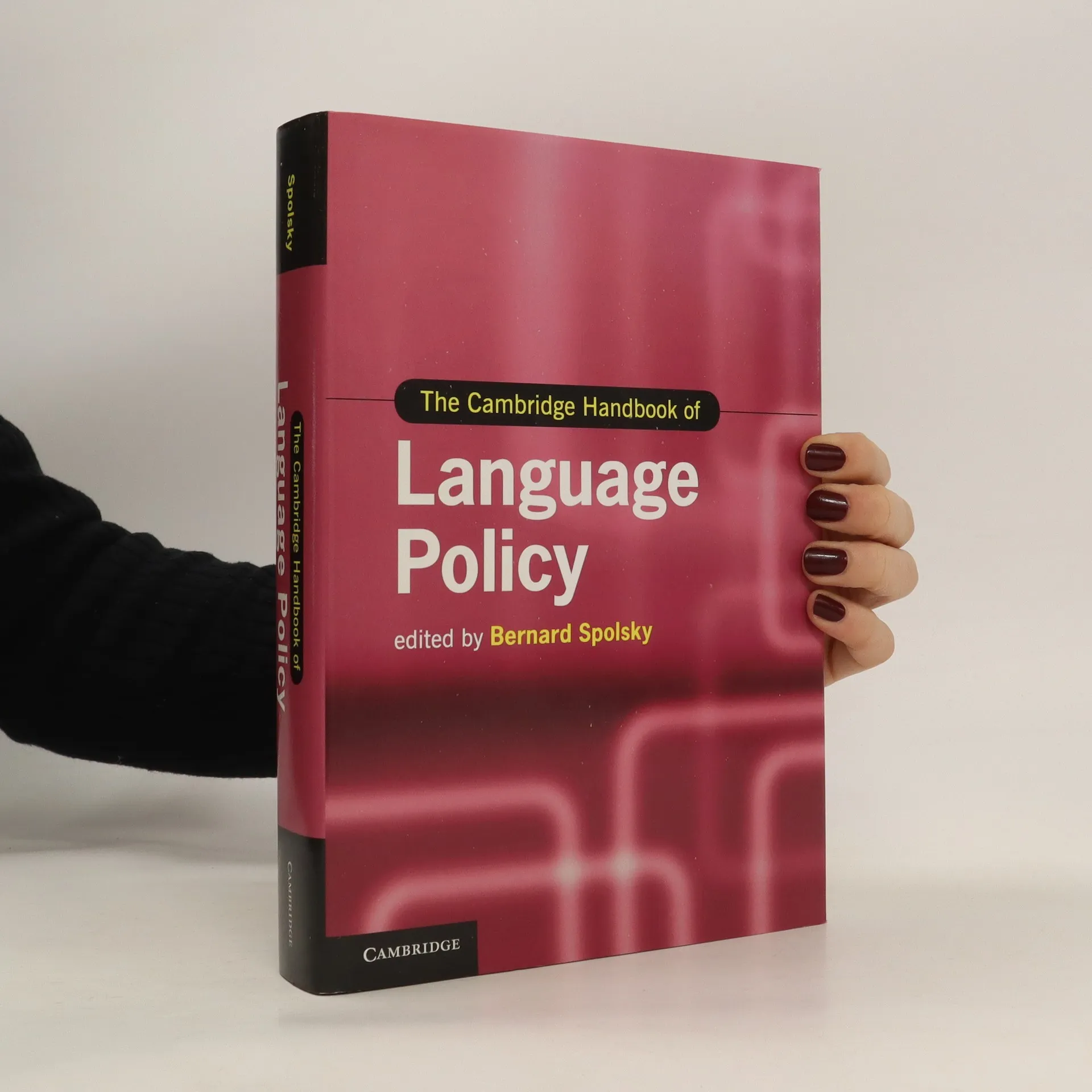
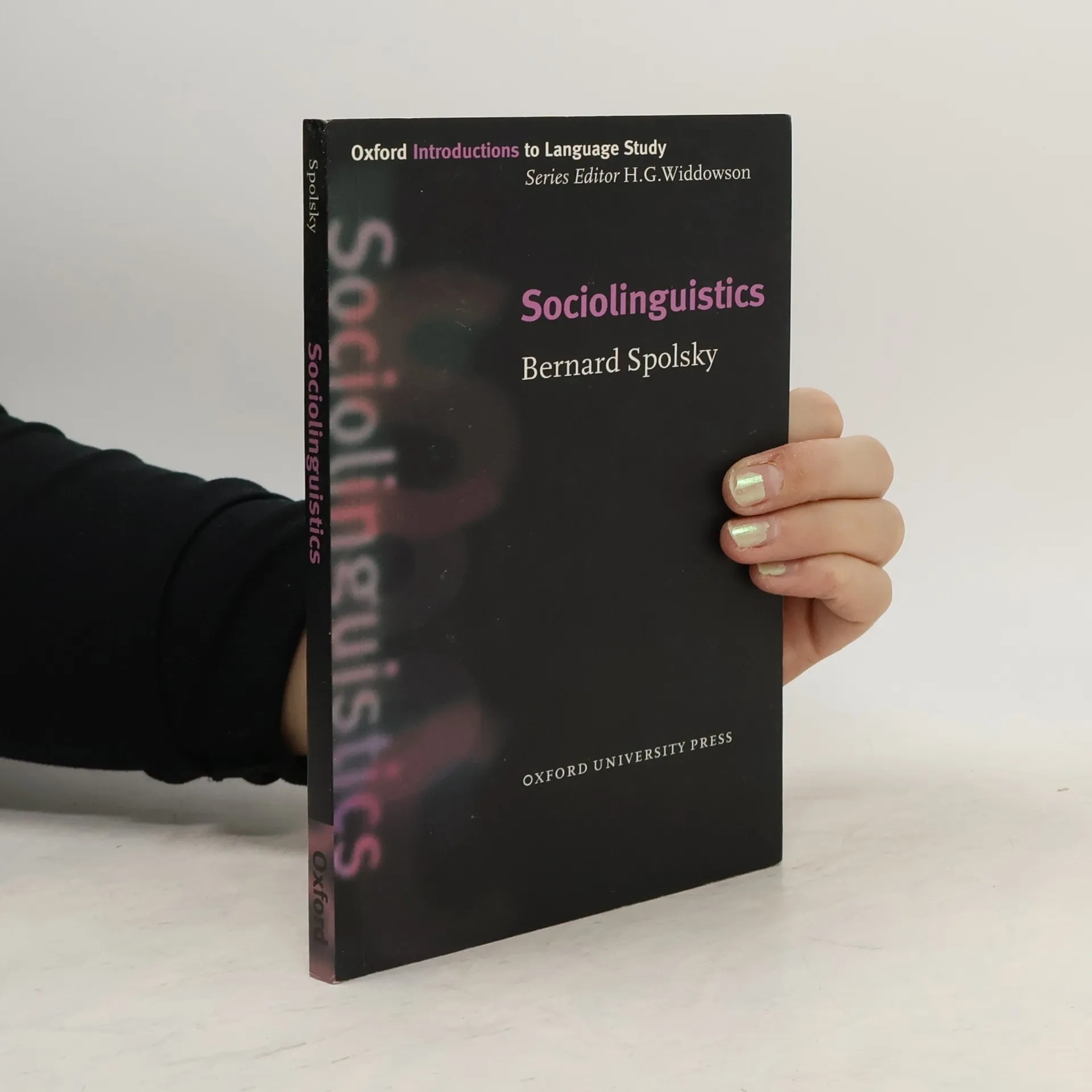
Bernard Spolsky est un éminent universitaire en linguistique appliquée, axant ses travaux sur l'acquisition des langues secondes et la politique linguistique. Sa recherche explore en profondeur les conditions qui facilitent l'apprentissage des langues étrangères, en examinant les dimensions sociolinguistiques du développement linguistique. Les investigations de Spolsky contribuent à une compréhension plus riche de la manière dont les individus et les sociétés interagissent avec la langue. Ses publications, sous l'égide de prestigieuses presses universitaires, offrent des perspectives précieuses tant aux linguistes qu'aux éducateurs.
Sociolinguistics is the study of the different ways in which different groups
of people use language. This book provides a brief but comprehensive
introduction to the field, making links with related disciplines such as
history, politics, and gender studies.
Over the last 50 years, language policy has developed into a major discipline, drawing on research and practice in many nations and at many levels. This is the first Handbook to deal with language policy as a whole and is a complete 'state-of-the-field' survey, covering language practices, beliefs about language varieties, and methods and agencies for language management. It provides a historical background which traces the development of classical language planning, describes activities associated with indigenous and endangered languages, and contains chapters on imperialism, colonialism, effects of migration and globalization, and educational policy. It also evaluates language management agencies, analyzes language activism and looks at language cultivation (including reform of writing systems, orthography and modernized terminology). The definitive guide to the subject, it will be welcomed by students, researchers and language professionals in linguistics, education and politics.