Cecil Woodham-SmithOrdre des livres (chronologique)
Cecil Blanche Woodham-Smith fut une historienne et biographe britannique. Ses œuvres ont exploré diverses facettes de l'ère victorienne, donnant vie à cette période pour un large public. Elle excellait à rendre l'histoire accessible par une recherche méticuleuse et une narration captivante. Son approche combinait la profondeur académique avec un talent pour la narration convaincante.
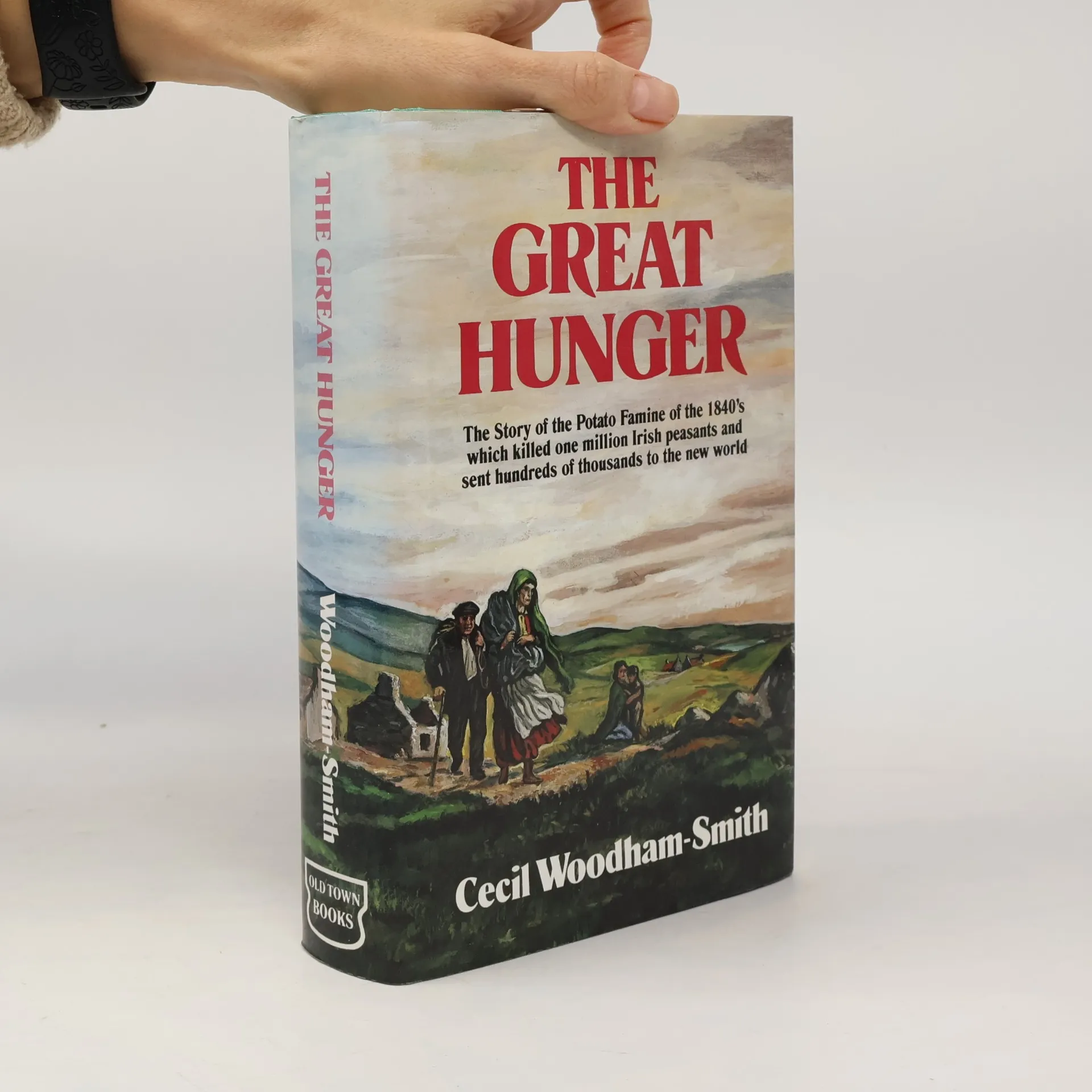
The Irish potato famine of the 1840s, perhaps the most appalling event of the
Victorian era, killed over a million people and drove as many more to emigrate
to America. The impact on Anglo-Irish relations was incalculable, the
immediate human cost almost inconceivable. This book provides a definitive
account.
THE GREAT HUNGER is the story of one of the worst disasters in world history; the Irish potato famine of the 1840s. In only five years one million people died of starvation, and emigrants by the hundreds of thousands sailed for America and Canada. The majority of the emigrant ships were small, ill-equipped, dangerously unsanitary, and often unseaworthy. Some ships never arrived, those that did carried passengers already infected with and often dying of typhus. The Irish who managed to reach this country alive had little or no money and were often too weak to work. They crowded into cellars without light or sanitation, begged in the streets, and accepted whatever employment they could get at wages which no American would accept. Epidemics, riots and chaos followed in the wake of this hopeless flood. Irish immigrants came to be regarded as a danger to the health of the community and a burden on society. Cecil Woodham-Smith, in this balanced and dispassionate look at a terrible tragedy, attempts to apportion the blame among the then known disease which destroyed the potato on which the vast majority of the Irish depended almost exclusively for existence, greedy landlords, and the total lack of comprehension of the British government. THE GREAT HUNGER is a heartbreaking story of suffering, insensitivity, and blundering stupidity, but it is also a story of courage, dignity and, against all odds, a hardly supportable optimism. 'A moving and terrible book. It combines great literary power with great learning. It explains much in modern Ireland - and in modern America' - D.W. Brogan.