Bookbot

Joseph Heath

    1 janvier 1967

    Joseph Heath est un philosophe qui sonde les liens complexes entre la rationalité individuelle et les structures sociétales. Son œuvre explore en profondeur la philosophie politique, l'éthique des affaires et la théorie du choix rationnel. Heath se concentre sur la manière dont les décisions individuelles interagissent avec les normes et les systèmes sociaux plus larges. Son écriture, s'adressant aussi bien au public académique qu'au grand public, se caractérise par sa clarté et sa perspicacité dans l'analyse des interrogations philosophiques clés.


    Joseph Heath
    Konsumrebellen
    The Machinery of Government
    Cooperation and Social Justice
    On Decline
    Ethics for Capitalists
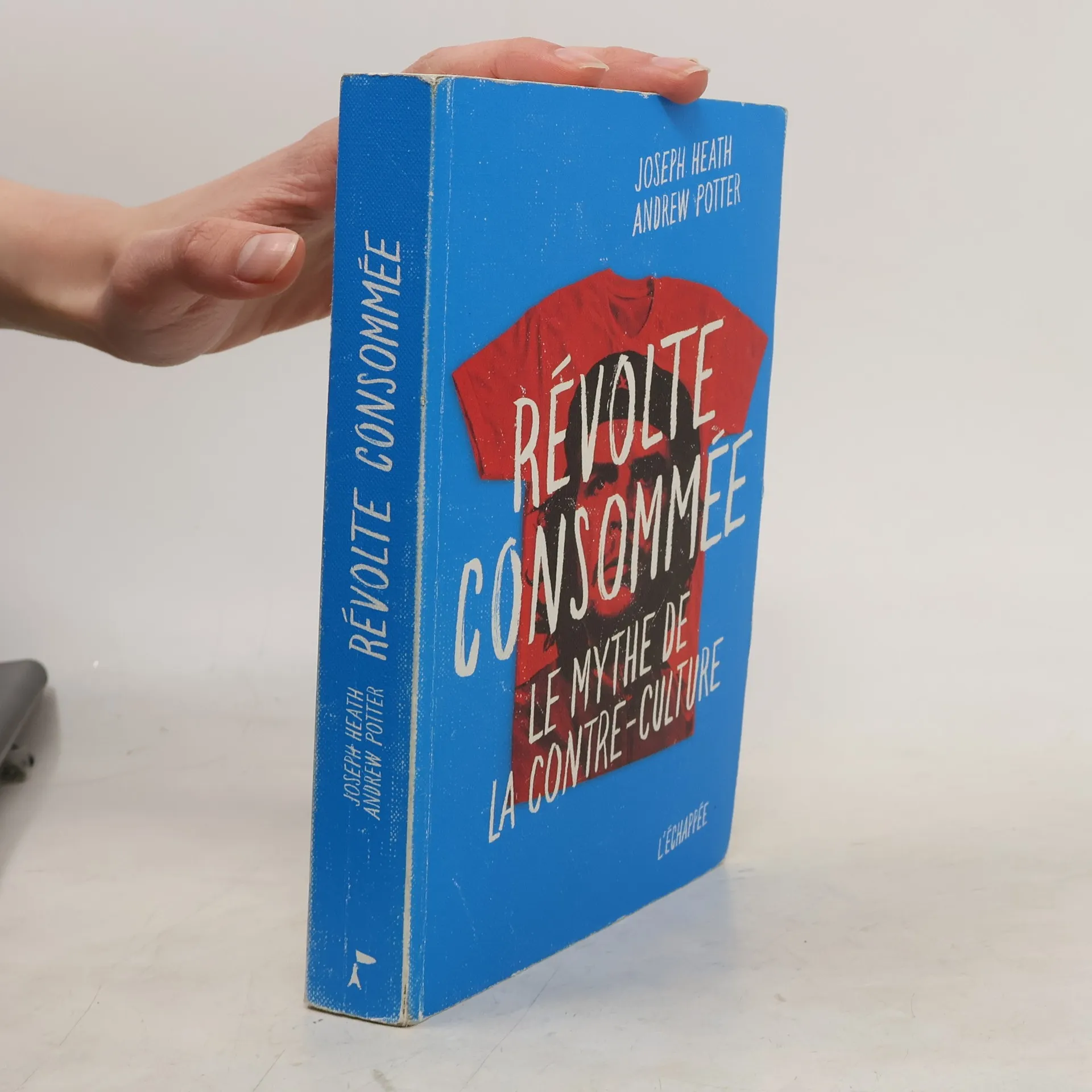
    Révolte consommée
    • Ethics for Capitalists

      A Systematic Approach to Business Ethics, Competition, and Market Failure

      • 276pages
      • 10 heures de lecture

      The Market Failures Approach to business ethics is at the forefront of this work, emphasizing the balance between economic freedom and moral responsibility. It argues that profit-seeking must align with market institutions' goal of efficiency in goods and services allocation. The book explores its implications for business strategy, corporate governance, and shareholder primacy, offering a comprehensive and philosophically grounded framework for understanding ethical practices in capitalism. This foundational perspective aims to shape future discussions in business ethics.

      Ethics for Capitalists
    • On Decline

      • 128pages
      • 5 heures de lecture

      COVID-19 has exposed weaknesses across all aspects of society. What can it tell us about the reality of Western civilization?

      On Decline
    • This book analyses tensions that arise between the principles of social justice and the need for cooperation to advance collective goals.

      Cooperation and Social Justice
    • The Machinery of Government

      • 440pages
      • 16 heures de lecture

      In political theory, the traditional model of state power involves elected officials making policy decisions executed by public servants. However, the complexity of the modern state renders this model outdated, as many economic and social challenges require significant rule-making power to be delegated to civil servants. Despite this, political philosophers often overlook the crucial role of these "permanent" state officials, sometimes referred to as the "deep state," in liberal democracies. For instance, central banks operate independently, akin to supreme courts, yet they address a multitude of economic, social, and political issues. This raises questions about how these public servants make policy decisions and the normative principles guiding their judgments. Joseph Heath seeks to explore these questions by examining public administration practices and addressing normative issues. He aims to outline a "philosophy of the executive," acknowledging the political authority of this often-neglected branch of government. Heath provides a corrective to the tendency to underestimate civil servants' contributions to the success of liberal-democratic welfare states while offering a more comprehensive understanding of the principles underlying public administration.

      The Machinery of Government
    • Konsumrebellen

      • 431pages
      • 16 heures de lecture
      4,3(55)Évaluer

      Lehnen Sie die Konsumkultur ab? Den Verpackungskram, den Reklamerummel? Eine Modeindustrie, die Jagd auf Ihre Kinder macht, mit dem Ergebnis, dass außer Klamotten von Replay und Schuhen von Nike nichts mehr in die Tüte kommt? Willkommen im Club. Denn selbst in knappen Zeiten gehört in Deutschland eine konsumkritische Haltung fast schon zum guten Ton. Mit einer paradoxen Konsequenz: Versandhäuser, die sich von der industriellen Massenfertigung abwenden und nur teure Design-Produkte vertreiben – die so genannten „guten Dinge“ – florieren. Filme wie American Beauty oder Fight Club, die sich gegen die Entfremdung des modernen Menschen in der Warenwelt wenden, machen Kasse; und Gesellschafts-Kritiken wie Naomi Kleins No Logo halten sich monatelang in den Bestsellerlisten. Offenbar funktioniert der Kapitalismus bestens und stellt sich auch noch auf die Nachfrage nach konsumkritischen Produkten ein. Aber wie können so viele Menschen das Konsumdenken ablehnen und trotzdem an einer Konsumgesellschaft teilnehmen? Dieser Frage sind die Autoren in ihrem schnellen Buch über Gegenkultur und Scheinrebellion nachgegangen, in dem es genauso um große Autos und schicke Lofts geht wie um Baudrillard und Douglas Adams, Star Trek und Sigmund Freud.

      Konsumrebellen