

Bookbot

David Graeber

    12 février 1961 – 2 septembre 2020

    David Graeber était un anthropologue et anarchiste américain dont l'œuvre explorait des thèmes tels que la dette, le travail et l'anarchie. Son approche était profondément ancrée dans l'anthropologie sociale, mais dépassait le cadre universitaire par son fort engagement dans le militantisme politique. L'écriture de Graeber était réputée pour sa perspicacité et sa capacité à relier des concepts théoriques aux réalités quotidiennes et aux défis des structures sociales. Ses analyses mettaient souvent en lumière les formes invisibles de pouvoir et de contrôle au sein de la société moderne.

    David Graeber
    Frei von Herrschaft
    Possibilities
    Anarchy-In a Manner of Speaking
    Revolutions In Reverse: Essays On Politics, Violence, Art, And Imagination
    Debt, 10th Anniversary Edition
    Au commencement était…
    • Today's capitalist systems appear to be coming apart - but what is the alternative? In a generation or so, capitalism may no longer exist as it's impossible to maintain perpetual growth on a finite planet. David Graeber explores political strategy, global trade, violence, alienation and creativity looking for a new common sense.

      Revolutions In Reverse: Essays On Politics, Violence, Art, And Imagination
    • David Graeber challenges mainstream liberal and leftist thought through his extensive experience as an ethnologist and activist. He explores a new genealogy of anarchist thought, inspired by movements like Occupy Wall Street, aiming to inspire fresh political ideas for the 21st century, emphasizing collective action over individualism.

      Anarchy-In a Manner of Speaking
    • Possibilities

      • 433pages
      • 16 heures de lecture
      4,3(284)Évaluer

      An anthropologist investigates the revolution of everyday life.

      Possibilities
    • Frei von Herrschaft

      • 254pages
      • 9 heures de lecture
      4,3(2594)Évaluer

      Sind anarchistische Lebensformen der Schlüssel zu einer gerechteren Gesellschaft? Der Anthropologe David Graeber ebnet spannenden Forschungsergebnissen endlich den Weg in den allgemeinen Diskurs.

      Frei von Herrschaft
    • Debt : the first 5000 years

      • 542pages
      • 19 heures de lecture
      4,2(20089)Évaluer

      The groundbreaking international best-seller that turns everything you think about money, debt, and society on its head—from the “brilliant, deeply original political thinker” David Graeber (Rebecca Solnit, author of Men Explain Things to Me) Before there was money, there was debt. For more than 5,000 years, since the beginnings of the first agrarian empires, humans have used elaborate credit systems to buy and sell goods—that is, long before the invention of coins or cash. It is in this era that we also first encounter a society divided into debtors and creditors—which lives on in full force to this day. So says anthropologist David Graeber in a stunning reversal of conventional wisdom. He shows that arguments about debt and debt forgiveness have been at the center of political debates from Renaissance Italy to Imperial China, as well as sparking innumerable insurrections. He also brilliantly demonstrates that the language of the ancient works of law and religion (words like “guilt,” “sin,” and “redemption”) derive in large part from ancient debates about debt, and shape even our most basic ideas of right and wrong. We are still fighting these battles today.

      Debt : the first 5000 years
    • On August 2 2011, David Graeber and a group of veterans from various European, Middle Eastern and Asian activist movements answered the Adbusters provocation to 'occupy Wall Street'. This book tells the story of Occupy Wall Street's origins and explains how the movement works and how readers can replicate its method in their communities.

      The democracy project : a history, a crisis, a movement
    • 4,2(17232)Évaluer

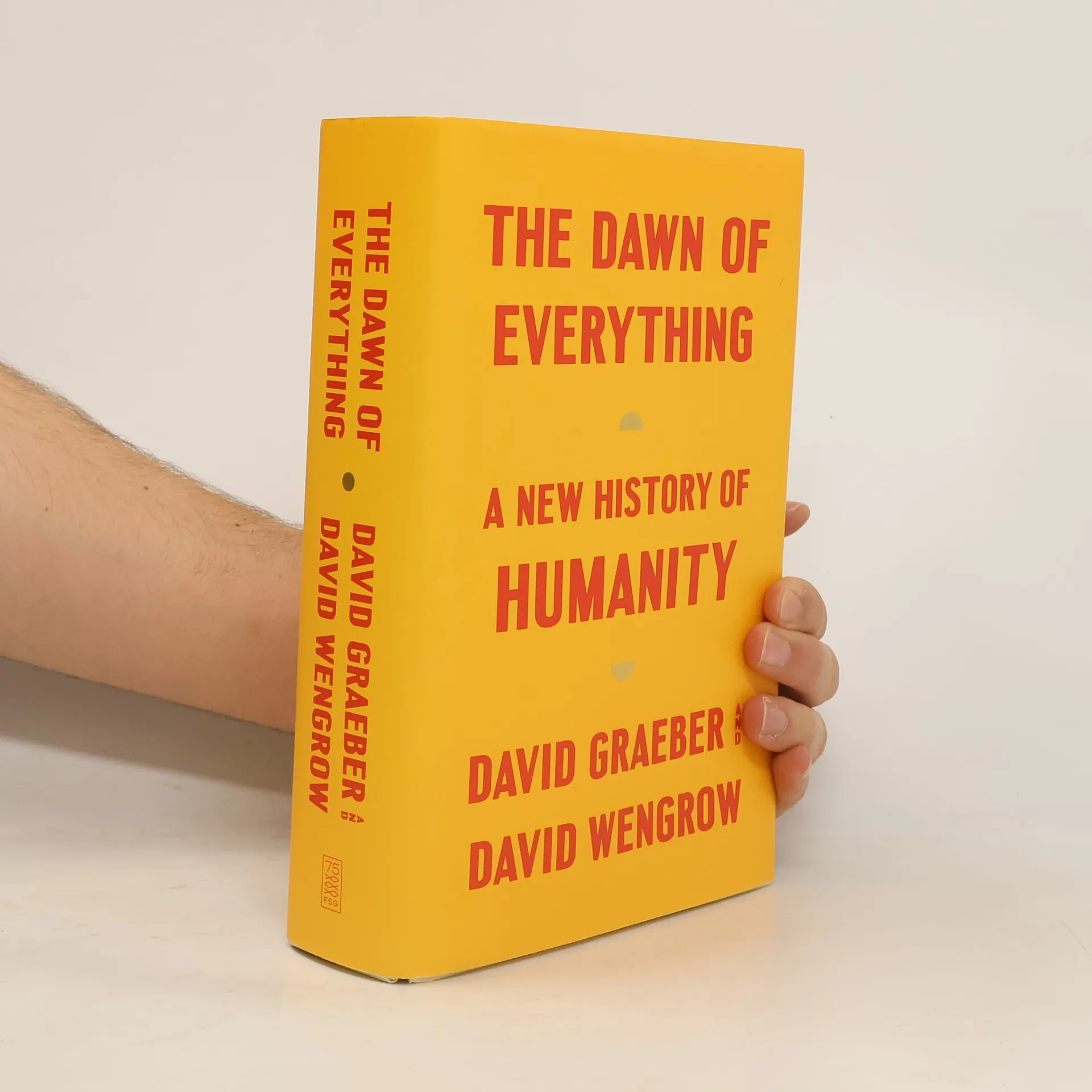
      Drawing on pathbreaking research in archaeology and anthropology, the authors show how history becomes a far more interesting place once we learn to throw off our conceptual shackles and perceive what's really there. If humans did not spend 95 percent of their evolutionary past in tiny bands of hunter-gatherers, what were they doing all that time? If agriculture, and cities, did not mean a plunge into hierarchy and domination, then what kinds of social and economic organization did they lead to? The answers are often unexpected, and suggest that the course of human history may be less set in stone, and more full of playful, hopeful possibilities, than we tend to assume

      The Dawn of Everything. A New History of Humanity