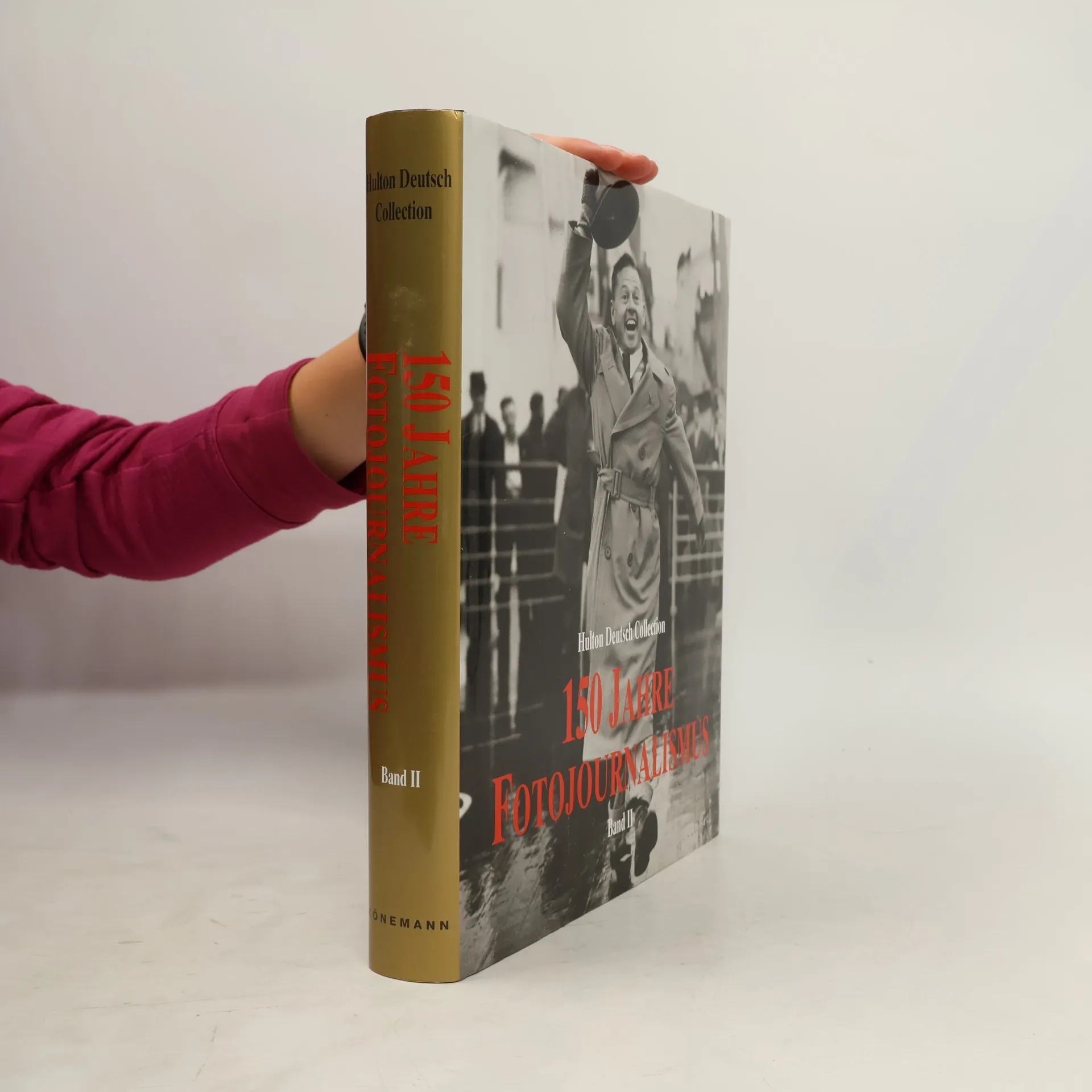
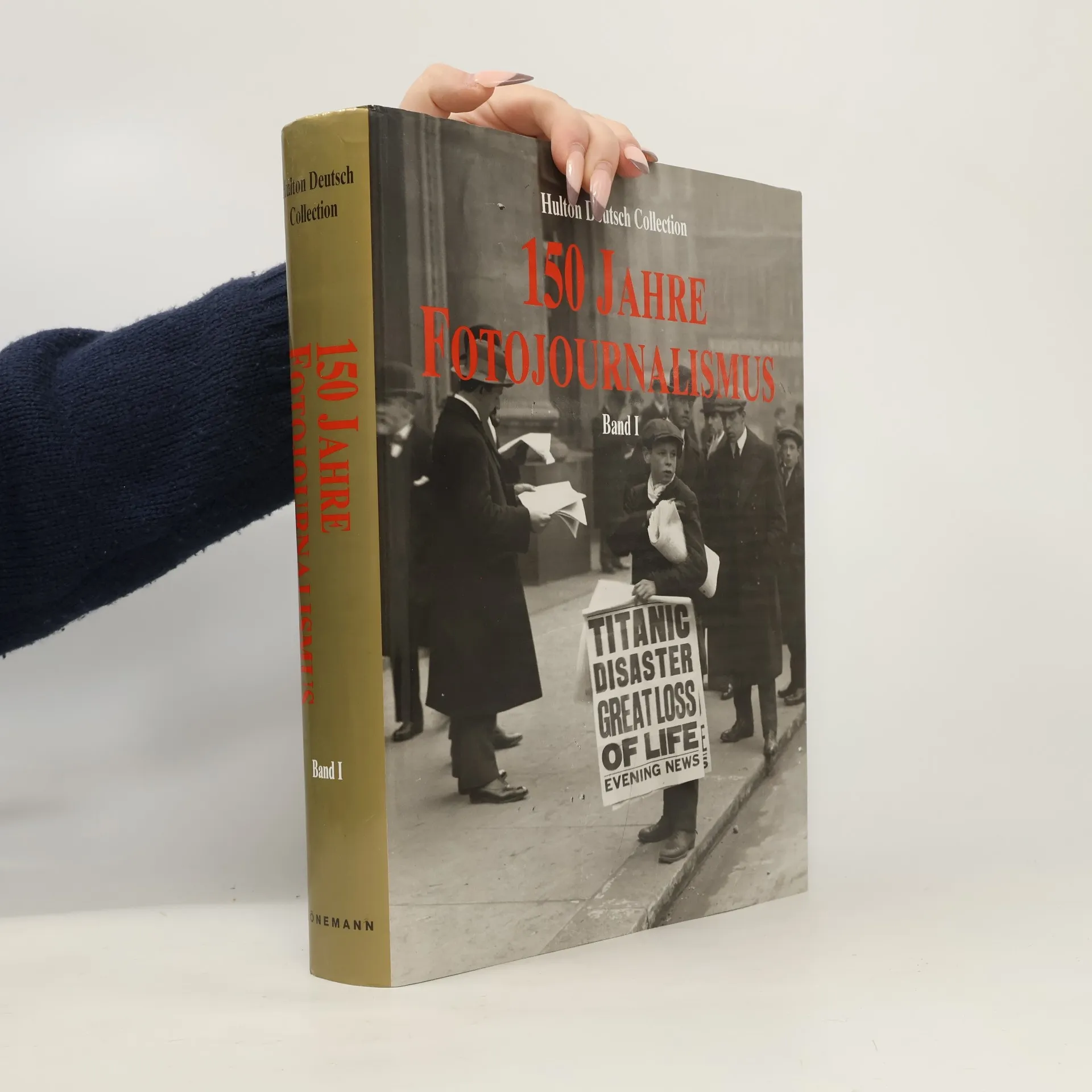
Featuring black-and-white and colour photographs, this volume aims to lead observers through 150 years of the history of photo-journalism. Including both everyday life and the grandest events, it conveys the ideals and fears of the decades.
Vol. 2. Images 1918 To The Present -- Aspects Of The 1920s And 1930s -- The Rise Of Facism -- Nazism -- War In Europe : The Blitz -- Postwar Fashion -- Cinema -- The Changing Role Of Women -- Music And Dance -- The Sixties -- Aviation And Space -- World Events -- Civil Protest -- Disasters -- Sport. Text By Nick Yapp (vol. I) ; Amanda Hopkinson (vol. Ii). Includes Index. Text In English, German, And French; German Translation By Birgit Herbst And French Translation By Sylvie Adam-kuenen.
This book covers the history of photojournalism from 1850 to the present. Part I encompasses 1850 through 1918, including aviation and railways, World War I, and the Russian Revolution. Part II covers 1918 to the present, including the rise of Fascism, Nazism, the changing role of women, and civil protest.
The fascinating black-and-white and color photographs in this volume lead observers through almost two centuries of the history of photo journalism. Including both everyday life and the grandest events, the ideals and fears of the decades are conveyed through an exciting perspective. The book will captivate you with its varied and striking images. Viewers will be touched, shocked, amused, or even moved to tears. Photo Journalism is a must for everyone interested in photography and the events of our times.
Featuring a comprehensive 4000-word essay by a field expert, this series offers a deep dive into photography. It includes 55 chronologically arranged photographs, each accompanied by insightful commentary, enhancing the viewer's understanding of the images. Additionally, a biography of the featured photographer provides context and background, making it an enriching experience for photography enthusiasts and those interested in the art form's history.
“I think of women as the most natural subjects for me, in two senses. Firstly, because women often express more in their faces, and are less inhibited in showing emotion. Then because being a woman has been a great advantage to me personally in being a photographer. Women subjects are less threatened by a woman, so it is easier for me to approach them without seeming intimidating. I can win their trust, move in closer.” 'About Women' is Dorothy Bohm’s first book to focus exclusively on the subject of women. Taken throughout the world, from the late 1940s until the present day, her photographs range from images of ordinary women going about their everyday activities, to explorations of the role that representations of women, in the form of advertisements, posters and mannequins, play in contemporary westernised society. The photographs, many of which are previously unpublished, are complemented by an insightful foreword by novelist Marika Cobbold and an informative essay, based on conversations with Dorothy Bohm, by photography curator and historian Amanda Hopkinson.
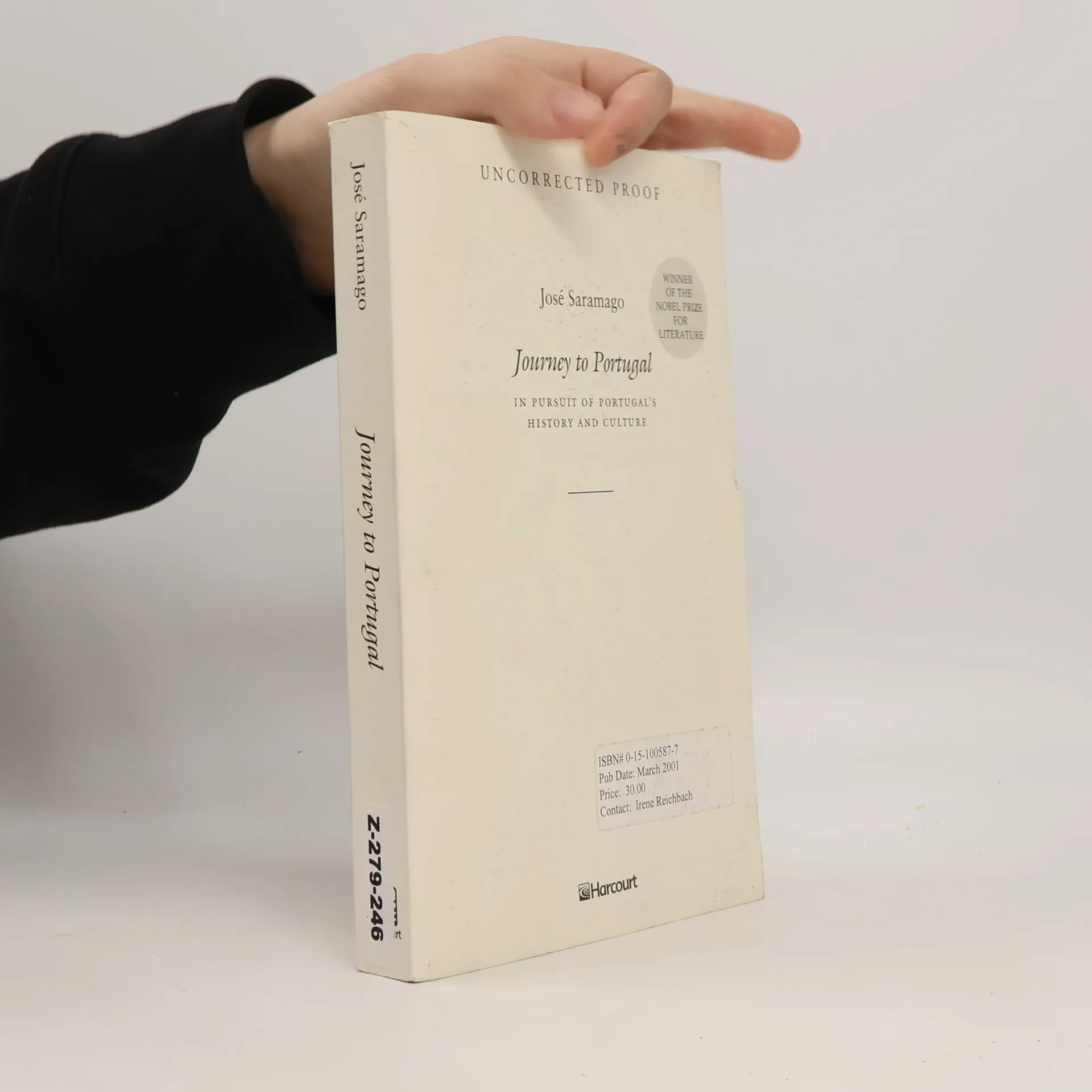
In Pursuit of Portugal's History and Culture - Uncorrected Proof
452pages
16 heures de lecture
When José Saramago decided some twenty years ago to write a book about Portugal, his only desire was that it be unlike all other books on the subject, and in this he has certainly succeeded. Recording the events and observations of a journey across the length and breadth of the country he loves dearly, Saramago brings Portugal to life as only a writer of his brilliance can. Forfeiting sources of information such as tourist guides and road maps, he scours the country with the eyes and ears of an observer fascinated by the ancient myths and history of his people. Whether an inaccessible medieval fortress set on a cliff, a wayside chapel thick with cobwebs, or a grand mansion in the city, the extraordinary places of this land come alive with kings, warriors, painters, explorers, writers, saints, and sinners. Always meticulously attentive to those elements of ancient Portugal that persist today, Saramago examines the country in its current period of rapid transition and growth. Infused with the tenderness and intelligence that have become familiar to his readers, Saramago's Journey to Portugal is an ode of love for a country and its rich traditions.
Un mystérieux étranger arrive, dans une région montagneuse, au village de Bescos qui compte 281 habitants, des fermiers et des bergers qui vivent hors du temps. Par l'intermédiaire de Mlle Prym, une jeune employée de l'hôtel qu'il soudoie, l'étranger adresse aux villageois une étrange proposition : s'ils assassinent l'un des leurs, ils se verront récompensés par un trésor de lingots d'or.
Wenn Sie den Namen Gerti Deutsch nicht kennen, sind sie offenbar zu jung, um Picture Post gelesen zu haben. Ihr Name stand dort in den 1930er und 1940er Jahren regelmäßig unter den interessantesten Fotoreportagen. (Wolf Suschitzky, 2010) Der Bildband gibt erstmals einen Einblick in das fotografische Gesamtwerk von Gerti Deutsch. Es reicht von kunstfotografischen Portraits aus den 30er Jahren in Wien, die sie vermutlich im Zuge ihres Studiums an der Graphischen Lehr- und Versuchsanstalt gemacht hat, über ihre produktivste Zeit als Fotojournalistin bis hin zu bewegenden Bildern aus dem Wien der Nachkriegszeit und Entwürfen zu nie verwirklichten Buchprojekten in den 60er Jahren. Gerti Deutsch, in ein gutbürgerliches jüdisches Elternhaus in Wien geboren, arbeitete ab 1938 im Londoner Exil als eine der wenigen Frauen für die damals führende Bildillustrierte Picture Post, für die sie unmittelbar nach dem Krieg auch Reportagen in ihrer ehemaligen Heimatstadt Wien fotografierte. Ende der 60er Jahre kehrte sie nach einem Aufenthalt in Italien für längere Zeit wieder nach Österreich zurück. Die Texte stammen von Wolf Suschitzky, dem ebenfalls nach London emigrierten Fotografen und Kameramann, von ihrer Tochter Amanda Hopkinson, selbst eine profilierte Fotohistorikerin; von der Literaturwissenschaftlerin und Kulturtheoretikerin Sabine Coelsch-Foisner und dem Fototheoretiker Kurt Kaindl.