

Épuisé, mais très demandé!

Vous l'avez dans votre bibliothèque ?Gagnez de l'argent entre 50,31 € et 62,26 € en vendant ce livre.
Vendre des livresParamètres
- 314pages
- 11 heures de lecture
En savoir plus sur le livre
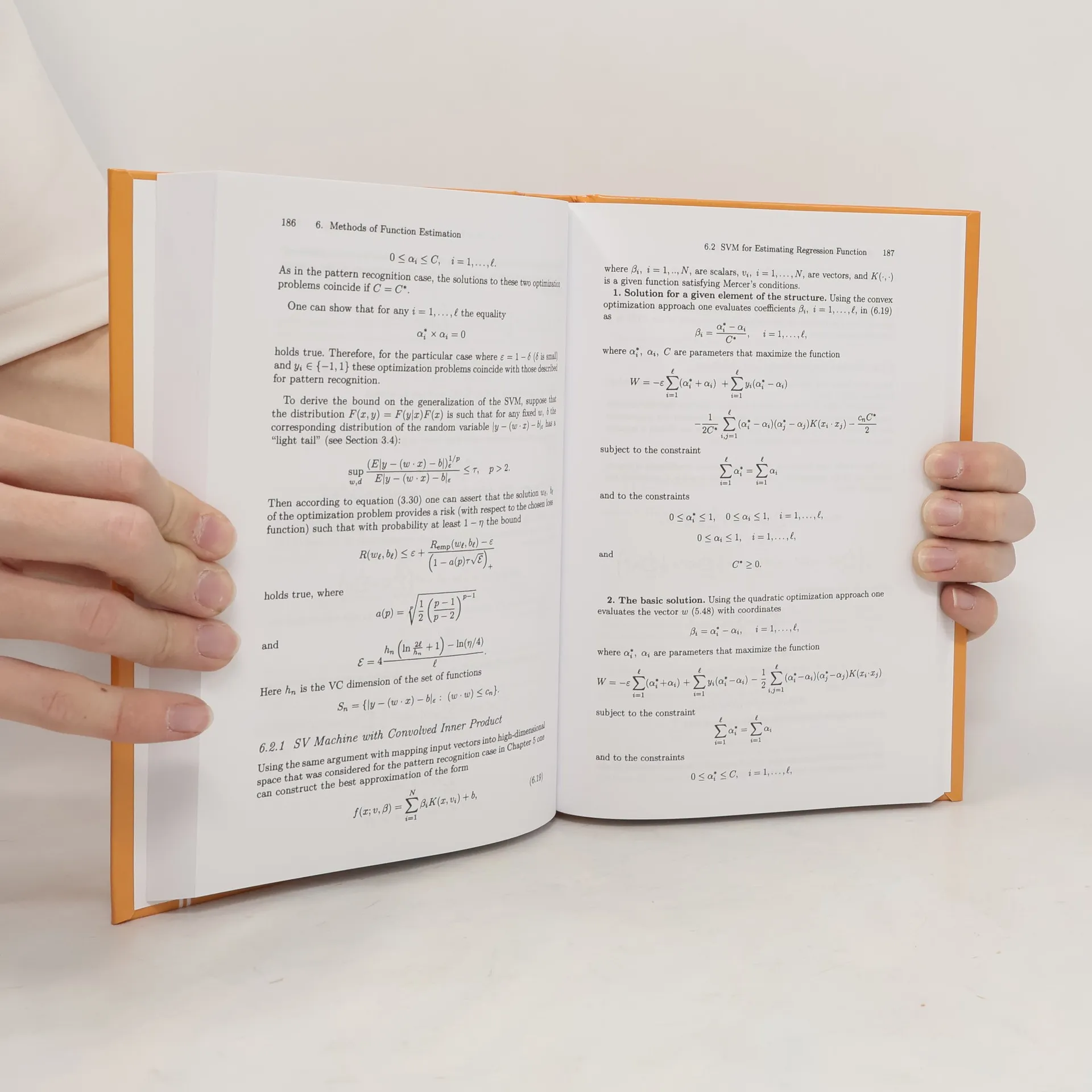
The aim of this book is to discuss the fundamental ideas which lie behind the statistical theory of learning and generalization. It considers learning as a general problem of function estimation based on empirical data. Omitting proofs and technical details, the author concentrates on discussing the main results of learning theory and their connections to fundamental problems in statistics. This second edition contains three new chapters devoted to further development of the learning theory and SVM techniques. Written in a readable and concise style, the book is intended for statisticians, mathematicians, physicists, and computer scientists.
Édition

Achat du livre
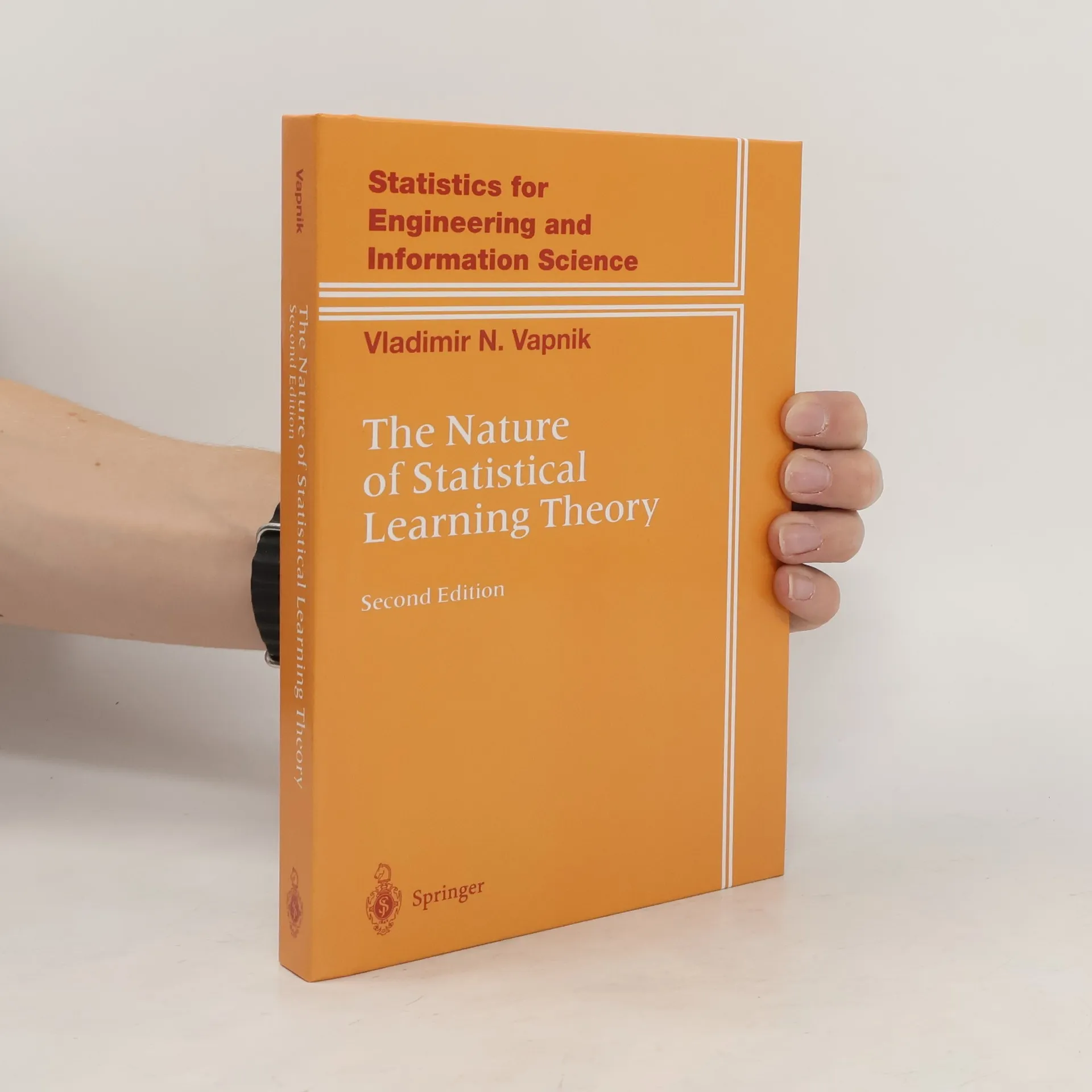
The nature of statistical learning theory, Vladimir Naumovich Vapnik
- Langue

- Année de publication
- 2000
- Reliure
- (rigide)
Nous vous informerons par e-mail dès que nous l’aurons retrouvé.
Modes de paiement
4,2
Très bien
27 Évaluations
Il manque plus que ton avis ici.
- Titre
- The nature of statistical learning theory
- Langue
- Allemand
- Auteurs
- Vladimir Naumovich Vapnik
- Éditeur
- Springer
- Publié
- 2000
- Format
- rigide
- Pages
- 314
- ISBN10
- 0387987800
- ISBN13
- 9780387987804
- Séries
- Évaluation
- 4,2 sur 5
- Description
- The aim of this book is to discuss the fundamental ideas which lie behind the statistical theory of learning and generalization. It considers learning as a general problem of function estimation based on empirical data. Omitting proofs and technical details, the author concentrates on discussing the main results of learning theory and their connections to fundamental problems in statistics. This second edition contains three new chapters devoted to further development of the learning theory and SVM techniques. Written in a readable and concise style, the book is intended for statisticians, mathematicians, physicists, and computer scientists.