


Paramètres
- 120pages
- 5 heures de lecture
En savoir plus sur le livre
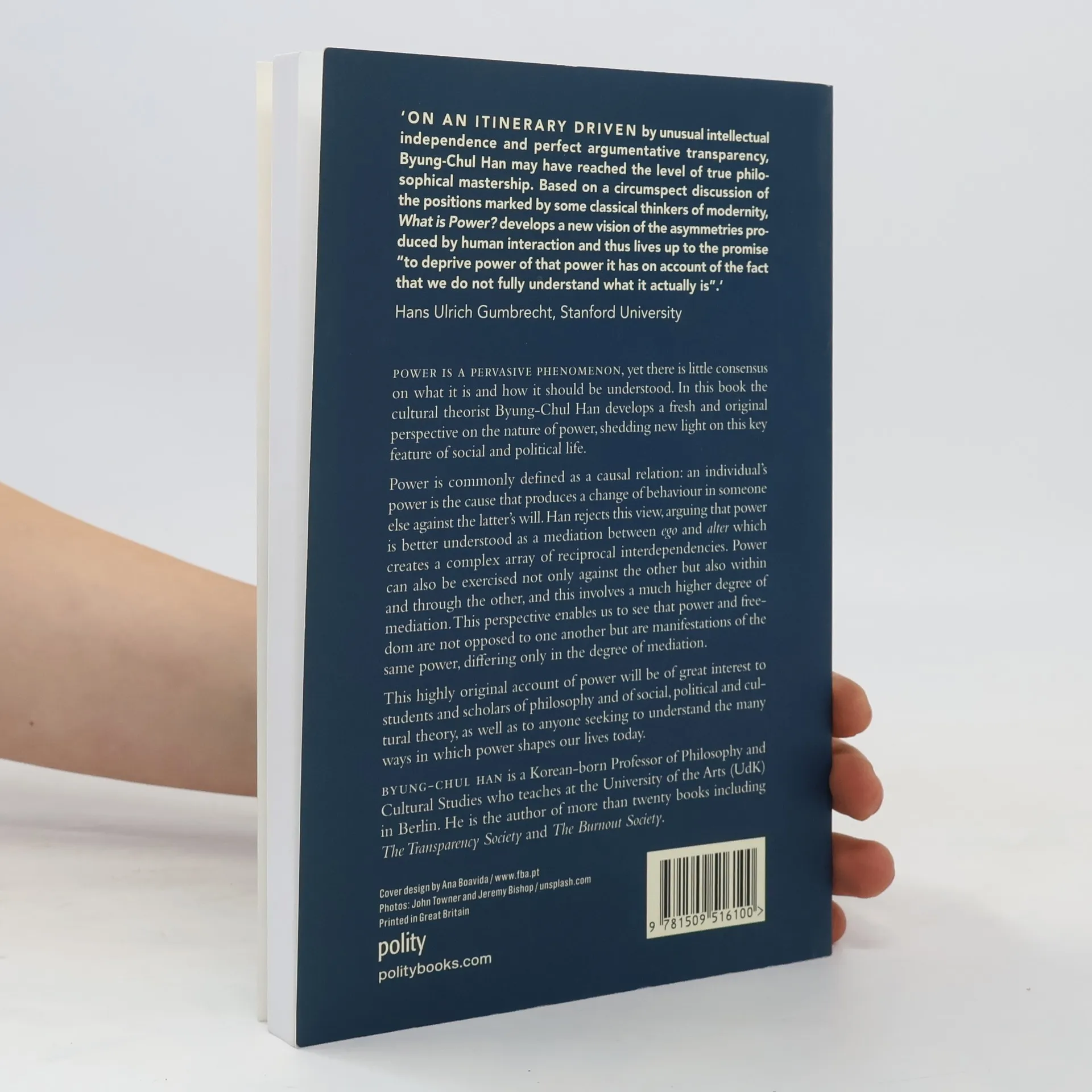
Power is a pervasive phenomenon yet there is little consensus on what it is and how it should be understood. In this book the cultural theorist Byung-Chul Han develops a fresh and original perspective on the nature of power, shedding new light on this key feature of social and political life. Power is commonly defined as a causal relation: an individual’s power is the cause that produces a change of behaviour in someone else against the latter’s will. Han rejects this view, arguing that power is better understood as a mediation between ego and alter which creates a complex array of reciprocal interdependencies. Power can also be exercised not only against the other but also within and through the other, and this involves a much higher degree of mediation. This perspective enables us to see that power and freedom are not opposed to one another but are manifestations of the same power, differing only in the degree of mediation. This highly original account of power will be of great interest to students and scholars of philosophy and of social, political and cultural theory, as well as to anyone seeking to understand the many ways in which power shapes our lives today.

Édition

Achat du livre
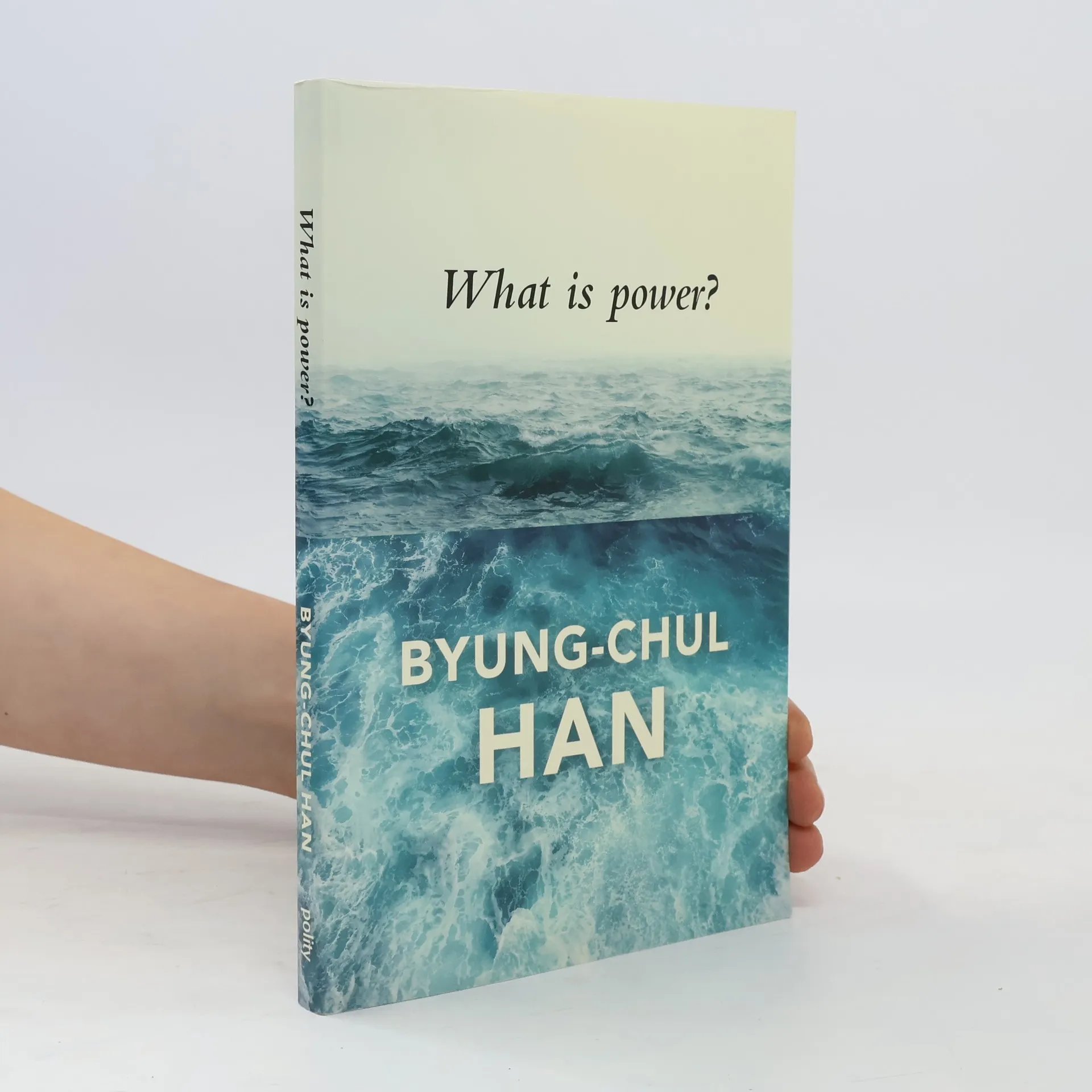
What is Power?, Han Byung Chul
- Langue

- Année de publication
- 2018
- Reliure
- (souple)
Modes de paiement
Il manque plus que ton avis ici.
- Titre
- What is Power?
- Langue
- Anglais
- Auteurs
- Han Byung Chul
- Éditeur
- Polity Press
- Publié
- 2018
- Format
- souple
- Pages
- 120
- ISBN10
- 1509516107
- ISBN13
- 9781509516100
- Séries
- Mots clés
- Thèmes psychologiques, Thématique philosophique, Littérature allemande, Politique, Cadeaux pour papy, Violence, Théories scientifiques, Morale
- Évaluation
- 3,75 sur 5
- Description
- Power is a pervasive phenomenon yet there is little consensus on what it is and how it should be understood. In this book the cultural theorist Byung-Chul Han develops a fresh and original perspective on the nature of power, shedding new light on this key feature of social and political life. Power is commonly defined as a causal relation: an individual’s power is the cause that produces a change of behaviour in someone else against the latter’s will. Han rejects this view, arguing that power is better understood as a mediation between ego and alter which creates a complex array of reciprocal interdependencies. Power can also be exercised not only against the other but also within and through the other, and this involves a much higher degree of mediation. This perspective enables us to see that power and freedom are not opposed to one another but are manifestations of the same power, differing only in the degree of mediation. This highly original account of power will be of great interest to students and scholars of philosophy and of social, political and cultural theory, as well as to anyone seeking to understand the many ways in which power shapes our lives today.