

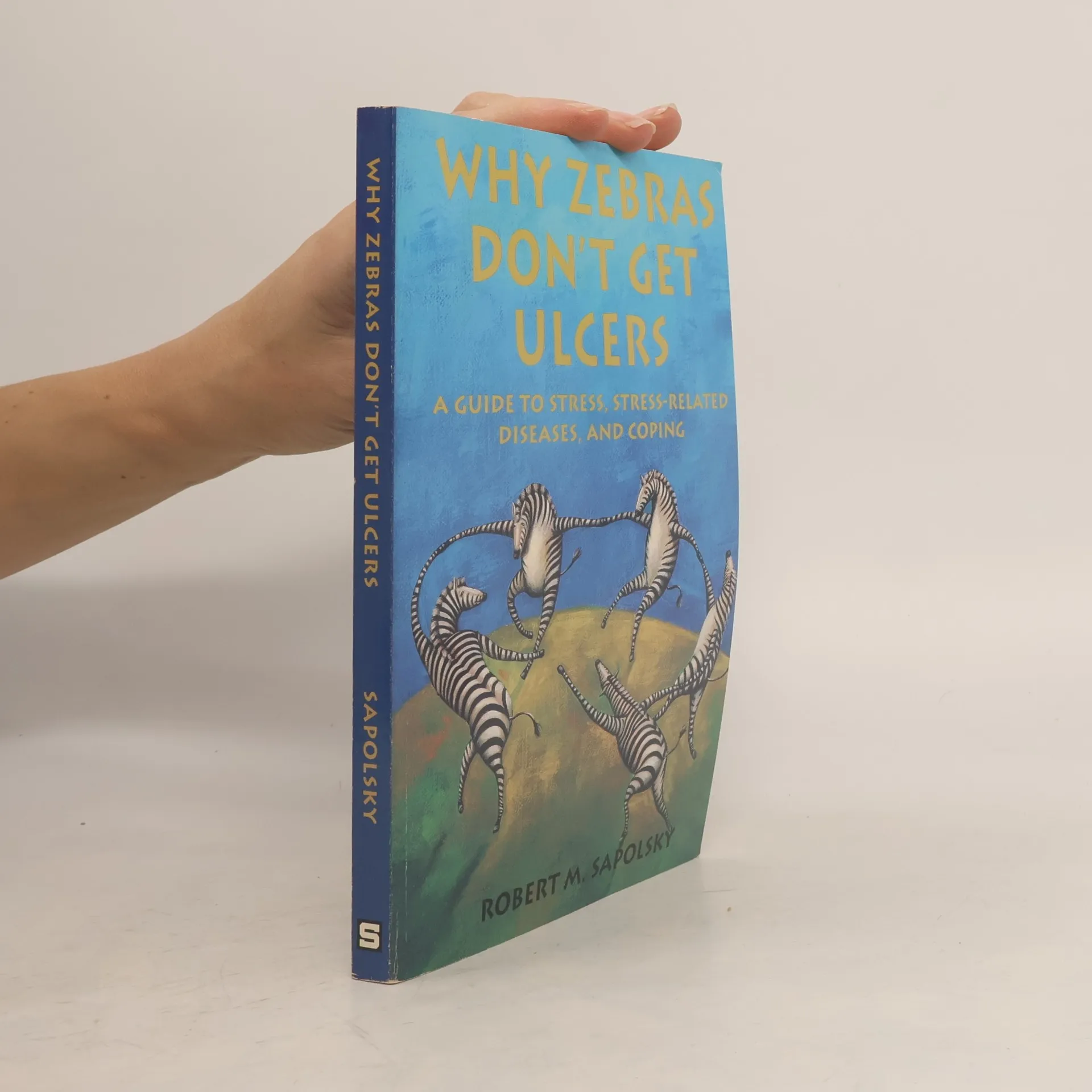
Why Zebras Don't Get Ulcers
A Guide to Stress-Related Diseases, and Coping
Auteurs
Évaluation du livre
En savoir plus sur le livre
Now in a third edition, Robert M. Sapolsky's acclaimed and successful Why Zebras Don't Get Ulcers features new chapters on how stress affects sleep and addiction, as well as new insights into anxiety and personality disorder and the impact of spirituality on managing stress. As Sapolsky explains, most of us do not lie awake at night worrying about whether we have leprosy or malaria. Instead, the diseases we fear--and the ones that plague us now--are illnesses brought on by the slow accumulation of damage, such as heart disease and cancer. When we worry or experience stress, our body turns on the same physiological responses that an animal's does, but we do not resolve conflict in the same way--through fighting or fleeing. Over time, this activation of a stress response makes us sick.


Achat du livre
Why Zebras Don't Get Ulcers, Robert M. Sapolsky
- Langue

- Année de publication
- 1994
- Reliure
- (souple)
Modes de paiement
Il manque plus que ton avis ici.
- Titre
- Why Zebras Don't Get Ulcers
- Sous-titre
- A Guide to Stress-Related Diseases, and Coping
- Langue
- Anglais
- Auteurs
- Robert M. Sapolsky
- Éditeur
- Freeman
- Publié
- 1994
- Format
- souple
- Pages
- 282
- ISBN10
- 0916318524
- ISBN13
- 9780916318529
- Séries
- Catégories
- Mots clés
- Santé & Médecine, Sciences naturelles, Thèmes psychologiques, Science, Santé, Neurosciences
- Titre original
- Why zebras don't get ulcers
- Évaluation
- 4,2 sur 5
- Description
- Now in a third edition, Robert M. Sapolsky's acclaimed and successful Why Zebras Don't Get Ulcers features new chapters on how stress affects sleep and addiction, as well as new insights into anxiety and personality disorder and the impact of spirituality on managing stress. As Sapolsky explains, most of us do not lie awake at night worrying about whether we have leprosy or malaria. Instead, the diseases we fear--and the ones that plague us now--are illnesses brought on by the slow accumulation of damage, such as heart disease and cancer. When we worry or experience stress, our body turns on the same physiological responses that an animal's does, but we do not resolve conflict in the same way--through fighting or fleeing. Over time, this activation of a stress response makes us sick.