



En savoir plus sur le livre
Both authors are PhDs in Psychology. Practically every advice written in this book is backed up by some empiracal evidence or study. The book covers all aspects of communication such as listening, body language, and influencing others using operant conditioning. One should note that this book focuses improving relationships through better communication. Hence, this book is not suitable for situations where antagonistic and competitive communication styles are warranted. For example, I thought the chapter on negotiation was poor due to the fact that the book promotes a "nice guy who will listen" approach to negotiation. Such approach to negotiation with no competitive strategic objective will spell disaster against a well seasoned negotiation sharks in a professional environment. Overall, the book offers solid scientifically based advice on personal communication. Just don't rely too much on it in a setting where competition, not cooperation, can be the norm.
Édition

Achat du livre
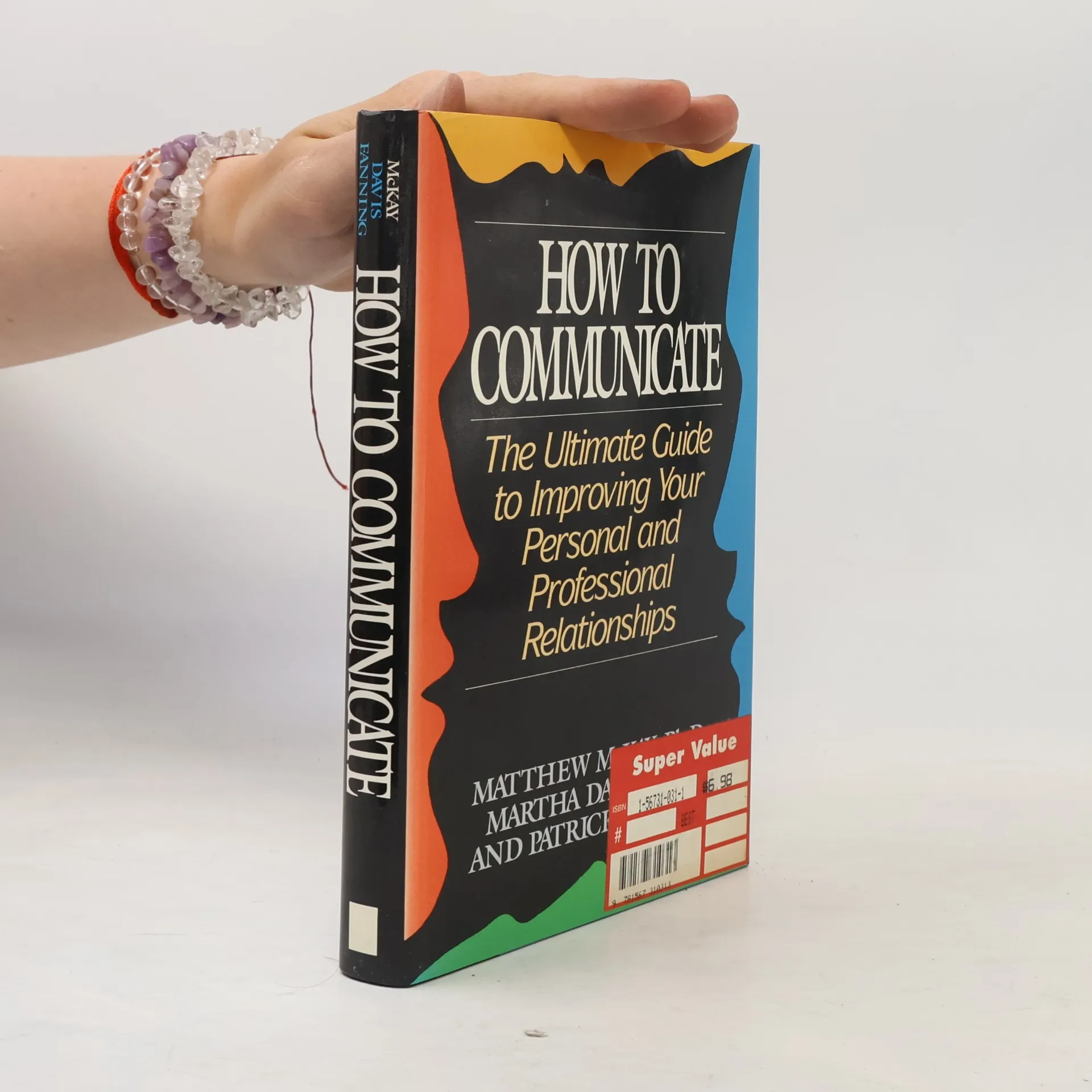
How to Communicate, Matthew McKay, Martha Davis, Patrick Fanning
- Langue

- Année de publication
- 1993
- Reliure
- (rigide),
- État du livre
- Bon
- Prix
- 1,99 €
Modes de paiement
Il manque plus que ton avis ici.
- Titre
- How to Communicate
- Langue
- Anglais
- Auteurs
- Matthew McKay, Martha Davis, Patrick Fanning
- Éditeur
- M J F Books
- Publié
- 1993
- Format
- rigide
- Pages
- 272
- ISBN10
- 1567310311
- ISBN13
- 9781567310313
- Séries
- Mots clés
- Commerce, Thèmes psychologiques, Relations, Communication
- Évaluation
- 3,9 sur 5
- Description
- Both authors are PhDs in Psychology. Practically every advice written in this book is backed up by some empiracal evidence or study. The book covers all aspects of communication such as listening, body language, and influencing others using operant conditioning. One should note that this book focuses improving relationships through better communication. Hence, this book is not suitable for situations where antagonistic and competitive communication styles are warranted. For example, I thought the chapter on negotiation was poor due to the fact that the book promotes a "nice guy who will listen" approach to negotiation. Such approach to negotiation with no competitive strategic objective will spell disaster against a well seasoned negotiation sharks in a professional environment. Overall, the book offers solid scientifically based advice on personal communication. Just don't rely too much on it in a setting where competition, not cooperation, can be the norm.