



En savoir plus sur le livre
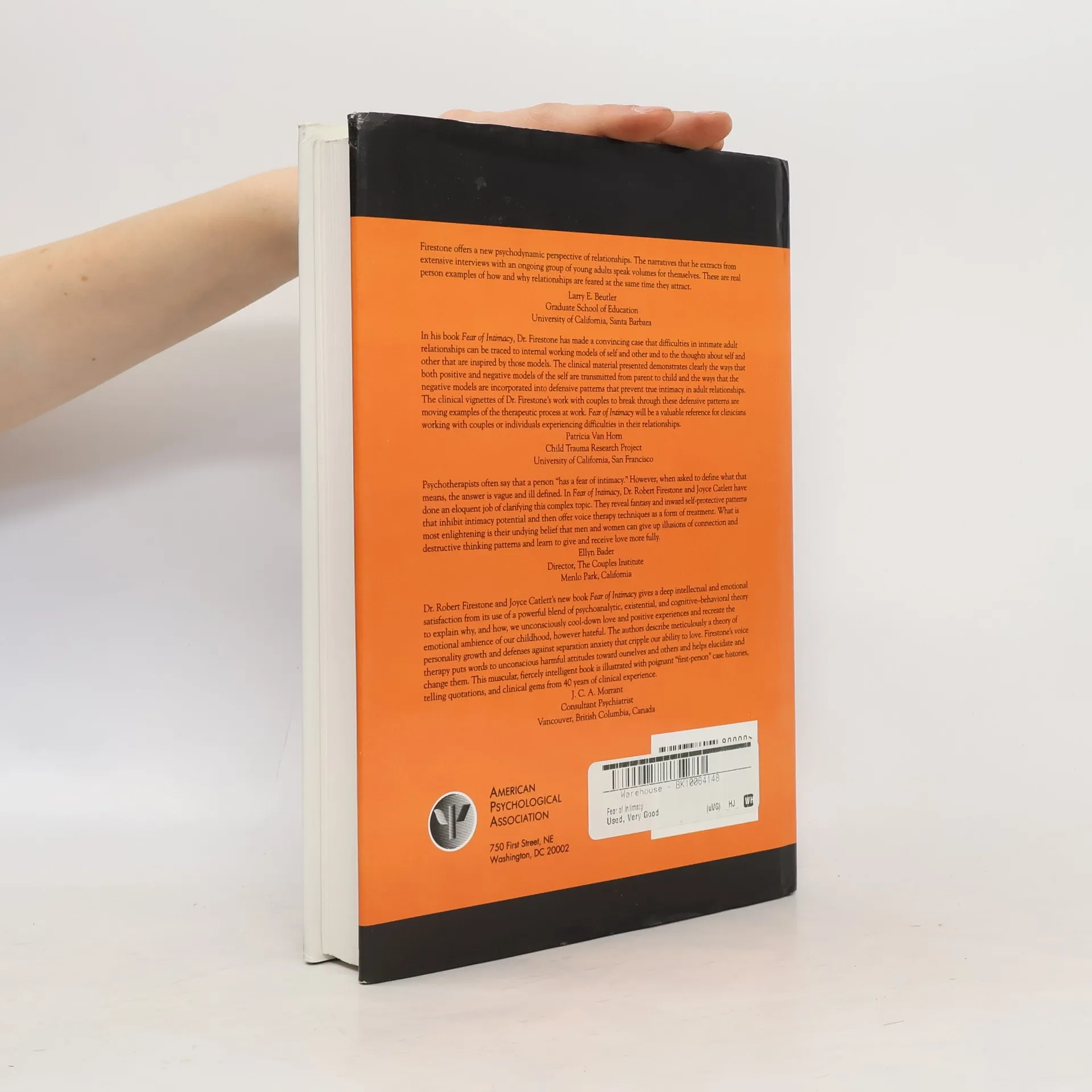
In Fear of Intimacy, the authors bring almost 40 years of clinical experience to bear in challenging the usual ways of thinking about couples and families. They argue that relationships fail not because of the commonly cited reasons but because of psychological defenses formed in childhood that act as a barrier to closeness in adulthood. Written in clear, jargon-free language, Fear of Intimacy shows how therapists can help couples identify and overcome the messages of the internal "voice" that foster distortions of the self and loved ones. Related issues such as interpersonal ethics and the role of stereotyping are also discussed. The authors' innovative approach will be of interest to therapists and couples alike.
Édition

Achat du livre
Fear of Intimacy, Robert Firestone, Joyce Catlett
- Langue

- Année de publication
- 1999
- Reliure
- (rigide)
Modes de paiement
Il manque plus que ton avis ici.
- Titre
- Fear of Intimacy
- Langue
- Anglais
- Auteurs
- Robert Firestone, Joyce Catlett
- Éditeur
- Amer Psychological Assn
- Publié
- 1999
- Format
- rigide
- Pages
- 358
- ISBN10
- 1557986053
- ISBN13
- 9781557986054
- Séries
- Catégories
- Évaluation
- 4,25 sur 5
- Description
- In Fear of Intimacy, the authors bring almost 40 years of clinical experience to bear in challenging the usual ways of thinking about couples and families. They argue that relationships fail not because of the commonly cited reasons but because of psychological defenses formed in childhood that act as a barrier to closeness in adulthood. Written in clear, jargon-free language, Fear of Intimacy shows how therapists can help couples identify and overcome the messages of the internal "voice" that foster distortions of the self and loved ones. Related issues such as interpersonal ethics and the role of stereotyping are also discussed. The authors' innovative approach will be of interest to therapists and couples alike.