

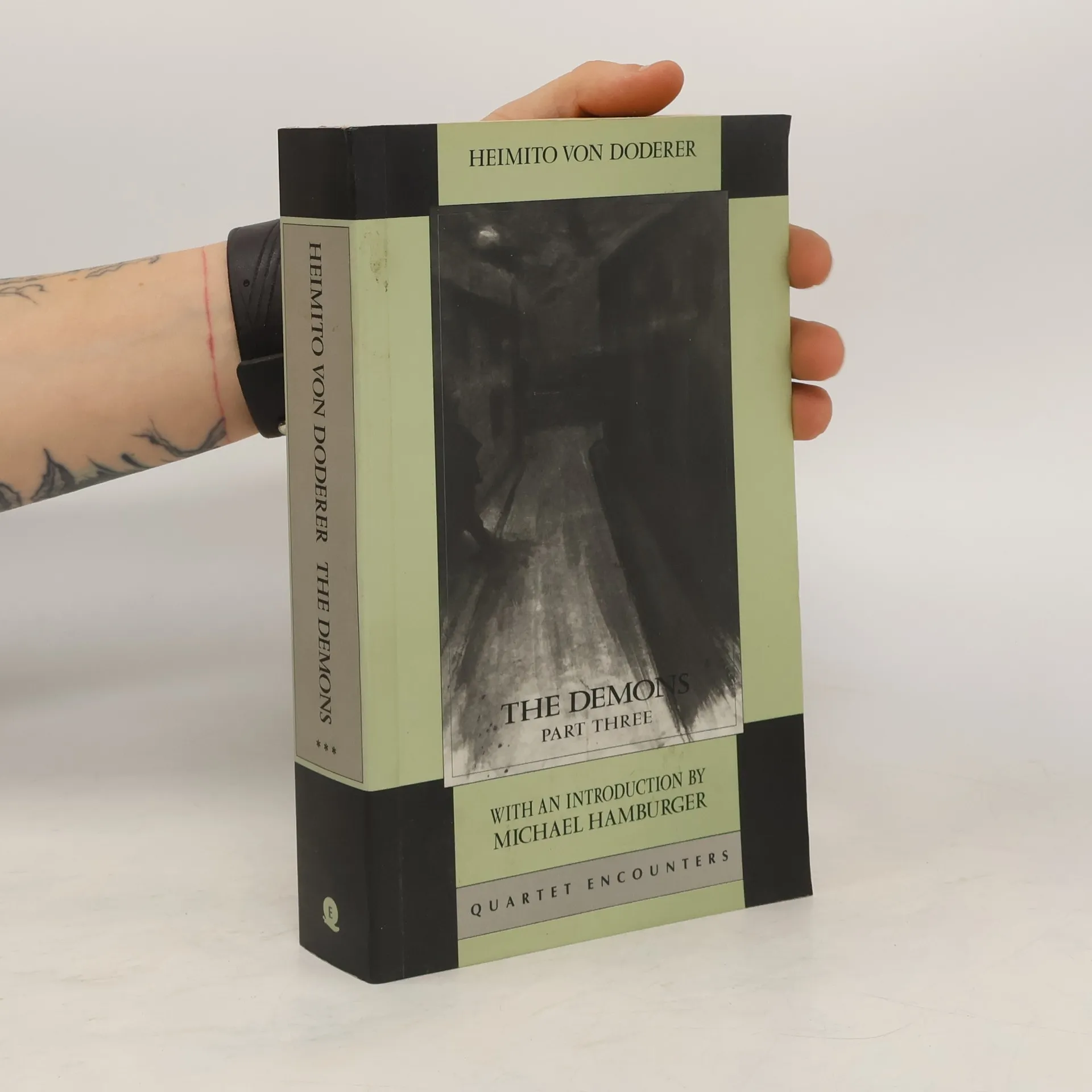
The Demons. Part Three
Évaluation du livre
En savoir plus sur le livre
Heimito von Doderer was one of the twentieth century's most distinguished Austrian novelists. His finest novel is The Demons, a monumental work and itself the 'Götterdämmerung' as it were to earlier novels. The central preoccupation of this masterpiece is the decline of European civilization. He began work on it in 1931, after reading Dostoyevsky's The Devils. Symphonic in construction, it is a panoramic re-creation of Viennese society in all its strata, conjuring the depths as well as the heights of everything we might think of as Vienna. Doderer has Balzacian scope as well as owing much to Proust and Musil. His human comedy is drawn with a humour as vital when ironic as when satirical, and his baroque imagination is well served by his tireless linguistic ingenuity.
Achat du livre
The Demons. Part Three, Heimito von Doderer, Clara Winston, Richard Winston
- Langue

- Année de publication
- 1989
- Reliure
- (souple)
Modes de paiement
Il manque plus que ton avis ici.
- Titre
- The Demons. Part Three
- Langue
- Anglais
- Éditeur
- Texas Bookman
- Publié
- 1989
- Format
- souple
- Pages
- 484
- ISBN10
- 070430113X
- ISBN13
- 9780704301139
- Séries
- Catégories
- Mots clés
- Évaluation
- 4,15 sur 5
- Description
- Heimito von Doderer was one of the twentieth century's most distinguished Austrian novelists. His finest novel is The Demons, a monumental work and itself the 'Götterdämmerung' as it were to earlier novels. The central preoccupation of this masterpiece is the decline of European civilization. He began work on it in 1931, after reading Dostoyevsky's The Devils. Symphonic in construction, it is a panoramic re-creation of Viennese society in all its strata, conjuring the depths as well as the heights of everything we might think of as Vienna. Doderer has Balzacian scope as well as owing much to Proust and Musil. His human comedy is drawn with a humour as vital when ironic as when satirical, and his baroque imagination is well served by his tireless linguistic ingenuity.